Genetically engineered bacterium for sarcosine production as well as construction method and application
What is AI technical title?
AI technical title is built by Patsnap AI team. It summarizes the technical point description of the patent document.
a technology of sarcosine and genetic engineering, applied in the field of genetic engineering, can solve the problems of difficult product separation and difficult reaction conditions
Active Publication Date: 2022-10-25
TIANJIN UNIV OF SCI & TECH +1
View PDF6 Cites 0 Cited by
Summary
Abstract
Description
Claims
Application Information
AI Technical Summary
This helps you quickly interpret patents by identifying the three key elements:
Problems solved by technology
Method used
Benefits of technology
Benefits of technology
[0011]Provided is a plasmid-free genetically engineered strain for efficiently sarcosine production by using cheap carbon source as the substrate. The genetically engineered strain is Escherichia coli SAR which is obtained by using Escherichia coli ATCC27325 as a host and through the following transformations: integrating a single copy of imine reductase gene dpkA, which is controlled by T7 promoter, on its genome; integrating a single copy of citrate synthase gene gltA, which is controlled by trc promoter, on its genome; knocking out glyoxylate cycle inhibitor gene iclR; knocking out malate synthase gene aceB; integrating a single copy of isocitrate lyase gene aceA, which is controlled by trc promoter, on its genome; integrating a single copy of membrane-bound transhydrogenase gene pntAB, which is controlled by trc promoter, on its genome; knocking out 2-ketate reductase gene ycdW; integrating a single copy of phosphoenolpyruvate carboxylase gene ppc, which is controlled by controlled by trc promoter, on its genome; and knocking out pyruvate kinase gene pykF.
[0038]6. The disclosure provides a plasmid-free genetically engineered strain for efficiently sarcosine production using cheap carbon source such as glucose as the substrate. The genetically engineered strain is obtained by using Escherichia coli as a host and by integrating single copy of imine reductase gene dpkA on its genome; integrating single copy of citrate synthase gene gltA; knocking out glyoxylate cycle inhibitor gene iclR; knocking out malate synthase gene aceB; integrating single copy of isocitrate lyase gene aceA; integrating single copy of membrane-bound transhydrogenase gene pntAB; knocking out 2-ketate reductase gene ycdW; integrating single copy of phosphoenolpyruvate carboxylase gene ppc; and knocking out pyruvate kinase gene pykF. Through system metabolism transformation, the engineered strain can use glucose and methylamine as main raw materials to synthesize sarcosine. After fermentation for 30 h in a 5 L fermentor, the sarcosine titer can reach 10 g / L.
Problems solved by technology
The preparation method of sarcosine sodium is mainly chemical synthesis (CN201310676025.9 and CN200610155348.3), which has the disadvantages of harsh reaction conditions and difficult product separation.
Method used
the structure of the environmentally friendly knitted fabric provided by the present invention; figure 2 Flow chart of the yarn wrapping machine for environmentally friendly knitted fabrics and storage devices; image 3 Is the parameter map of the yarn covering machine
View more
Image
Smart Image Click on the blue labels to locate them in the text.
Viewing Examples
Smart Image
Click on the blue label to locate the original text in one second.
Reading with bidirectional positioning of images and text.
Smart Image
Examples
Experimental program
Comparison scheme
Effect test
example 1
ion of Genetically Engineered Strain Escherichia coli SAR
[0075]1. Gene Editing Method
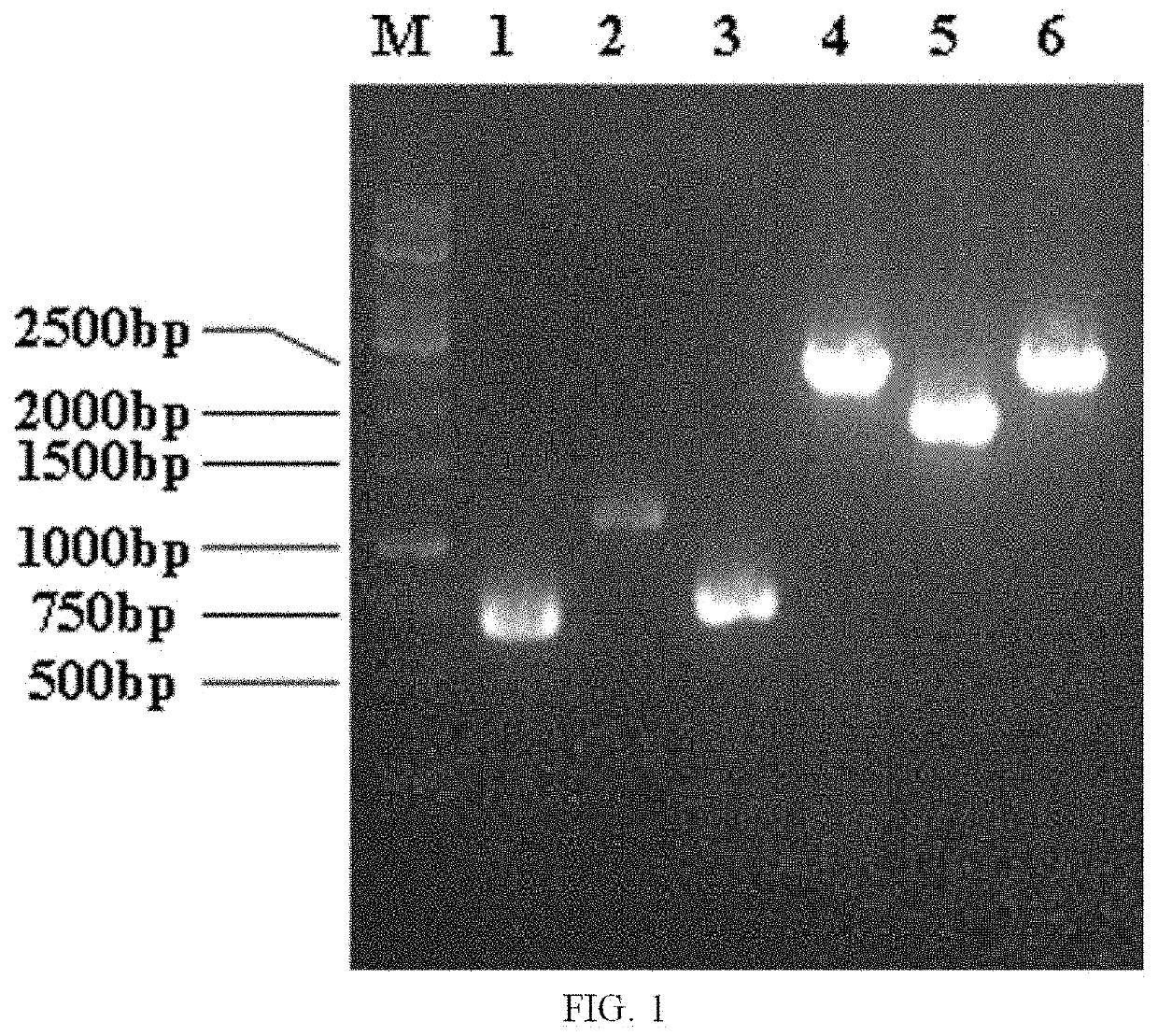
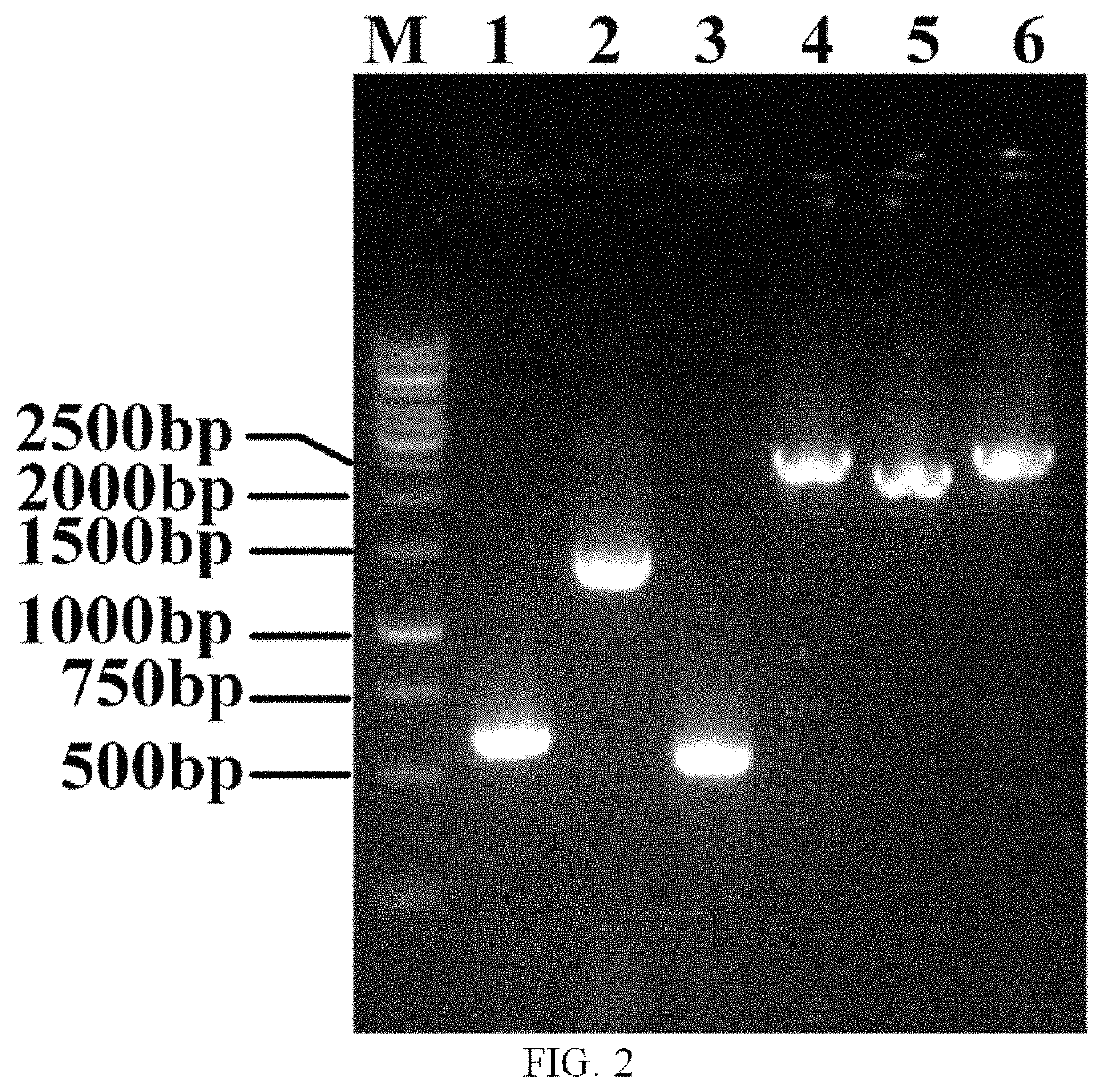
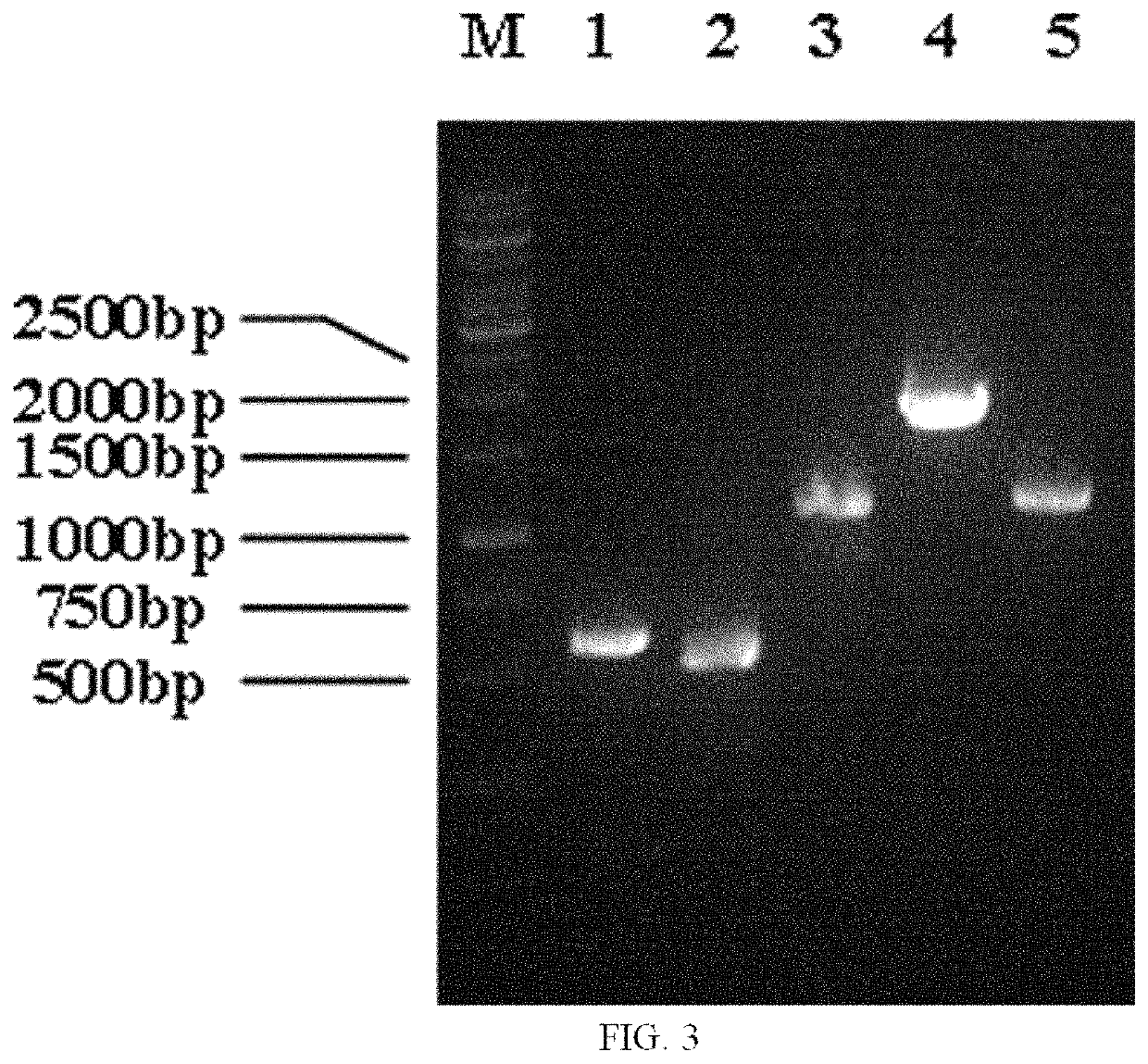
[0076]The disclosure adopted a CRISPR / Cas9-mediated gene editing method, which refers to a literature (Metabolic Engineering, 2015, 31:13-21). Two plasmids used in this method were pGRB and pREDCas9 respectively. The pREDCas9 contained a gRNA plasmid elimination system, a Red recombination system of λ phage and a Cas9 protein expression system. It had spectinomycin resistance (working concentration: 100 mg / L) and was cultured at 32° C. The pGRB plasmid used pUC18 as a backbone, including promoter J23100, a gRNA-Cas9 binding region sequence and a terminator sequence. It had ampicillin resistance (working concentration: 100 mg / L) and was cultured at 37° C.
[0077]2. Specific Process for Strain Construction
[0078]2.1 Integration of PT7-dpkA (a Fragment Containing dpkA Gene and T7 Promoter) at the mbhA Site
[0079]An E. coli ATCC27325 genome was used as a template. Upstream homology arm primers UP-mbhA-S(SEQ...
example 2
n of Sarcosine by Flask Fermentation Using Strain E. coli SAR
[0108]Fermentation Experiment of Strain E. coli SAR in a 5 L Fermentor:
[0109]Slope activation culture: a ring of bacteria were scrapped off from a preserving tube in a −80° C. refrigerator, evenly coated on an activated slope, cultured for 12 h at 37° C., and then transferred to an eggplant-shaped bottle to conduct further culture for 12 h;
[0110]Seed culture: a proper amount of sterile water was placed in the eggplant-shaped bottle, and the bacterial suspension was inoculated into a seed culture medium to culture for 6 h, wherein the pH is stabilized at about 7.0, the temperature is constant at 37° C., and the dissolved oxygen is between 25% and 35%;
[0111]Fermentation culture: a fresh fermentation culture medium was inoculated with an inoculation amount of 15%. The loading amount was 60% (v culture medium / v fermentor). During the fermentation, the pH was stably controlled at about 7.0, and the temperature was maintained at...
the structure of the environmentally friendly knitted fabric provided by the present invention; figure 2 Flow chart of the yarn wrapping machine for environmentally friendly knitted fabrics and storage devices; image 3 Is the parameter map of the yarn covering machine
Login to View More
PUM
Property
Measurement
Unit
concentration
aaaaa
aaaaa
concentration
aaaaa
aaaaa
flow rate
aaaaa
aaaaa
Login to View More
Abstract
The disclosure discloses a genetically engineered strain for sarcosine production as well as a construction method and application. The genetically engineered strain is obtained by using Escherichia coli as a host and by integrating a single copy of imine reductase gene dpkA on its genome; singly copying citrate synthase gene gltA; knocking out glyoxylate cycle inhibitor gene iclR; knocking out malate synthase gene aceB; integrating a single copy of isocitrate lyase gene aceA; integrating a single copy of membrane-bound transhydrogenase gene pntAB; knocking out 2-ketate reductase gene ycdW; integrating a single copy of phosphoenolpyruvate carboxylase gene ppc; and knocking out pyruvate kinase gene pykF. After system metabolism transformation, the engineered strain can synthesize sarcosine with glucose and methylamine as main raw materials. The sarcosine titer can reach 10 g / L after fermentation for 30 h in a 5 L fermenter.
Description
CROSS REFERENCE TO RELATED APPLICATIONS[0001]This application is a continuation of International Patent Application No. PCT / CN2021 / 123534 with a filing date of Oct. 13, 2021, designating the United States, now pending, and further claims priority to Chinese Patent Application No. 202110186880.6 with a filing date of Feb. 18, 2021. The content of the aforementioned applications, including any intervening amendments thereto, are incorporated herein by reference.TECHNICAL FIELD[0002]The disclosure relates to the technical field of gene engineering, particularly relates to a genetically engineered strain for sarcosine production as well as a construction method and application.BACKGROUND OF THE DISCLOSURE[0003]Sarcosine (N-methyl-L-glycine) is an N-methylated amino acid. Its sodium salt, sarcosine sodium, is often used as a precursor for the synthesis of some important products. Sarcosine is an important amino acid product which has considerable effect on the repair of brain and muscles...
Claims
the structure of the environmentally friendly knitted fabric provided by the present invention; figure 2 Flow chart of the yarn wrapping machine for environmentally friendly knitted fabrics and storage devices; image 3 Is the parameter map of the yarn covering machine
Login to View More
Application Information
Patent Timeline
Application Date:The date an application was filed.
Publication Date:The date a patent or application was officially published.
First Publication Date:The earliest publication date of a patent with the same application number.
Issue Date:Publication date of the patent grant document.
PCT Entry Date:The Entry date of PCT National Phase.
Estimated Expiry Date:The statutory expiry date of a patent right according to the Patent Law, and it is the longest term of protection that the patent right can achieve without the termination of the patent right due to other reasons(Term extension factor has been taken into account ).
Invalid Date:Actual expiry date is based on effective date or publication date of legal transaction data of invalid patent.



 Login to View More