
Method and system for dynamically bounded spinning threads on a contested mutex
a dynamically bounded spinning thread and mutex technology, applied in the field of data processing system, can solve the problem of relatively significant overhead of thread suspension
Patent Information
- Authority / Receiving Office
- US · United States
- Patent Type
- Applications(United States)
- Current Assignee / Owner
- Publication Date
- 2005-04-14
- Estimated Expiration
- Not applicable · inactive patent
Smart Images
Figure 1 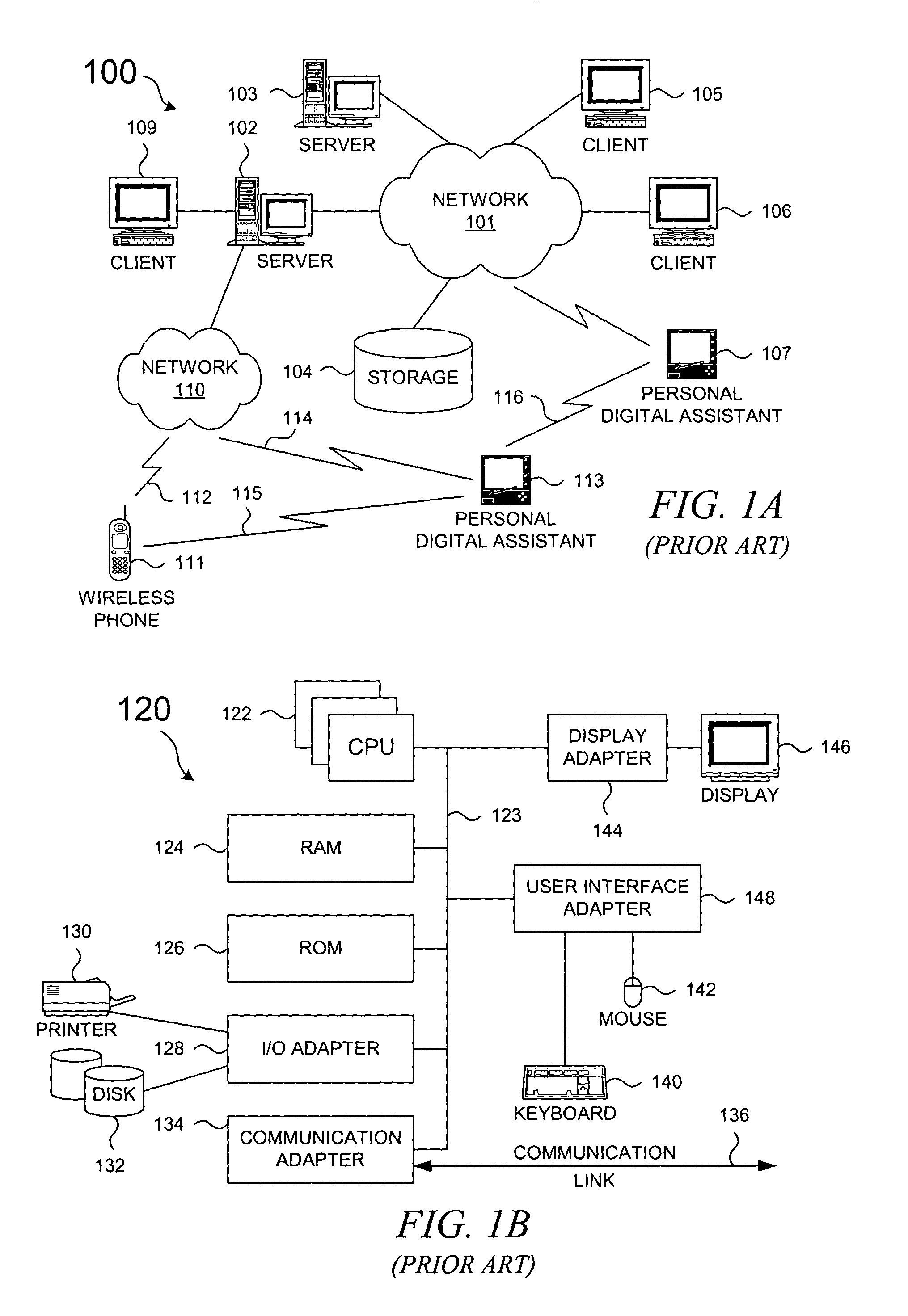
Figure 2 
Figure 3
Abstract
Description
BACKGROUND OF THE INVENTION
[0001] 1. Field of the Invention
[0002] The present invention relates to an improved data processing system and, in particular, to a method and apparatus for multiple process coordinating. Still more particularly, the present invention provides a method and apparatus for process scheduling or resource allocation during task management or control using mutual exclusion locks (mutexes).
[0003] 2. Description of Related Art
[0004] Modern operating systems support multiprogramming, whereby multiple programs appear to execute concurrently on a single computational device with a single central processing unit (CPU) or possibly multiple CPUs in a symmetric multiprocessor (SMP) machine. The appearance of concurrent execution is achieved through the use of serialized execution, also known as “time slicing”: the operating system of a device allows one of the multiple programs to execute exclusively for some limited period of time, i.e., a time slice, which is then ...
Examples
Embodiment Construction
[0027] In general, the devices that may comprise or relate to the present invention include a wide variety of data processing technology. Therefore, as background, a typical organization of hardware and software components within a distributed data processing system is described prior to describing the present invention in more detail.
[0028] With reference now to the figures, FIG. 1A depicts a typical network of data processing systems, each of which may implement a portion of the present invention. Distributed data processing system 100 contains network 101, which is a medium that may be used to provide communications links between various devices and computers connected together within distributed data processing system 100. Network 101 may include permanent connections, such as wire or fiber optic cables, or temporary connections made through telephone or wireless communications. In the depicted example, server 102 and server 103 are connected to network 101 along with storage u...