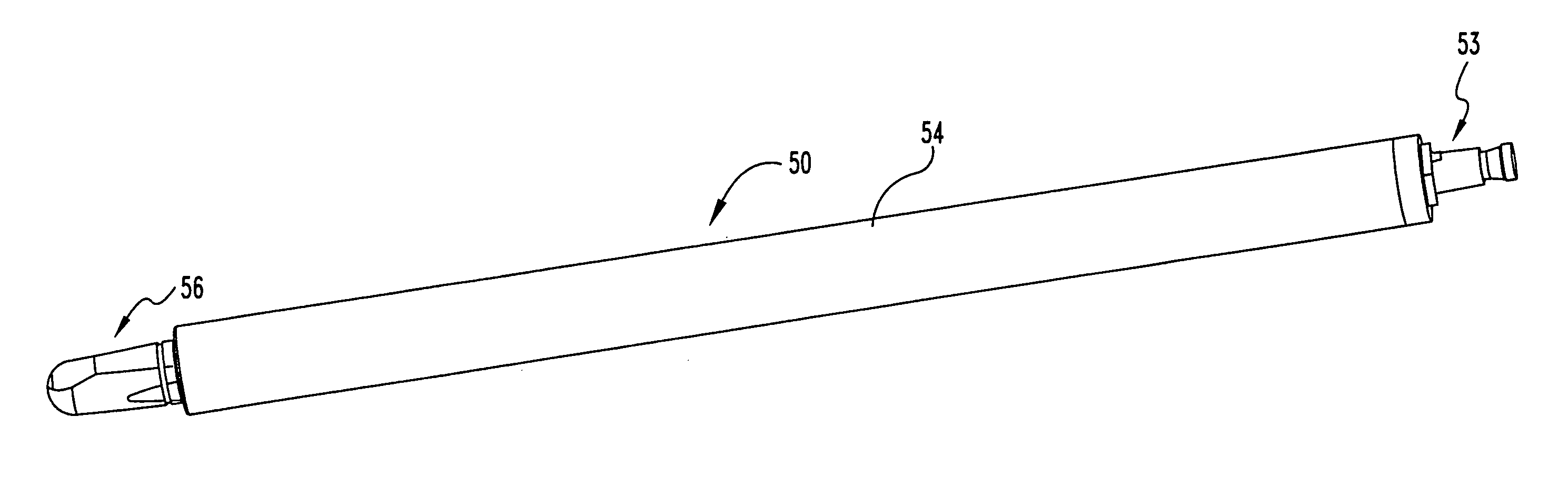
[0011] Once an initial opening or openings have been defined in the disc space, a distractor may be inserted to distract the disc space to the desired height. Various distractors according to the present invention may be used to distract the disc space. One such distractor has a first position that provides a first working
distraction height in the disc space and a second position that provides a greater second working
distraction height. Should the first working distraction height be insufficient, the distractor according to the present invention may be rotated one quarter turn to create a second greater distraction height in the disc space. Additionally, in a further preferred aspect of the invention, a modular distractor mechanism according to the present invention may be configured to accept many different rotatable distractor tips and may releasable engage the tips such that a distractor tip may be left in the disc space while permitting withdrawal of the distractor tool shaft. With such a configuration, a single distractor tool shaft may be use with various tips, thereby limiting the total number of complete distractor instruments required. Additionally, distractor tips may be made of radiolucent material that will not inhibit x-
ray imaging of the disc space. Such distractor tips may include radiographic markers to indicate the ends and / or outer edges of the device and markers to indicate the
rotational alignment of the distractors in the disc space.
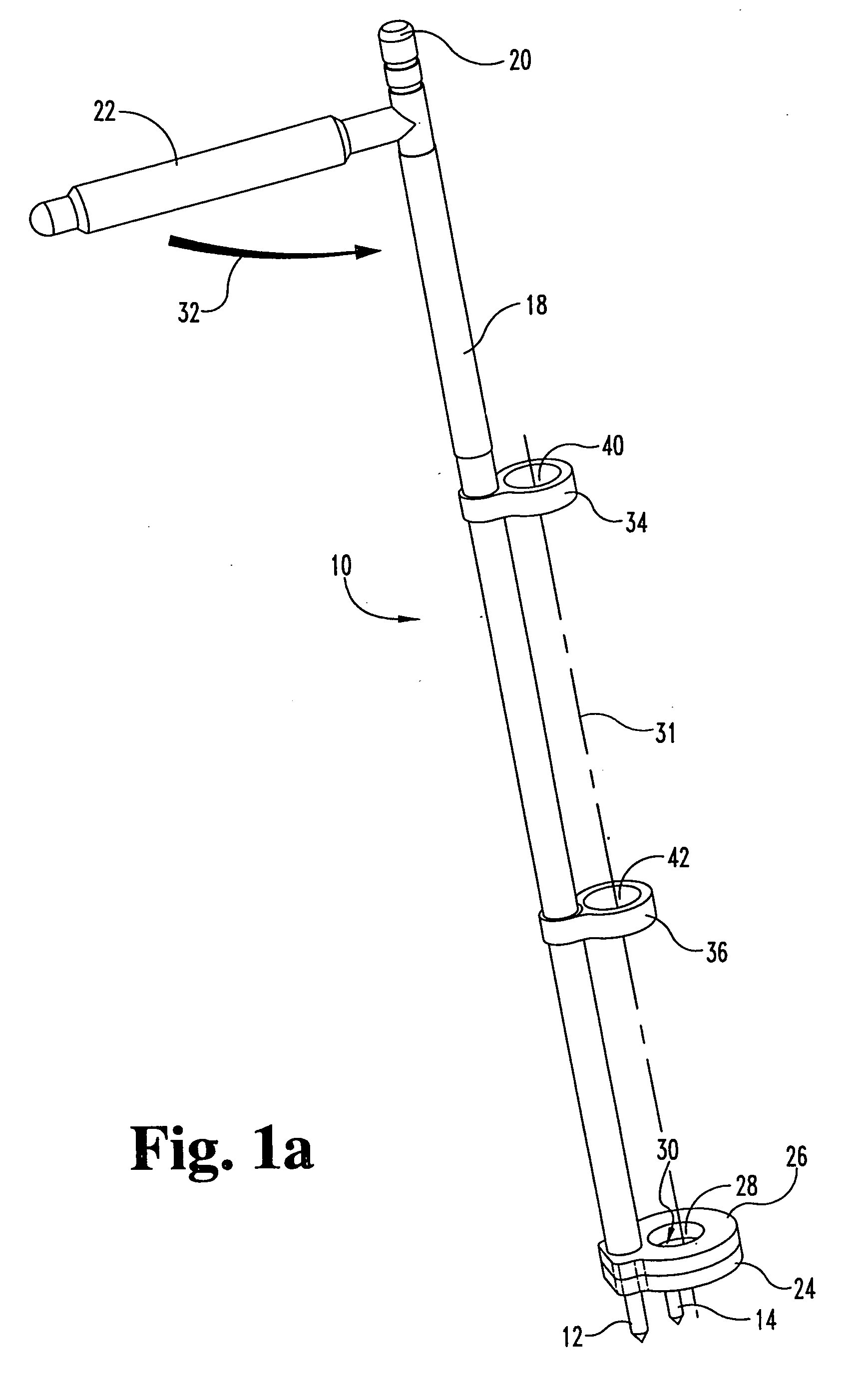
[0013] Although various sleeves are known in the art, in a preferred embodiment, outer sleeves according to the present invention have a reduced width portion adjacent the distal end to limit the amount of retraction of the surrounding vascular and neural structures required for the procedure. In a preferred form, a double
barrel sleeve
assembly includes a central distraction
flange having a first height and an opposing pair of lateral extensions having a second height, less than the first height. The lateral extensions provide protection from encroachment of tissue into the working area in the disc space. A further aspect of a preferred embodiment includes the provision of
visualization windows along the outer sleeve for visual access to the interior working channel while instruments are in the working channel. Various combinations of windows are disclosed to accomplish the desired
visualization. While
visualization is desirable, having openings in the outer sleeve may allow surrounding vessels and tissue to migrate into the working channel of the outer sleeve. Tissue and vessels present in the working channel may be damaged by
insertion and removal of the tools (often with cutting edges) or during use of those tools. Thus, the present invention contemplates covers over the windows that may be selectively opened for visualization and closed to prevent tissue and vessel infiltration. Additionally, the covers or the outer sleeve may be transparent to allow visualization through the windows without removing the covers or directly through the sleeve. In a similar manner, an
image guidance system such as that available under the tradename STEALTH may be used in conjunction with the present
system to monitor the advancement and positioning of instruments and implants. Even without the use of an imaging
system, the present invention discloses the use of manually adjustable depth stop that may be used to control the steps of trephining, reaming, tapping, and
dowel insertion. The term
dowel is used in a broad sense throughout the disclosure and is intended to encompass dowels made of bone, metallic cages and other implants used for interbody fusion regardless of shape or material of construction.
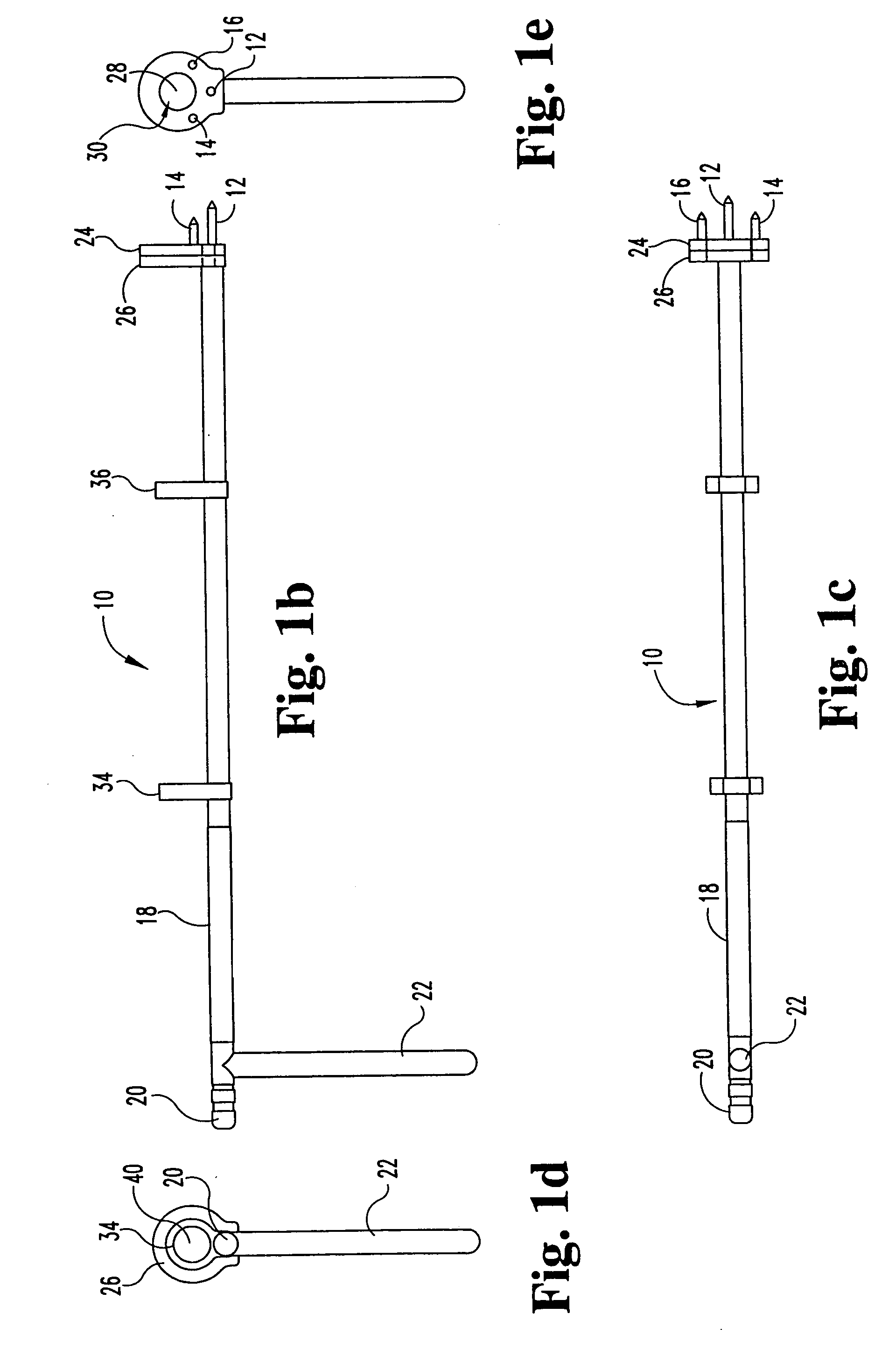
[0015] In yet another aspect, the outer sleeve has a double
barrel configuration. The bone engagement end of the outer sleeve includes a first
flange having a first height sufficient to maintain distraction. Preferably, the bone engaging end also includes a pair of opposing lateral extensions having a second height less than the first height. The lateral extensions are intended to inhibit lateral encroachment of tissue into the working area in the disc space but are not limited to maintain distraction.



 Login to View More
  Login to View More