
Flow component for medical infusion / transfusion lines
a flow component and flow line technology, applied in the direction of valves, tubes, intravenous devices, etc., can solve the problems of needle flexure risk, high risk, and high risk, and achieve the effect of facilitating centering and small amount of effor
- Summary
- Abstract
- Description
- Claims
- Application Information
AI Technical Summary
Benefits of technology
Problems solved by technology
Method used
Image

Examples
Embodiment Construction
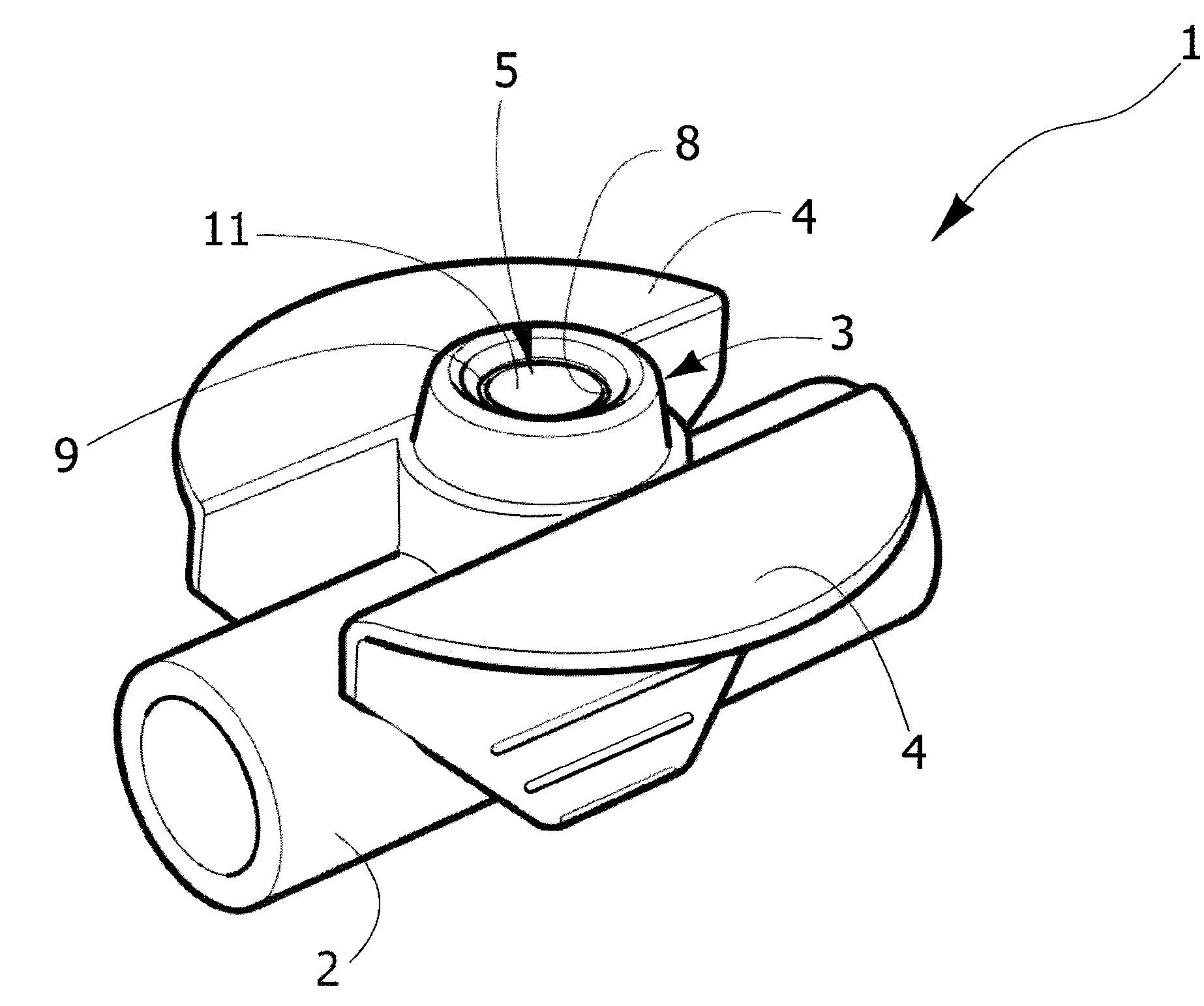
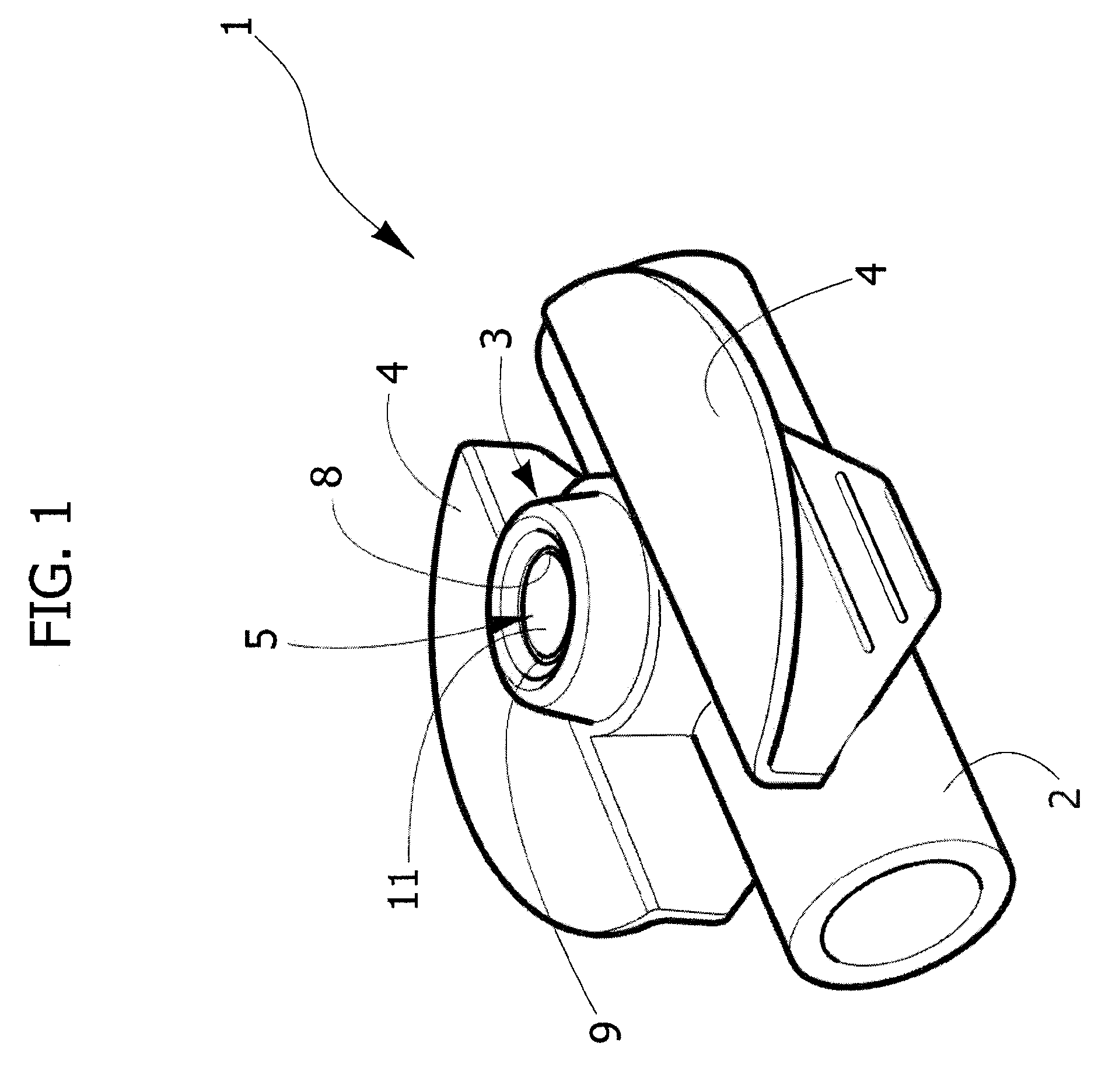
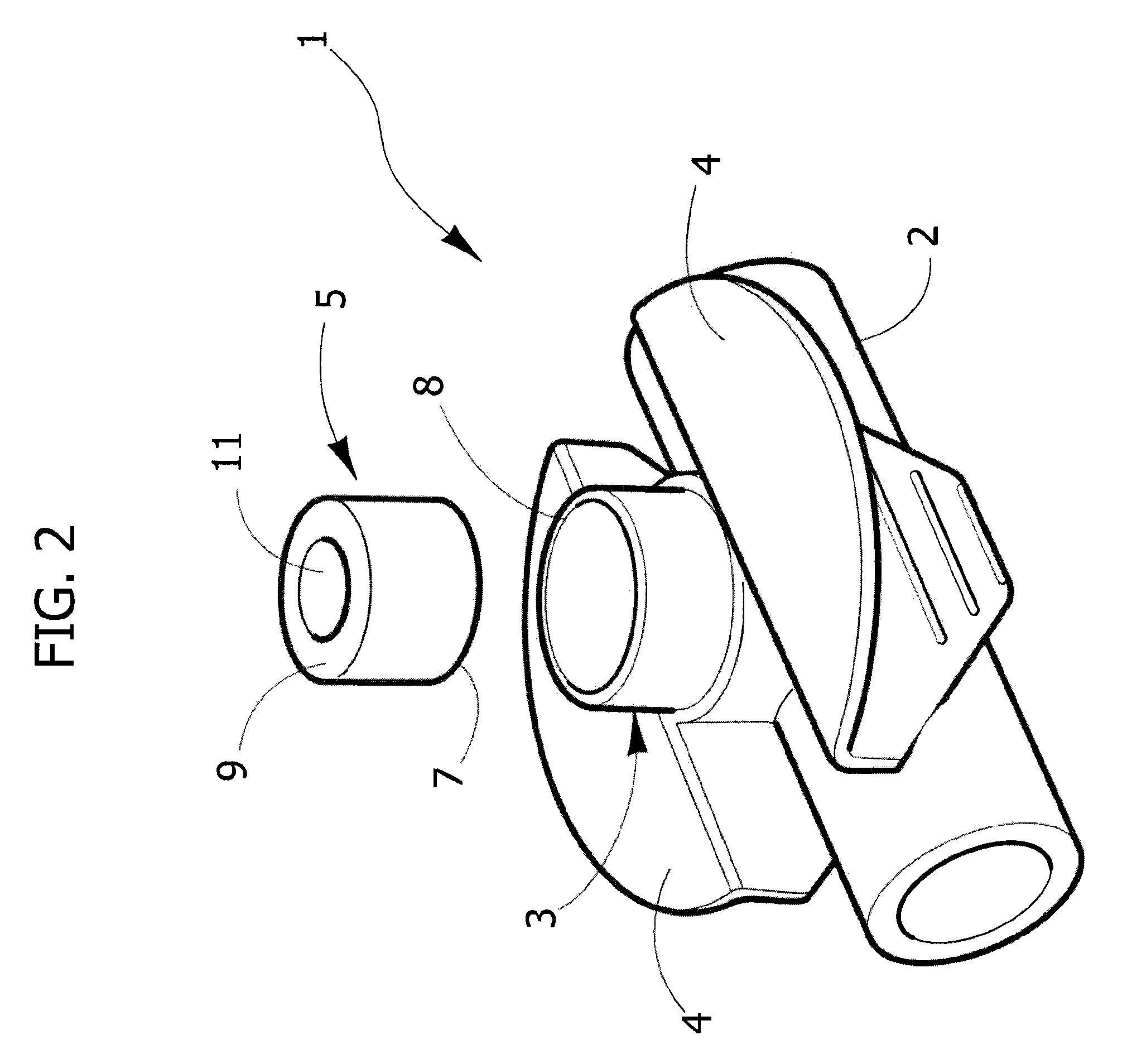
[0017]With reference initially to FIGS. 1 to 3, designated as a whole by 1 is a flow component according to the invention, applicable to a medical infusion / transfusion line and consisting of a so-called T-shaped or cross-shaped needle point. The flow component 1 is formed by a tubular body that basically comprises a main duct 2, designed in use to be traversed by a flow of a primary liquid, and a side tubular inlet connector 3 directed perpendicularly, i.e., radially with respect to the duct 2, in a substantially median area of the latter, for introduction of a secondary liquid into it. A pair of gripping and protection tabs 4 project from the outer surface of the duct 2 on opposite sides with respect to the inlet connector 3.
[0018]Housed in a fluid-tight way within the inlet connector 3 is an elastic sealing element 5 having a generally cylindrical shape, typically made of a soft elastomeric material, such as silicone rubber and the like. Said elastic sealing element 5 is blocked a...
PUM
 Login to View More
 Abstract
Description
Claims
Application Information
 Login to View More