
Container End Closure With Improved Chuck Wall and Countersink
a technology of end closure and countersink, which is applied in the field of container and container end closure, can solve the problems of not using the standard double seaming process, the 634 patent has not proved to be completely reliable in regard to leakage, and the end closure of the beverage container is described, so as to reduce the size of the blank material, improve the strength of the end closure, and save material costs
- Summary
- Abstract
- Description
- Claims
- Application Information
AI Technical Summary
Benefits of technology
Problems solved by technology
Method used
Image

Examples
Embodiment Construction
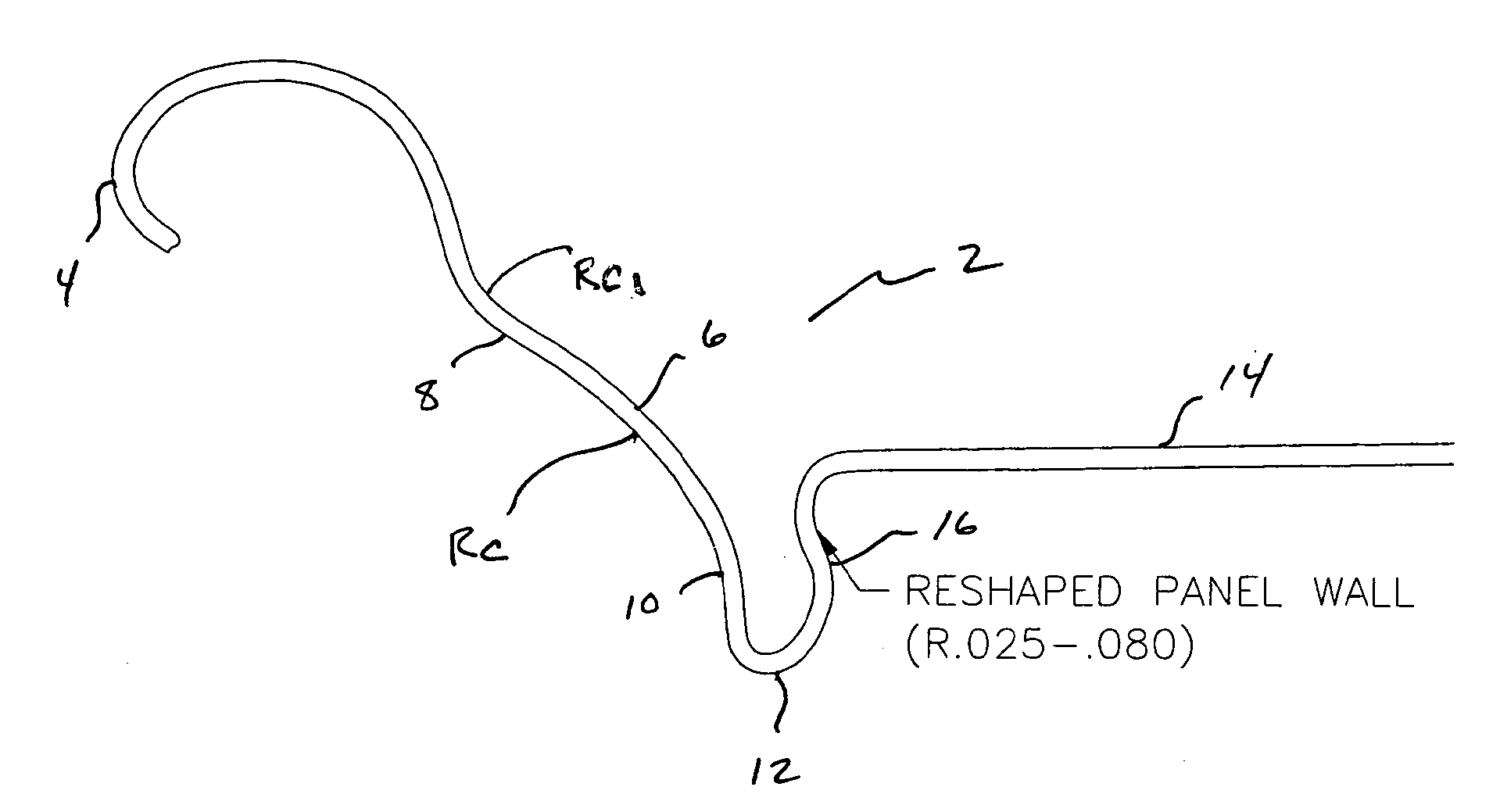
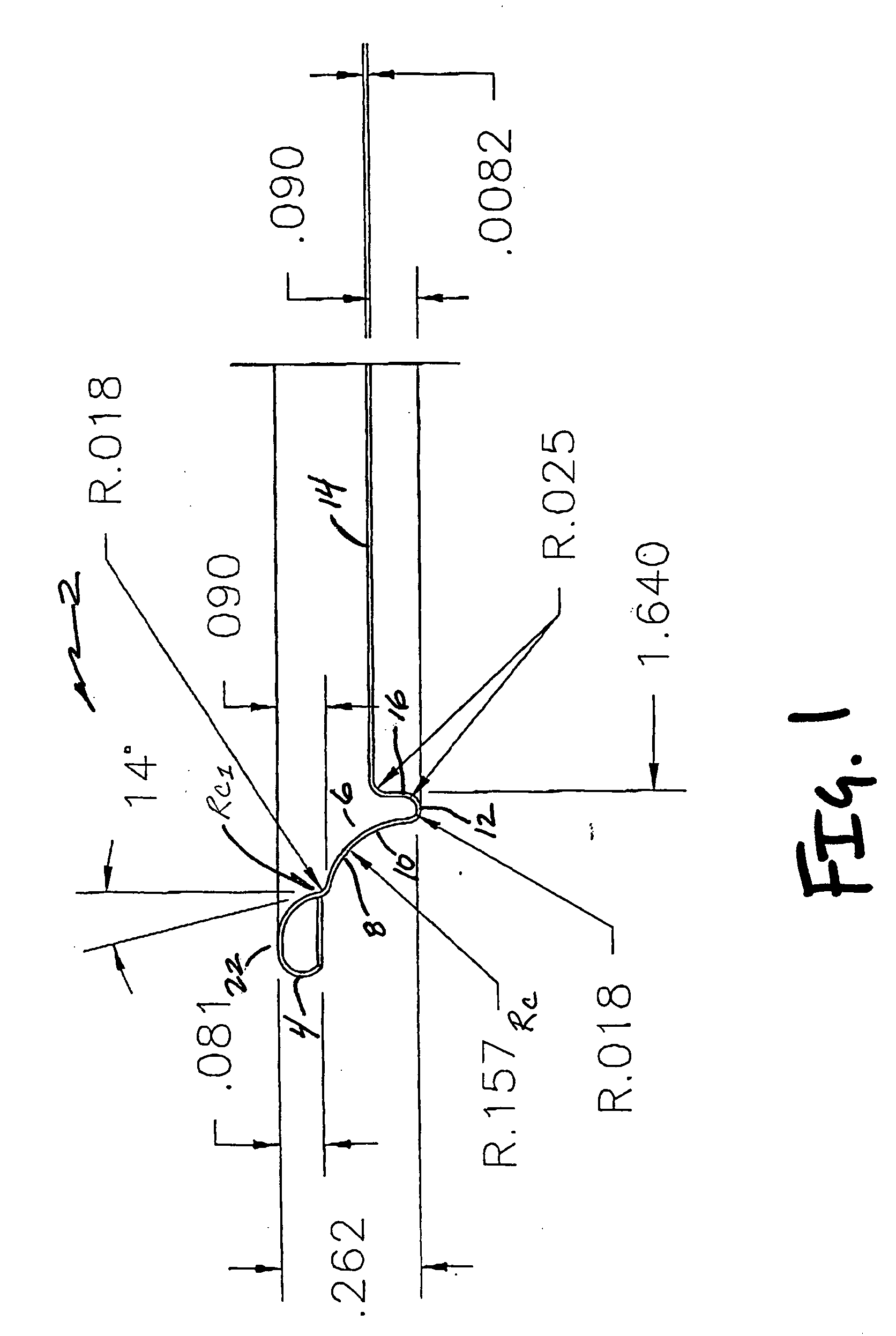
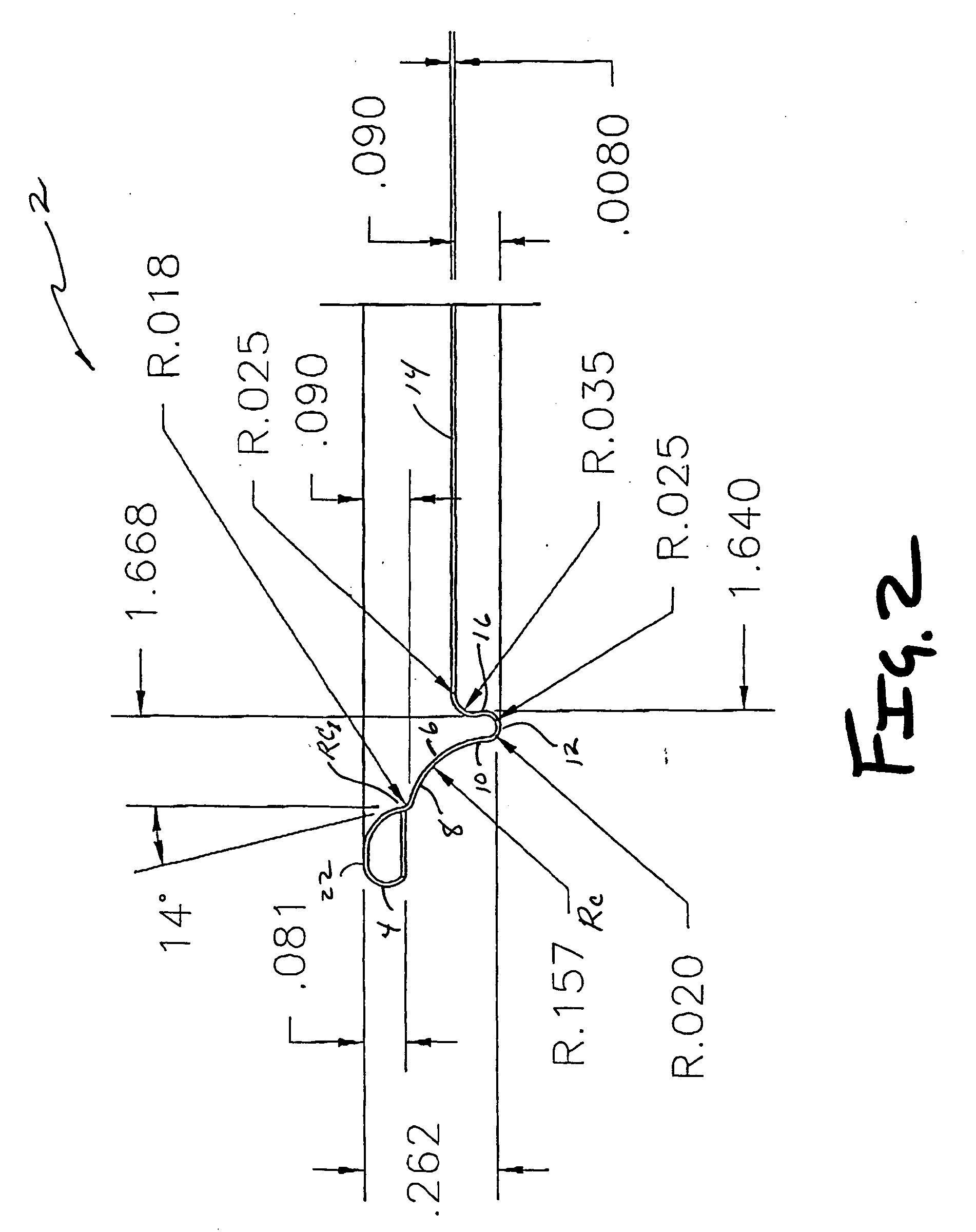
[0043]Referring now to the drawings, FIGS. 1-10 represent alternative embodiments of the present invention, and identifying various geometries which may be incorporated in a beverage can end closure 2 to achieve superior performance including buckle resistance. Each of the geometries shown in FIGS. 1-10 may be utilized independently, or alternatively combined in one or more combinations. FIGS. 11-13 represent prior at end closures 2, while FIGS. 14-19 depict cross-sectional front elevation views of alternative embodiments of the present invention. FIG. 20 shows a stacking arrangement of one end closure of the present invention and identifying the amount of “shuffle,” i.e. horizontal movement in a 2″ vertical stack of end closures. With regard to FIGS. 1-10, and the geometries provided herein, a detailed chart of these end closures is provided herein in the specification, wherein the specific geometry for each end closure is provided as well as specific performance data. Additionally...
PUM
 Login to View More
 Abstract
Description
Claims
Application Information
 Login to View More