
Ear mold for a hearing device
a hearing device and mold technology, applied in the field of ear molds for hearing devices, can solve the problems of snap-on connection not being reliably maintained, earpieces usually reversibly deformed, soft material abrasion, etc., and achieves reliable, durably-robust, and easy removal of the connection. , the effect of avoiding abrasion
- Summary
- Abstract
- Description
- Claims
- Application Information
AI Technical Summary
Benefits of technology
Problems solved by technology
Method used
Image

Examples
Embodiment Construction
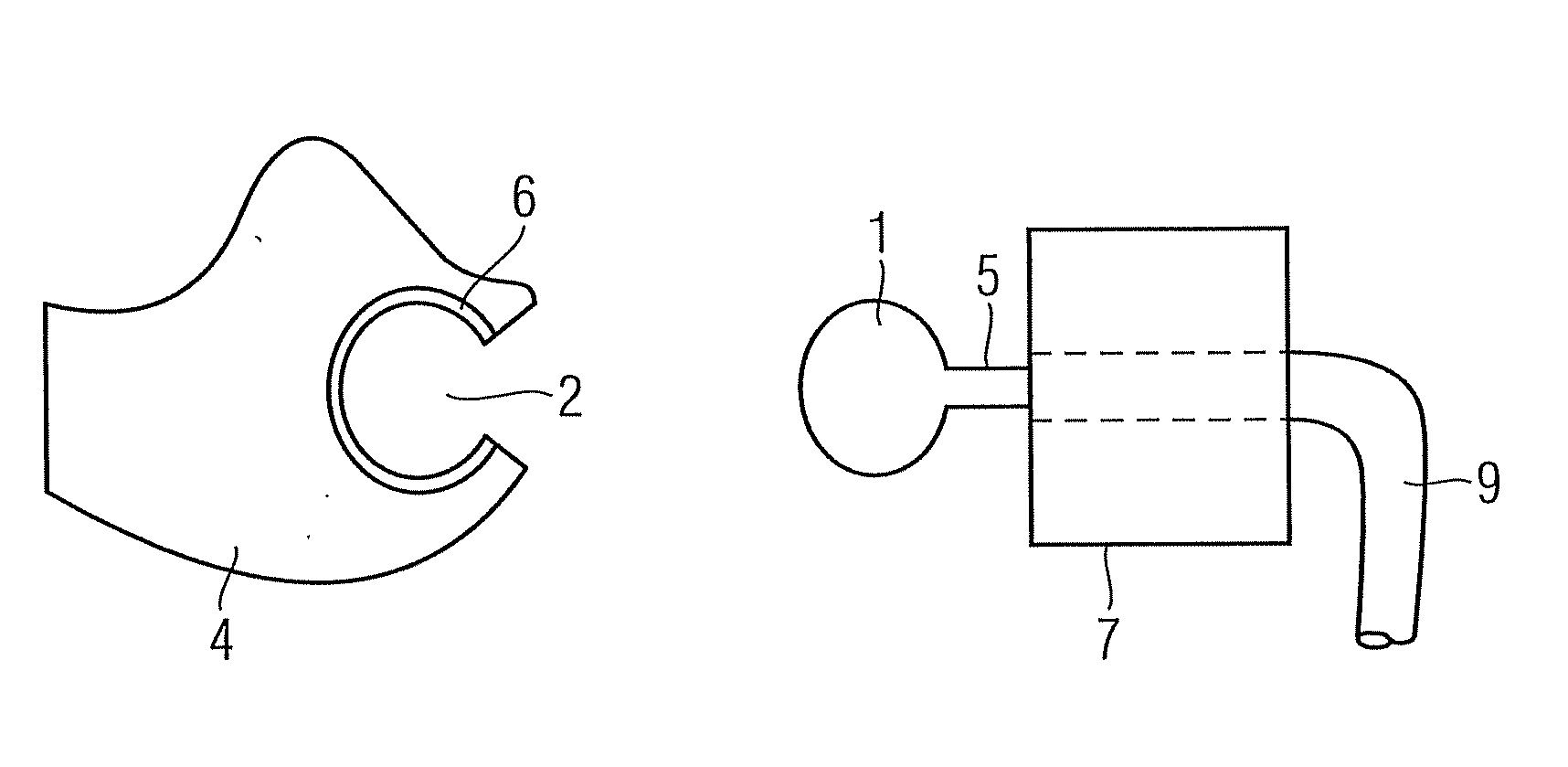
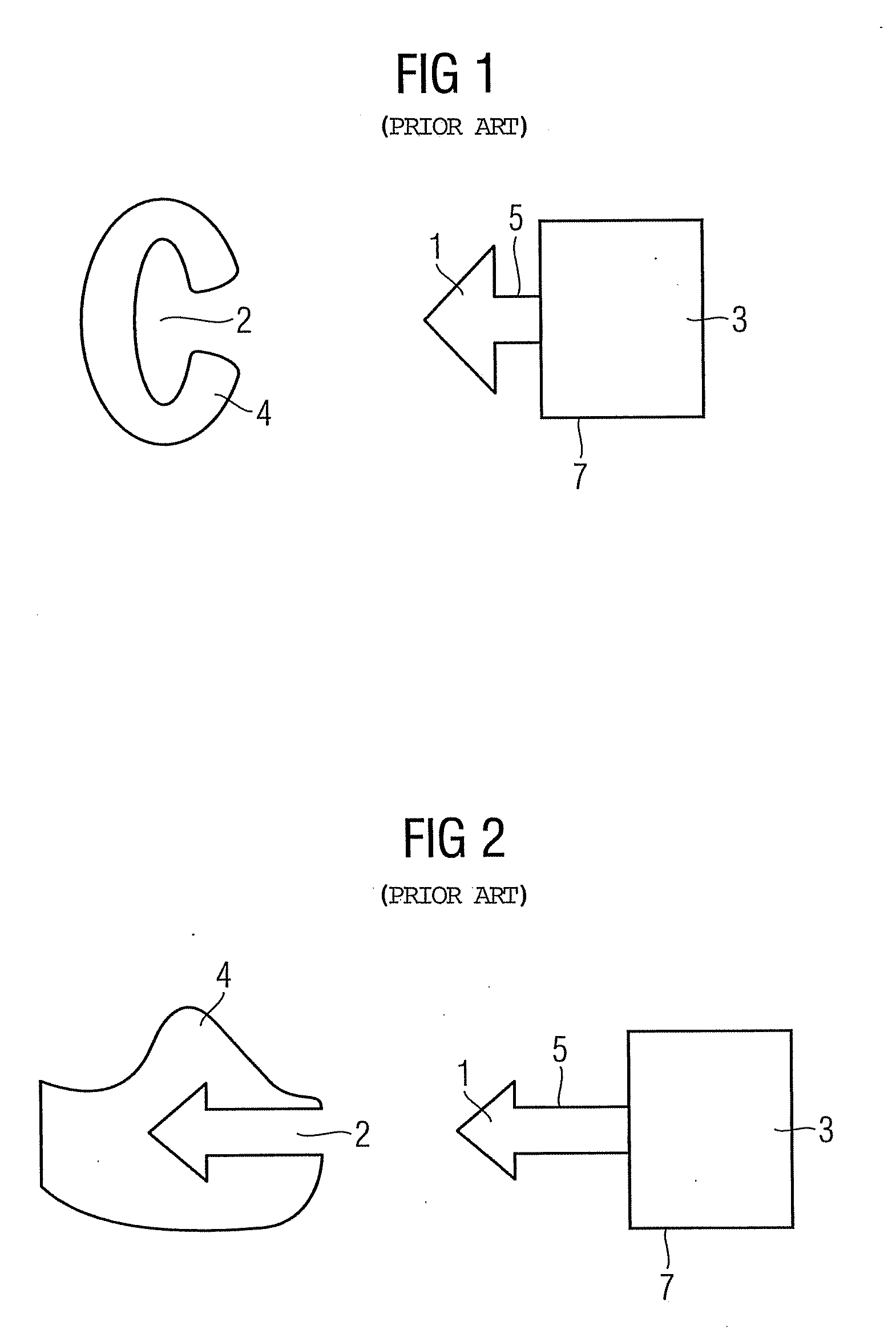
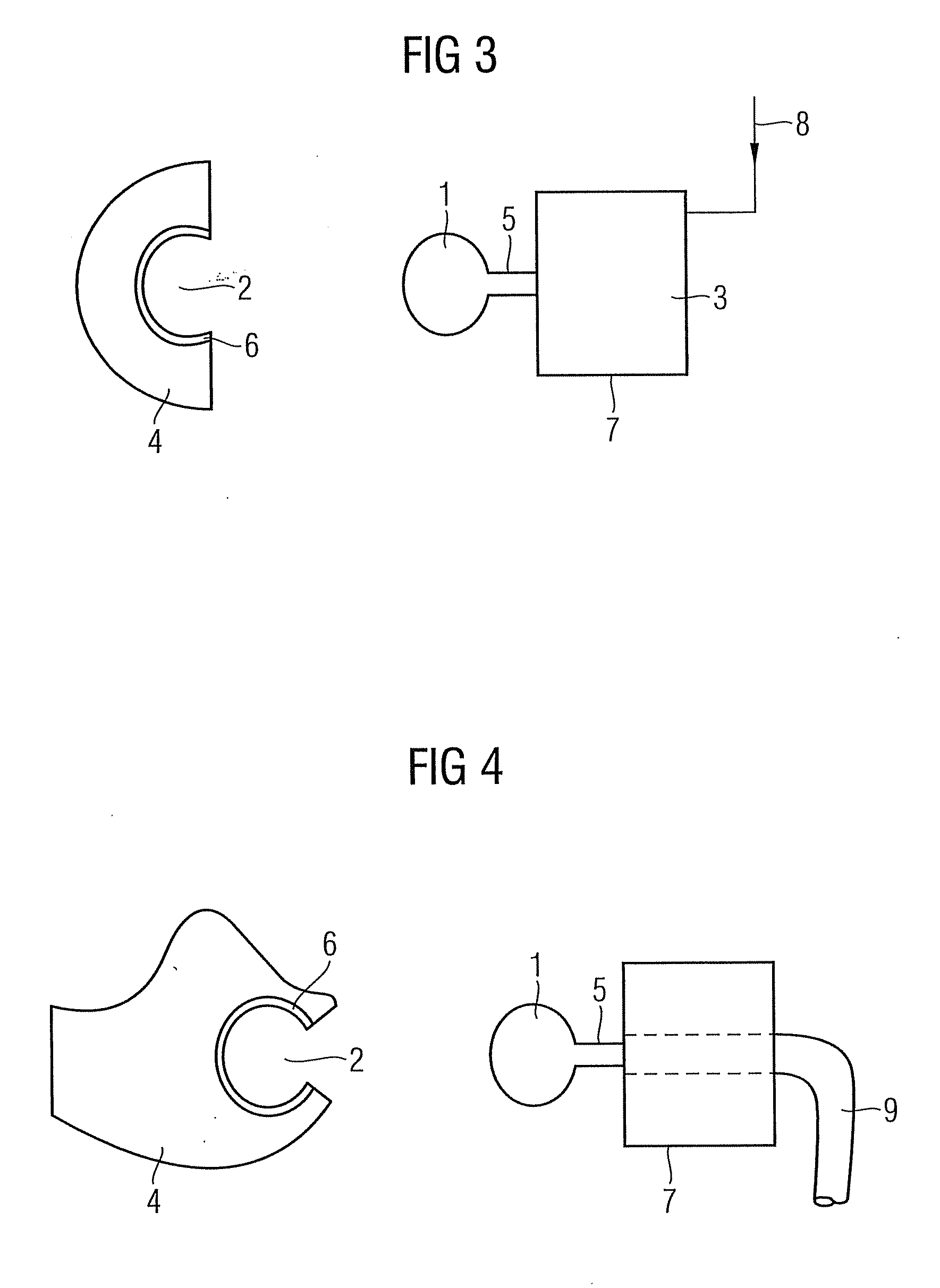
[0027]FIG. 3 shows a cross-section through an inventive ear mold 4 as well as a schematic representation of an inventive receiver 3 with a snap-on element 1. The ear mold 4 is made of a soft plastic, for instance silicon, and has a spherical opening 2, which is lined with a hard layer 6. The hard layer 6 makes the soft surface of the opening into a hard one, into which the snap-on element 1 of the receiver 3 can engage. This produces a robust, abrasion-free connection. The snap-on element 1 is likewise spherical and is fixedly connected to a housing 7 of the receiver 3 by means of a connecting element 5. The snap-on element 1 and connecting element 5 are preferably produced in one piece and from metal. The connecting element 5 is molded in a cylindrical fashion for instance. The receiver housing 7 is likewise made of metal. The snap-on element 1 is welded to the receiver housing for a secure hold. A hearing device wearer can thus easily connect the receiver 3 to a selected ear mold ...
PUM
 Login to View More
 Abstract
Description
Claims
Application Information
 Login to View More