
Self-retaining seal for undercut groove
a self-retaining seal and groove technology, applied in the direction of engine seals, engine components, mechanical equipment, etc., can solve the problems of requiring more assembly care and effort, affecting performance, and complicated reinstallation,
- Summary
- Abstract
- Description
- Claims
- Application Information
AI Technical Summary
Benefits of technology
Problems solved by technology
Method used
Image

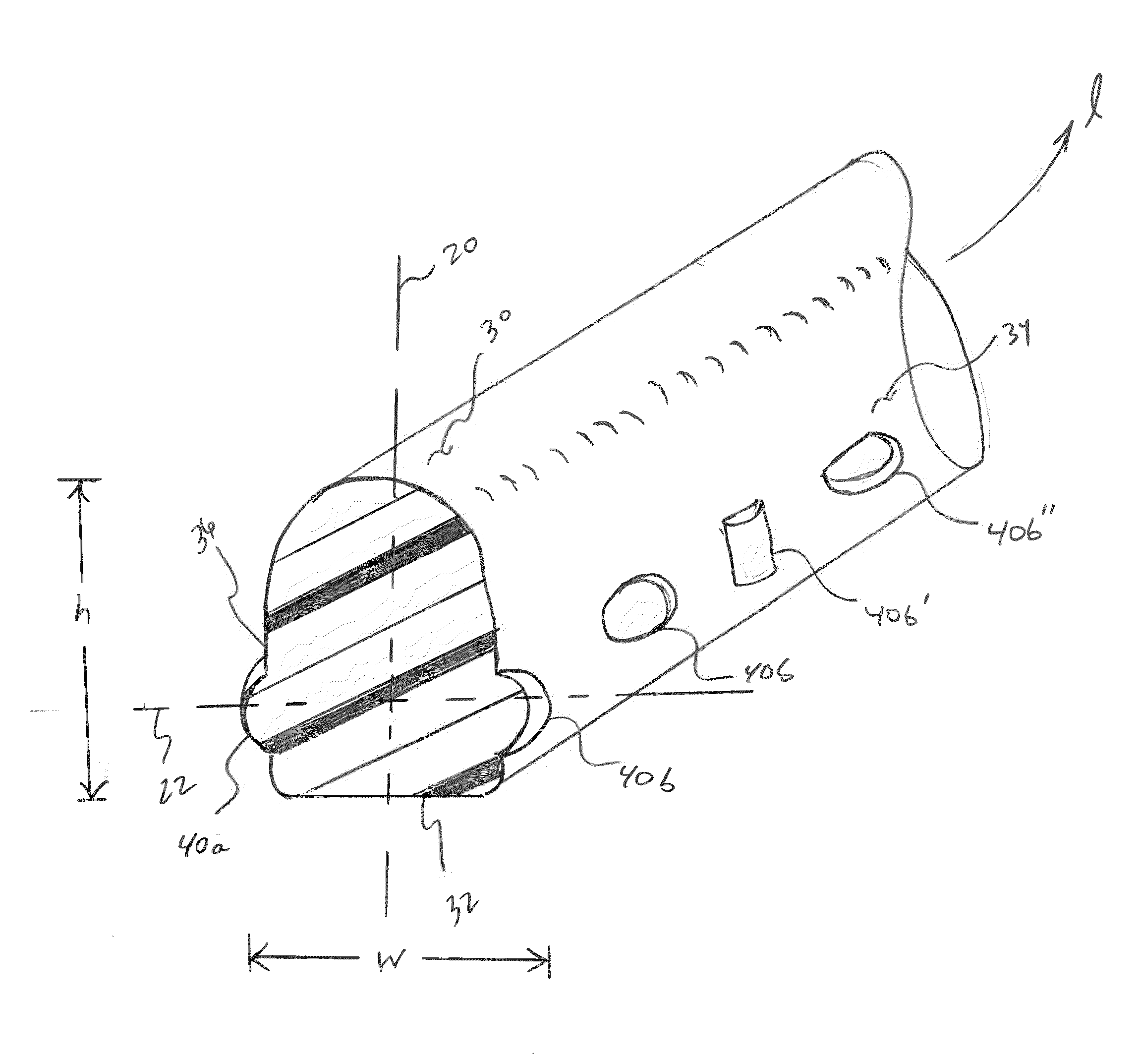
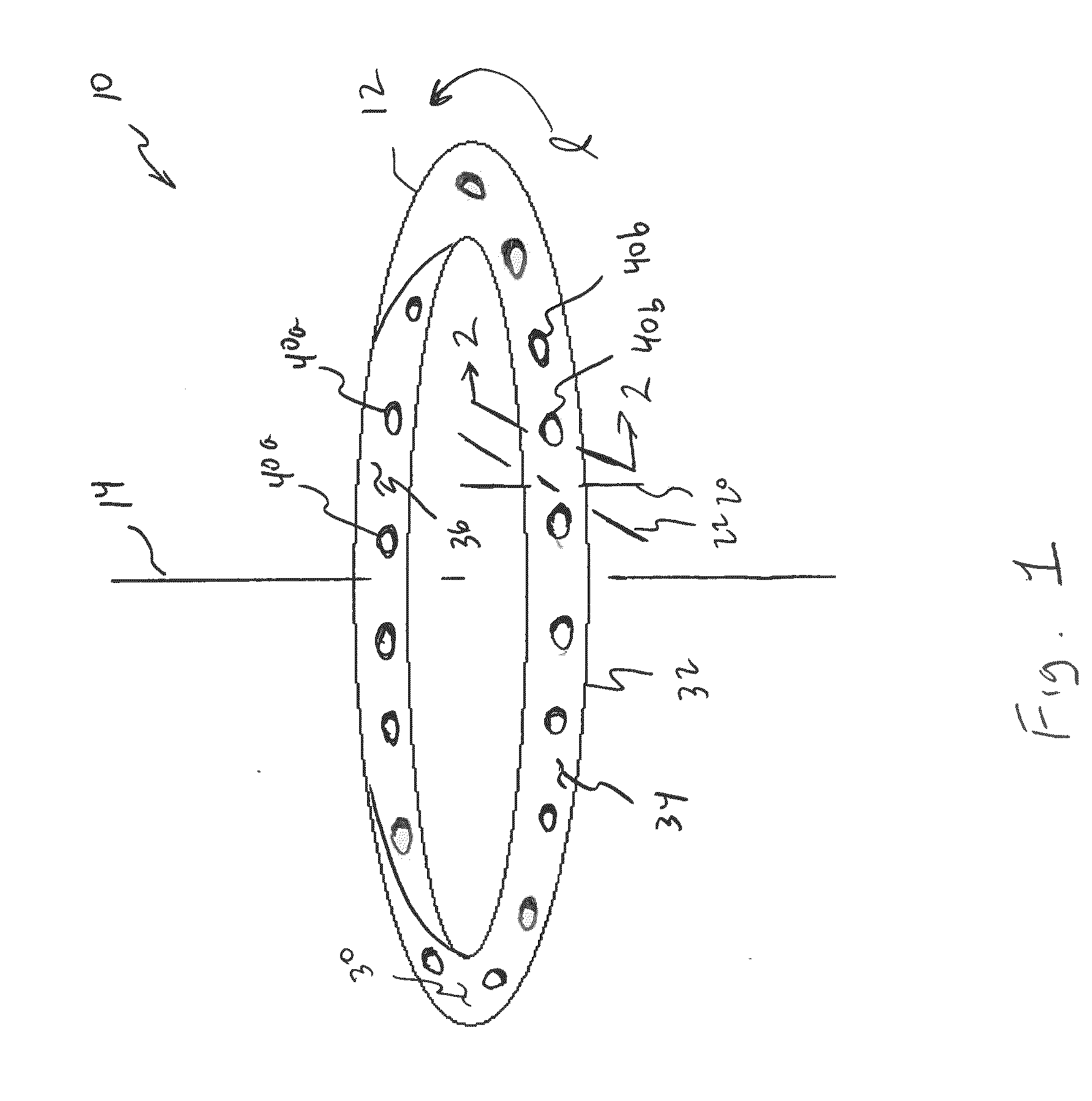
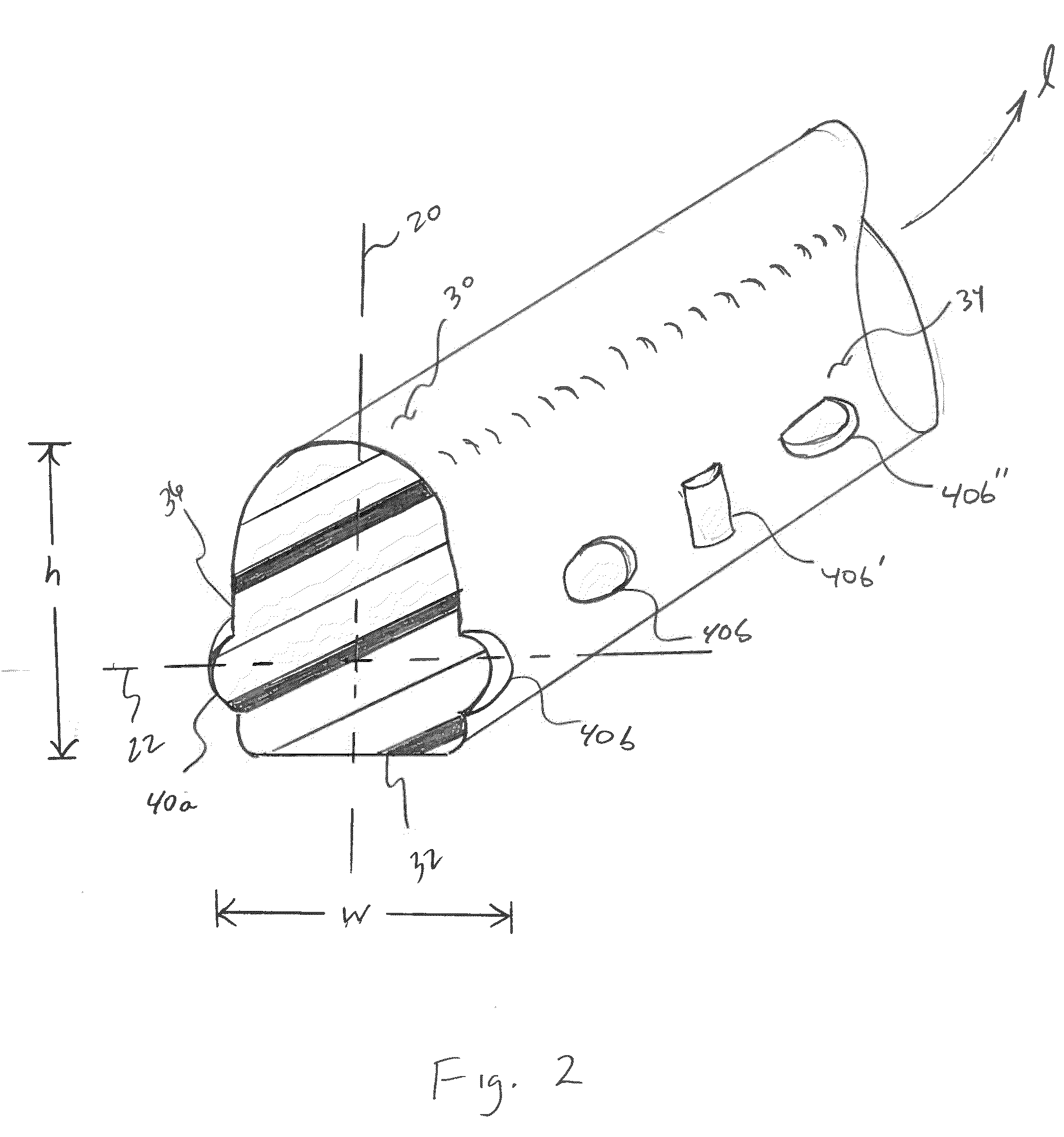
Examples
Embodiment Construction
[0018]Certain terminology may be employed in the following description for convenience rather than for any limiting purpose. For example, the terms “forward” and “rearward,”“front” and “rear,”“right” and “left,”“upper” and “lower,” and “top” and “bottom” designate directions in the drawings to which reference is made, with the terms “inward,”“inner,”“interior,” or “inboard” and “outward,”“outer,”“exterior,” or “outboard” referring, respectively, to directions toward and away from the center of the referenced element, the terms “radial” or “horizontal” and “axial” or “vertical” referring, respectively, to directions or planes which are perpendicular, in the case of radial or horizontal, or parallel, in the case of axial or vertical, to the longitudinal central axis of the referenced element, and the terms “downstream” and “upstream” referring, respectively, to directions in and opposite that of fluid flow. Terminology of similar import other than the words specifically mentioned abov...
PUM
 Login to View More
 Abstract
Description
Claims
Application Information
 Login to View More