
Building material having a fluorocarbon based capstock layer and process of manufacturing same with less dimensional distortion
a technology of fluorocarbon and building material, applied in the field of building material having a capstock, can solve the problems of few people achieving a realistic wood-grain appearance, affecting the appearance of the building material, so as to achieve the effect of realistic appearan
- Summary
- Abstract
- Description
- Claims
- Application Information
AI Technical Summary
Benefits of technology
Problems solved by technology
Method used
Image

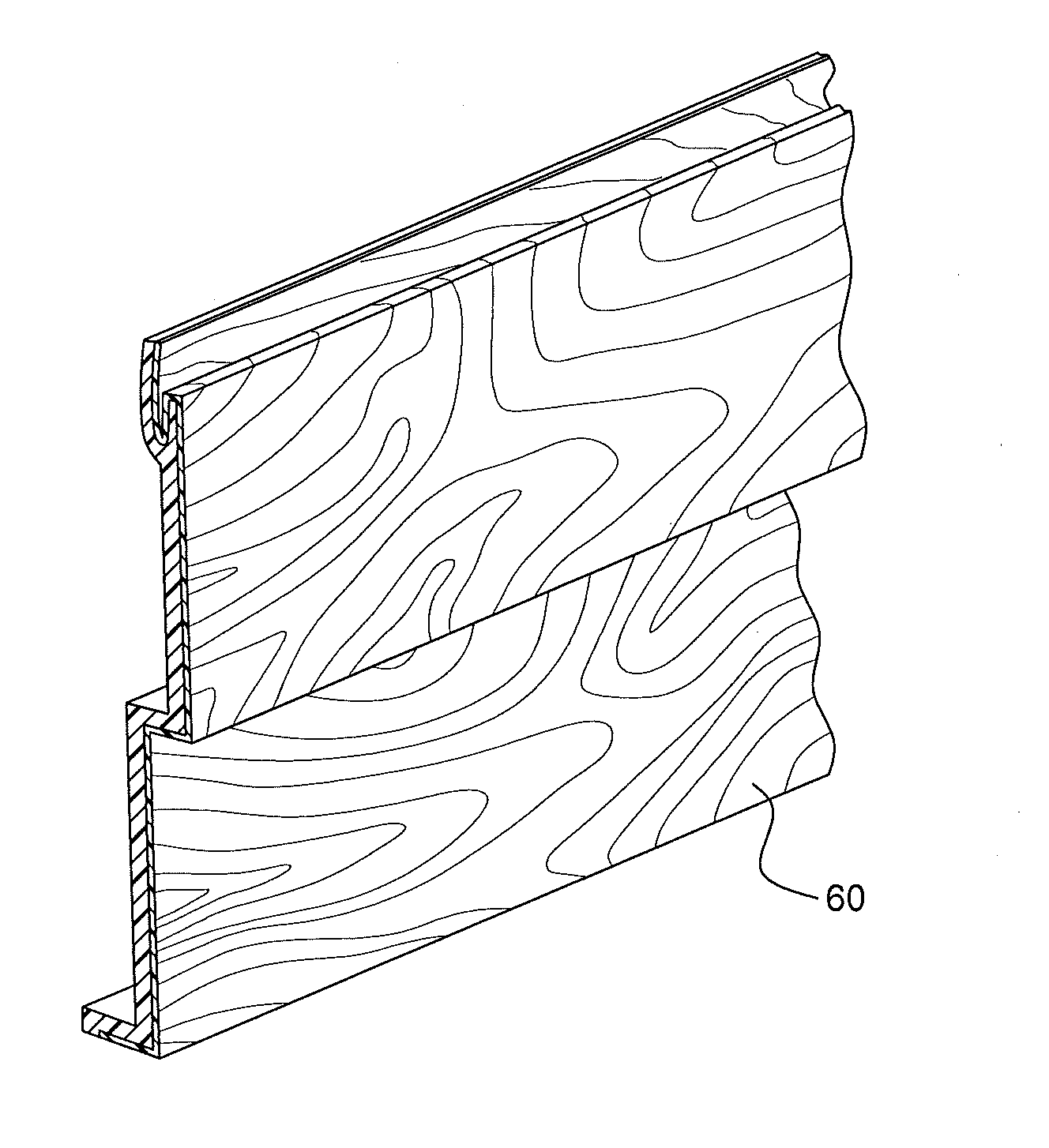
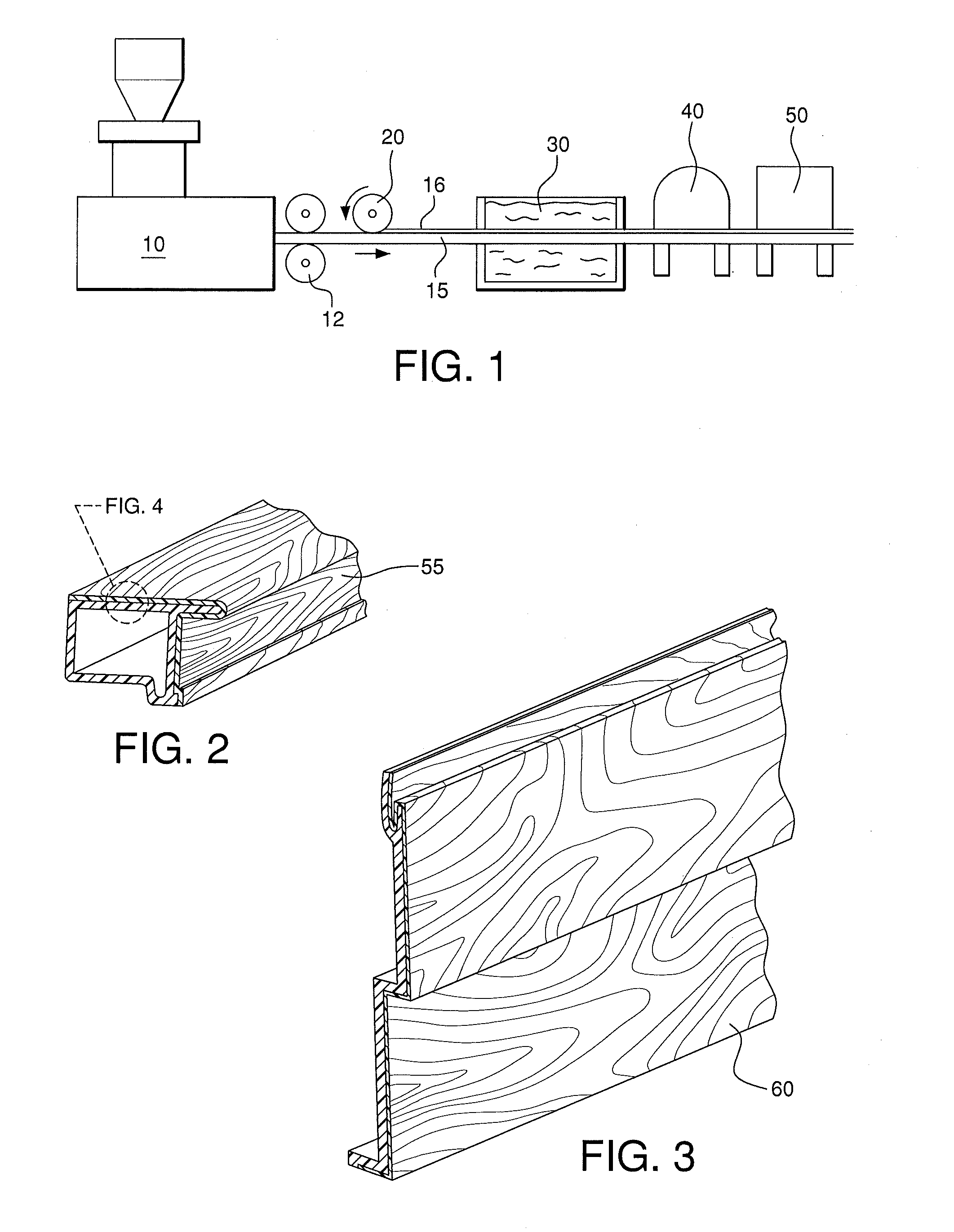
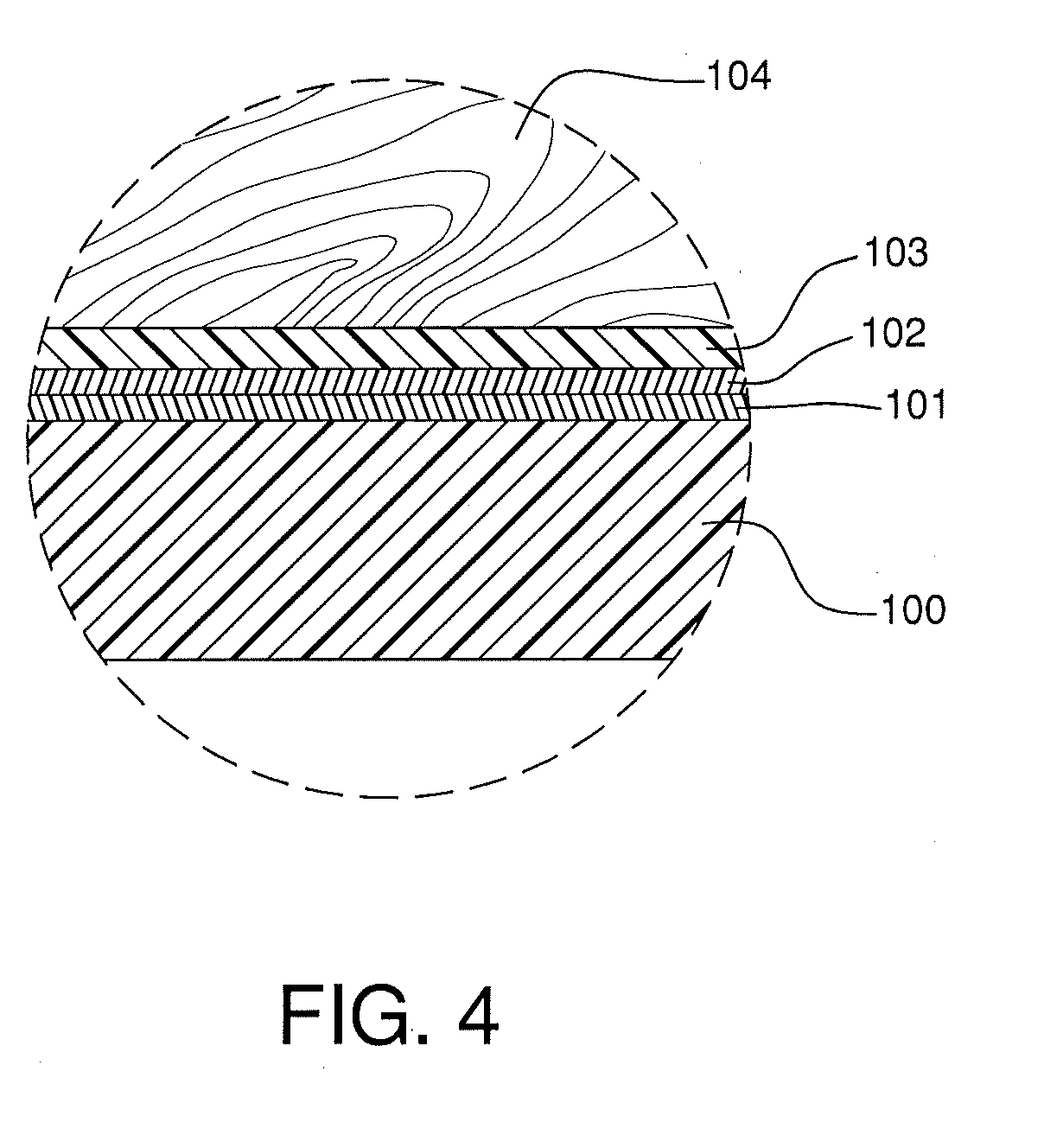
Examples
example
[0044]
TABLE 1Working example of Liquid Cap-StockIngredientSupplierphr *Substrate CompositionsPVC ResinCertainTeed100Methyl tin StabilizerArkema1.0Lubricant 1, Ca StearateBaerlocher1.4Lubricant 2, PE WaxHoneywell0.2~0.3Lubricant 3, Paraffin WaxHoneywell1.5Impact Modifier, AcrylicsRohm and Haas4.0Pigment, TiO2Kronos, DuPont0.8Filler, CaCO3Specialty Mineral10.0Capstock Selections1.Acrylonitrile-styrene-acrylateBASF100(ASA) based copolymer2.PVC Cap-StockCertainTeed100* phr = parts per hundred in reference to the PVC loading level
TABLE 2IngredientSupplierphrPVC Cap-Stock CompositionPVC ResinCertainTeed100Methyl tin stabilizerCrompton(chemtura)1.2Lubricant 1, Ca StearateBaerlocher1.7Lubricant 2, PE WaxHoneywell0.2Lubricant 3, Paraffin WaxHoneywell0.2Processing aid, AcrylicsRohm and Haas0.5Impact Modifier, AcrylicsRohm and Haas4.0Paint Selections1. Polyvinylidene Fluoride (PVDF)2. Kynar based copolymerKalcor100
TABLE 3Typical paint formulationAdd in order:wt. gramswet vol.wt. solidsvol. sol...
PUM
| Property | Measurement | Unit |
|---|---|---|
| thickness | aaaaa | aaaaa |
| temperature | aaaaa | aaaaa |
| temperature | aaaaa | aaaaa |
Abstract
Description
Claims
Application Information
 Login to View More