

Locking Assembly for a Drainage Catheter
a technology of locking mechanism and drainage catheter, which is applied in the direction of catheters, wound drains, suction devices, etc., can solve the problems of catheter being easily pulled out, device being somewhat uncomfortable for patients, and potential for severe infections
- Summary
- Abstract
- Description
- Claims
- Application Information
AI Technical Summary
Benefits of technology
Problems solved by technology
Method used
Image

Examples
Embodiment Construction
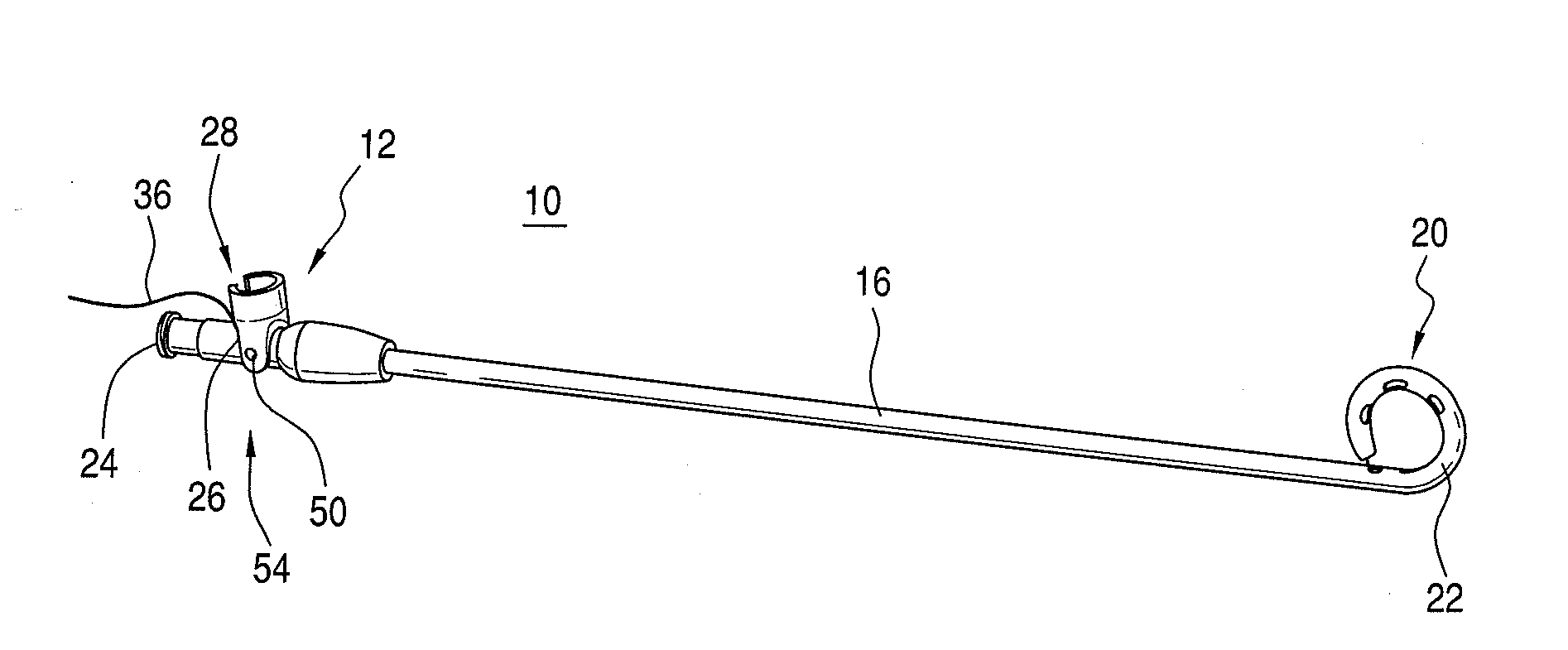
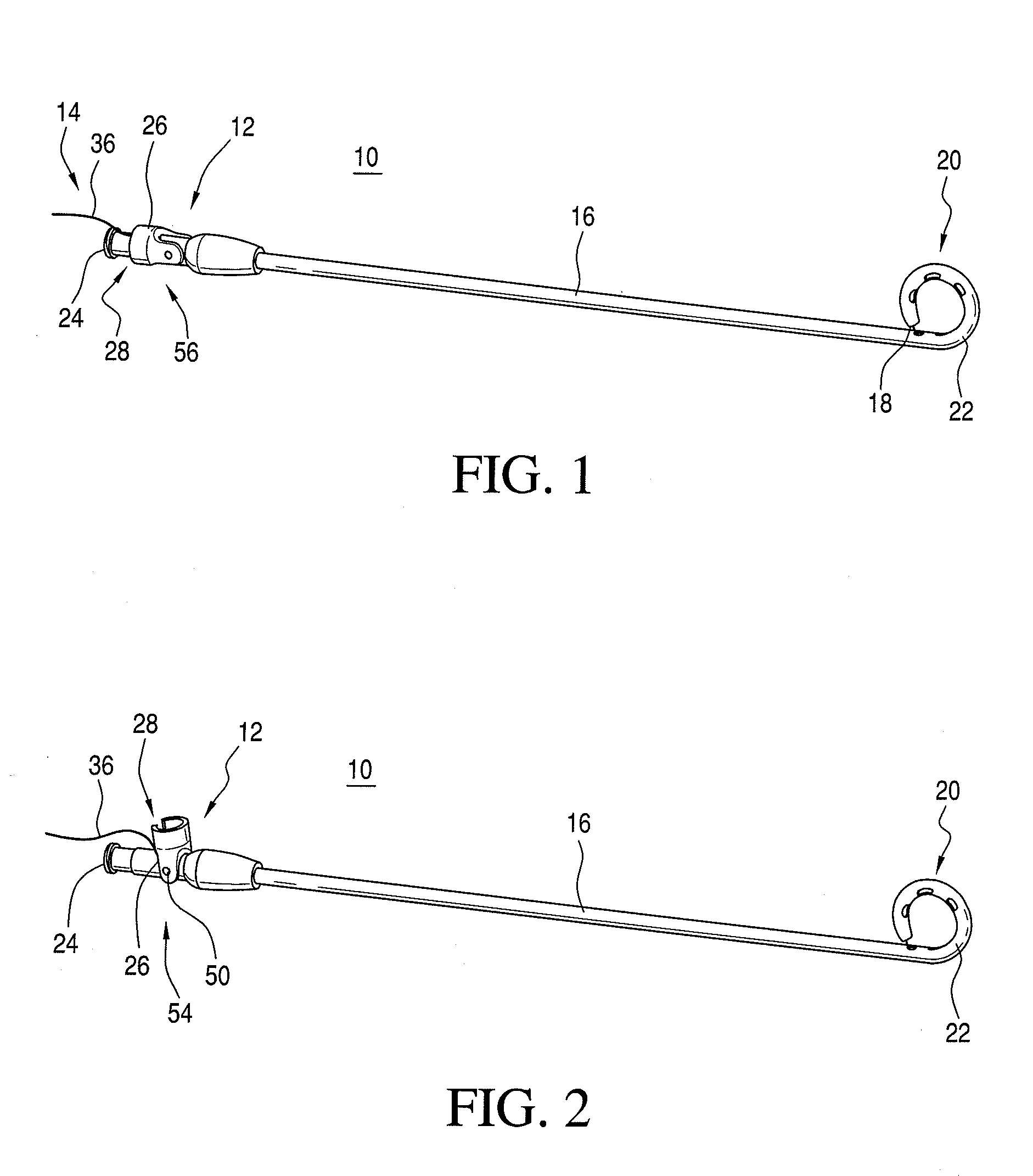
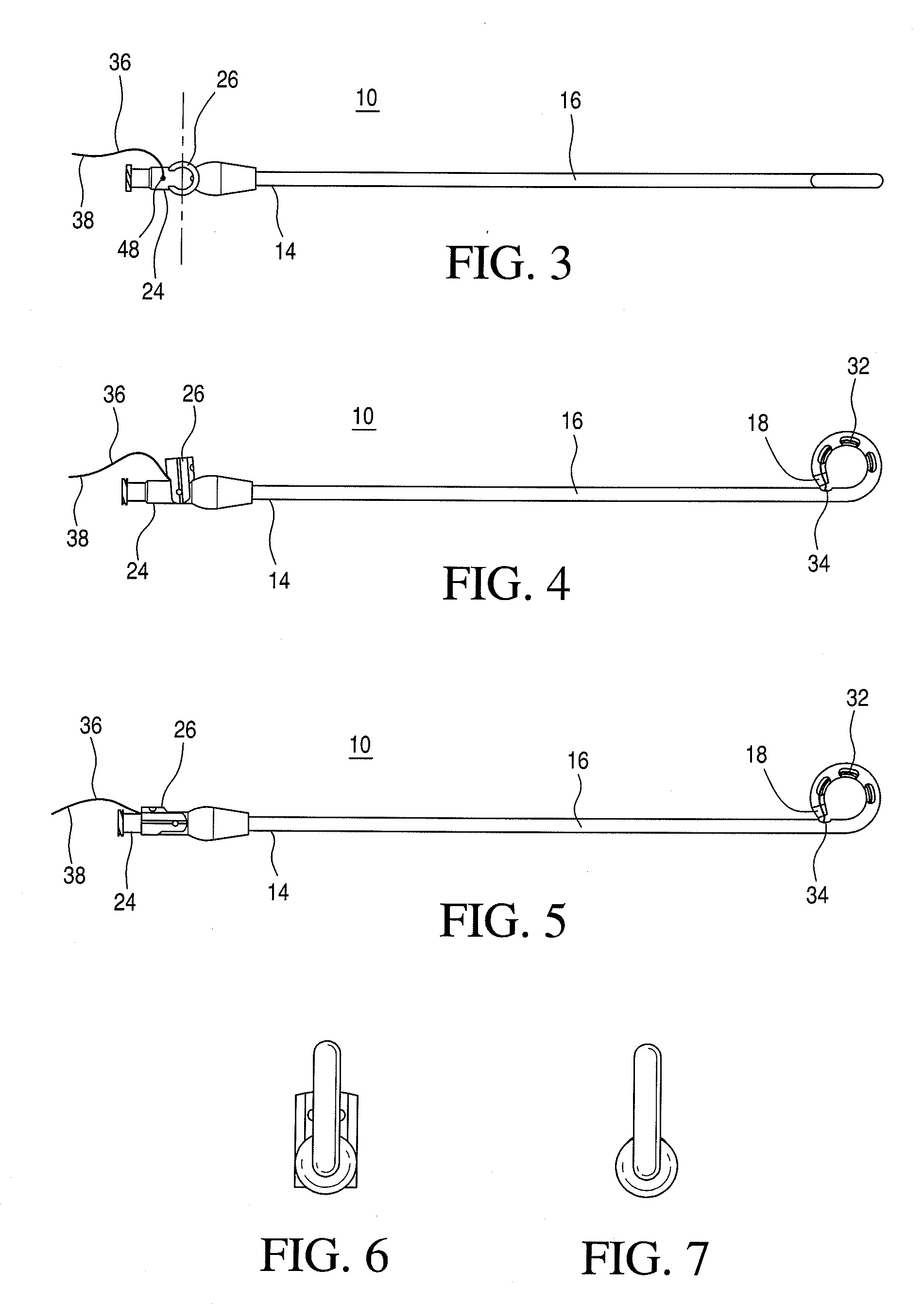
[0029]For the purposes of promoting an understanding of the principles of the invention, reference will now be made to the embodiments illustrated in the drawings, and specific language will be used to describe the same. It should nevertheless be understood that no limitation of the scope of the invention is thereby intended, such alterations and further modifications in the illustrated apparatus, and such further applications of the principles of the invention as illustrated therein being contemplated as would normally occur to one skilled in the art to which the invention relates.
[0030]In the following discussion, the terms “proximal” and “distal” will be used to describe the opposing axial ends of the drainage catheter, as well the opposing axial ends of component features of the catheter, such as the locking mechanism. The term “proximal” is used in its conventional sense to refer to the end of the catheter or component feature that is closest to the operator during use. The ter...
PUM
 Login to View More
 Abstract
Description
Claims
Application Information
 Login to View More