Method and apparatus for frequency domain reverse-time migration with source estimation

US20120051180A1Inactive Publication Date: 2012-03-01SEOUL NAT UNIV R&DB FOUND

Patent Information

Authority / Receiving Office
US · United States
Current Assignee / Owner
SEOUL NAT UNIV R&DB FOUND
Publication Date
2012-03-01
Estimated Expiration
Not applicable · inactive patent

Smart Images

  • Figure 1
    Figure 1
  • Figure 2
    Figure 2
  • Figure 3
    Figure 3
Patent Text Reader

Abstract

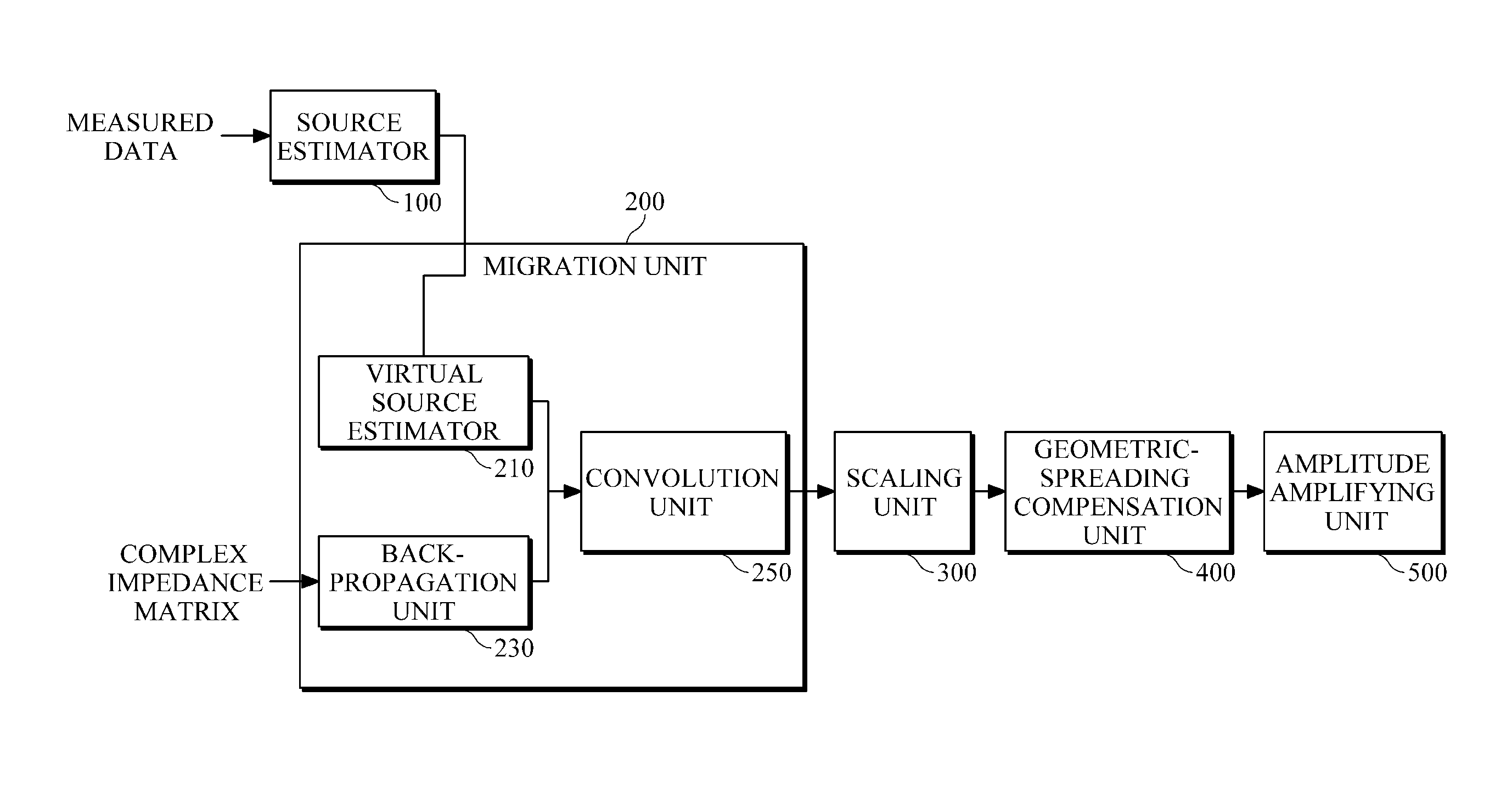
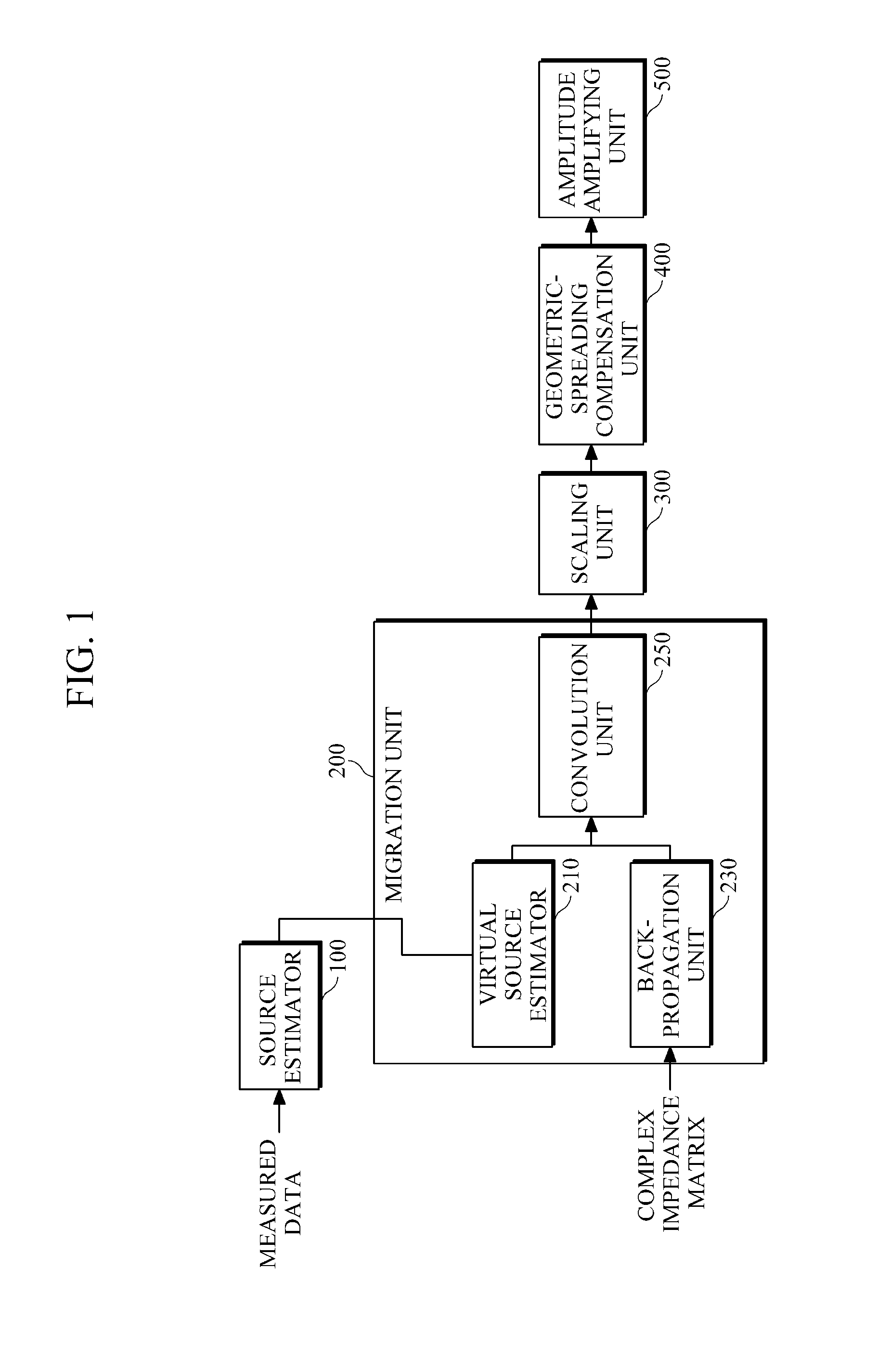
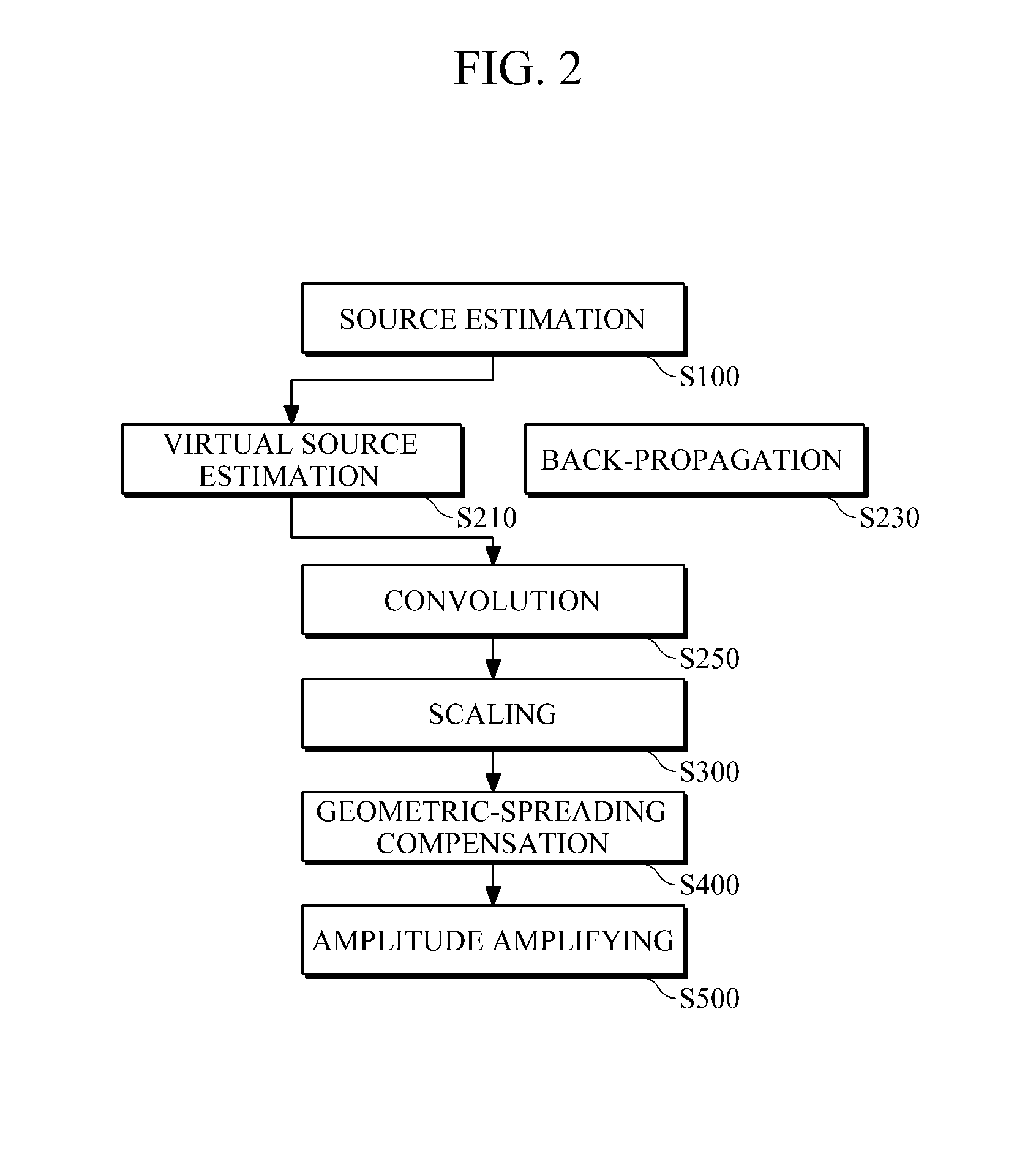
Provided is seismic imaging, particularly, reverse-time migration for generating a real subsurface image from modeling parameters calculated by waveform inversion, etc. A frequency-domain reverse-time migration apparatus includes: a source estimator configured to estimate sources from data measured on a plurality of receivers; and a migration unit configured to receive information about the sources estimated by the source estimator and to perform reverse-time migration in the frequency domain. The source estimator estimates the sources by updating an initial source vector using incremental changes according to a full Newton method. In more detail, the migration unit includes: a back-propagation unit configured to back-propagate the measured data; a virtual source estimator configured to estimate virtual sources from the sources estimated by the source estimator; and a convolution unit configured to convolve the back-propagated measured data with the virtual sources and to output the results of the convolution.
Need to check novelty before this filing date? Find Prior Art

Description

CROSS-REFERENCE TO RELATED APPLICATION

[0001] This application claims the benefit under 35 U.S.C. §119(a) of a Korean Patent Application No. 10-2010-0082161, filed on Aug. 24, 2010, the entire disclosure of which is incorporated herein by reference for all purposes.BACKGROUND

[0002] 1. Field

[0003] The following description relates to seismic imaging, and more particularly, to reverse-time migration for generating a real subsurface image from modeling parameters calculated by waveform inversion, etc.

[0004] 2. Description of the Related Art

[0005] A two-way migration method requires significantly more computational resources than a one-way migration method. However, since the two-way migration method has substantially no dip limitation as well as processing multiarrivals, the two-way migration method allows seismic imaging regardless of the inclination of a reflection surface and also can preserve the real amplitudes of seismic wavefields. For these reasons, the two-way migration method has b...

Claims

the structure of the environmentally friendly knitted fabric provided by the present invention; figure 2 Flow chart of the yarn wrapping machine for environmentally friendly knitted fabrics and storage devices; image 3 Is the parameter map of the yarn covering machine
Login to View More