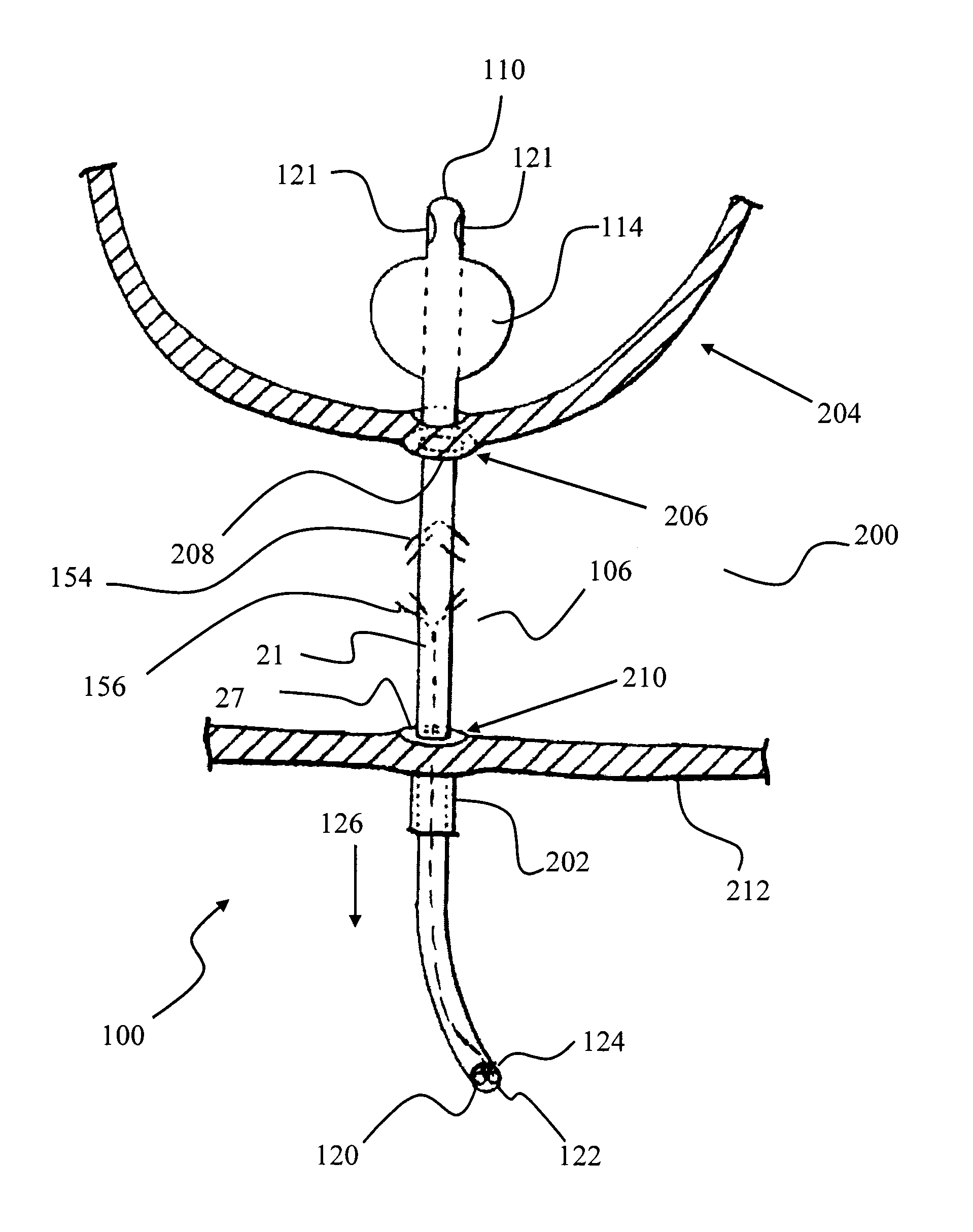
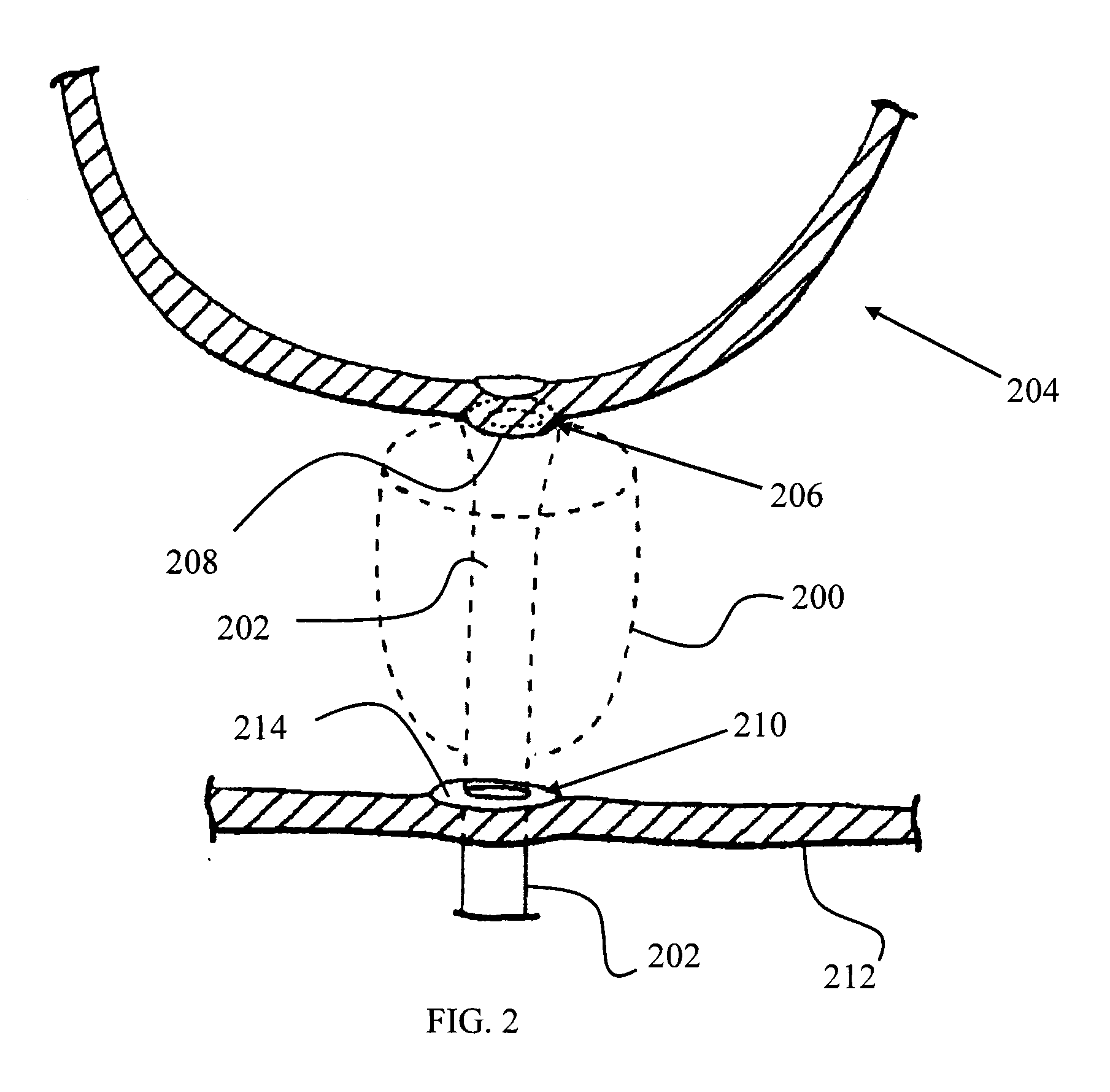
[0007]Embodiments of anastomosis devices of the invention, in addition to the tissue approximating structure, can include features and structures that function to drain the bladder, e.g., through a drain lumen, while at the same time functioning as a tissue approximating structure that causes contact between severed tissue to allow the severed tissues to heal together. Methods of the invention can use such an anastomosis device, including both a draining function and a tissue approximating function, to accomplish healing of the anastomosis, without sutures, and draining of the bladder, with the single anastomosis device and preferably without removing or replacing the device during or after the procedure until healing is complete. The anastomosis device can be installed during or after a radical
prostate removal procedure, and can remain installed with the bladder-draining function and the tissue-approximating function in effect until the anastomosis is completely healed and the severed tissue, e.g., bladder and
urethra, are re-connected. Thus, an
advantage associated with inventive methods and devices can be that the anastomosis device performs dual functions when installed during and following an anastomosis procedure, of draining the bladder and functioning as a tissue approximating structure, at the same time.
[0008]Also advantageously, inventive methods and devices avoid the need to use sutures to connect severed tissue such as a bladder neck and urethral stump. The ability to avoid sutures provides very significant advantages of avoiding the potential for damage to surrounding tissues and nerves that can be caused by installation of sutures using a needle. Such damage can include, for example, damage to ureters at the bladder or damage to the
sphincter or nerves located in the perineal floor. Damage to any of these tissues has the potential to cause incontinence or impotency. Additionally, installing sutures is a difficult and technique-sensitive process that must be performed in a
confined space and that would be avoided if possible based on other alternatives. Thus, the invention offers the very significant
advantage of eliminating the need to use sutures to re-attach severed tissues, and the attendant potential damage to those sensitive proximal tissues and nerves and the possibility of incontinence or impotency.
[0013]Still other embodiments can include one or more catheters configured to prevent the formation of blood clots and, thereby, improving the flow of
urine out of the catheter. The catheter can include a
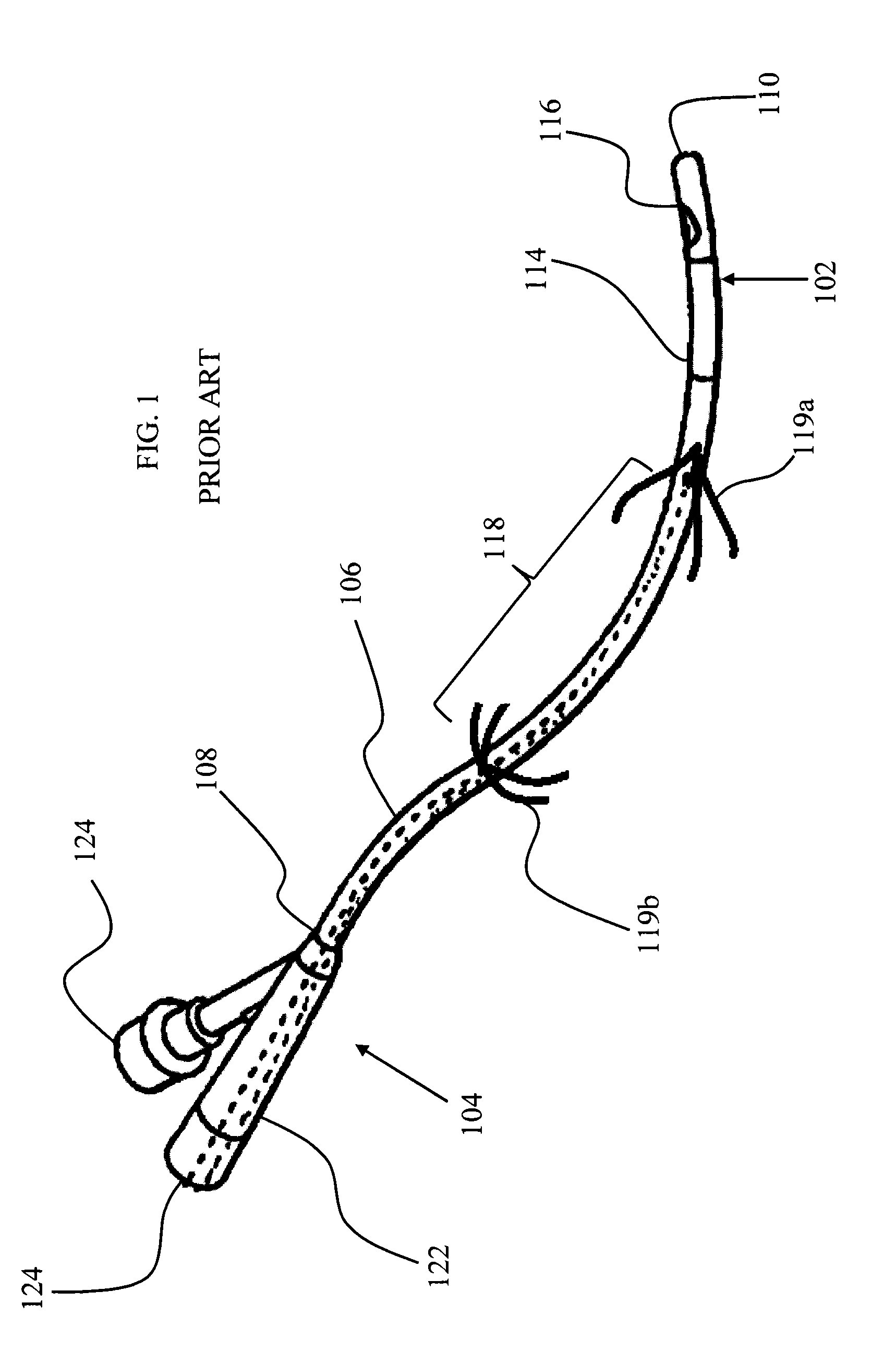
stent-like or like drainage feature provided
proximate the distal tip and catheter
balloon. The drainage feature can be constructed similar to Urolume™, with a
silicone insert molded at both ends of the feature for a soft tip to facilitate
insertion and bonding to other components.
[0014]The drainage feature can be inserted in a compressed state and then actuated or elongated to lengthen the feature. This will take the tip from a
solid tube state to a Nitinol wire state with expanded holes or gaps for drainage. Alternatively, the drainage feature can be inserted in the elongated state. By pulling or otherwise activating the feature (e.g., with expansion of bladder tines), the feature is pulled inward or shorter such that it generally bubbles or expands out in the middle. This will give the feature a bulged profile to provide expanded gaps to make it more difficult for blood clots to fully cover and plug the tip.
[0015]In various embodiments, the expandable
balloon proximate or at the
distal portion of the device can be molded with a base portion that is measurably thicker than the other portions of the balloon. This will assist in preventing
puncturing or other breaches of the region of the balloon coming into contact with sharp devices, such as the device tines. The shape of the balloon can be defined to accommodate the thicker base.
[0016]Various embodiments of the catheter can include a removable or replaceable lumen to provide reestablishment and maintenance of the
urine flow through the device in the event the original or previously provided catheter lumen becomes blocked or obstructed. A removable and replaceable lumen allows for correction of any blockage without disturbing the anastomotic site.


 Login to View More
  Login to View More