

Method of manufacturing collated t-nuts
a technology of collated t-nuts and collated t-nuts, which is applied in the field of collated t-nuts, can solve the problems of affecting the adhesive properties of tape, t-nuts can easily become detached or ‘unstuck’ from tape, and the taped t-nuts on the coil do not withstand impact well, so as to facilitate the installation process of the fastener
Patent Information
- Authority / Receiving Office
- US · United States
- Patent Type
- Applications(United States)
- Current Assignee / Owner
- Publication Date
- 2012-07-19
- Estimated Expiration
- Not applicable · inactive patent
Smart Images
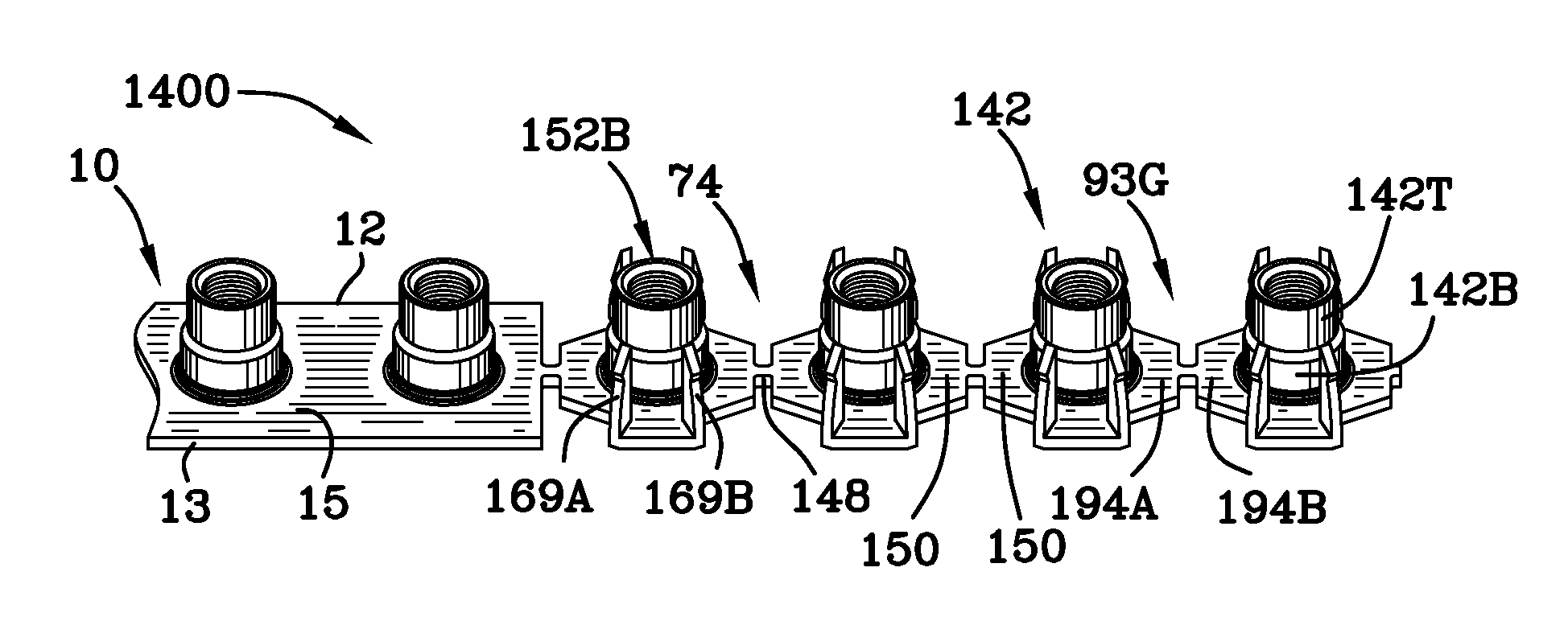
Figure 1 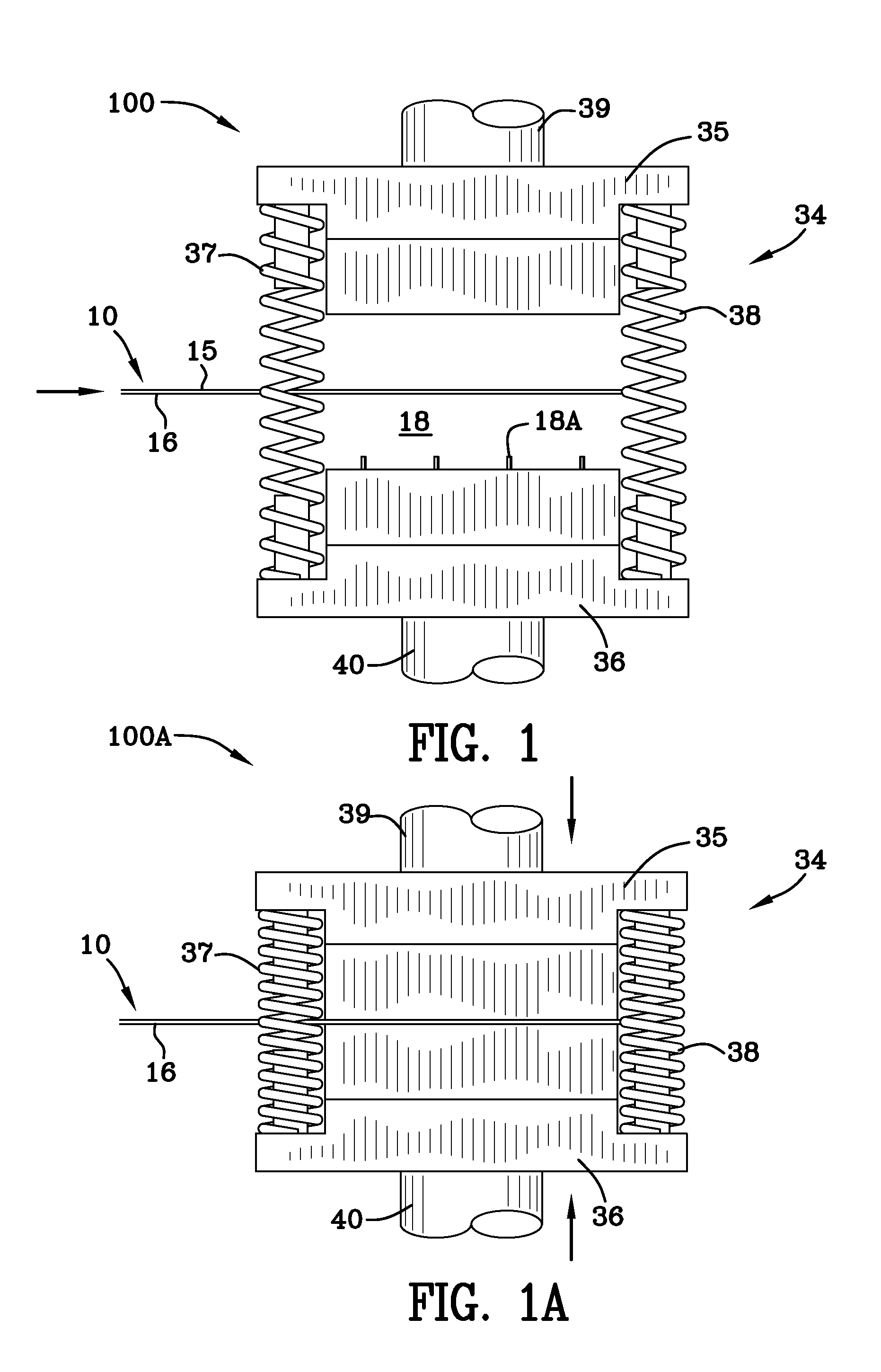
Figure 2 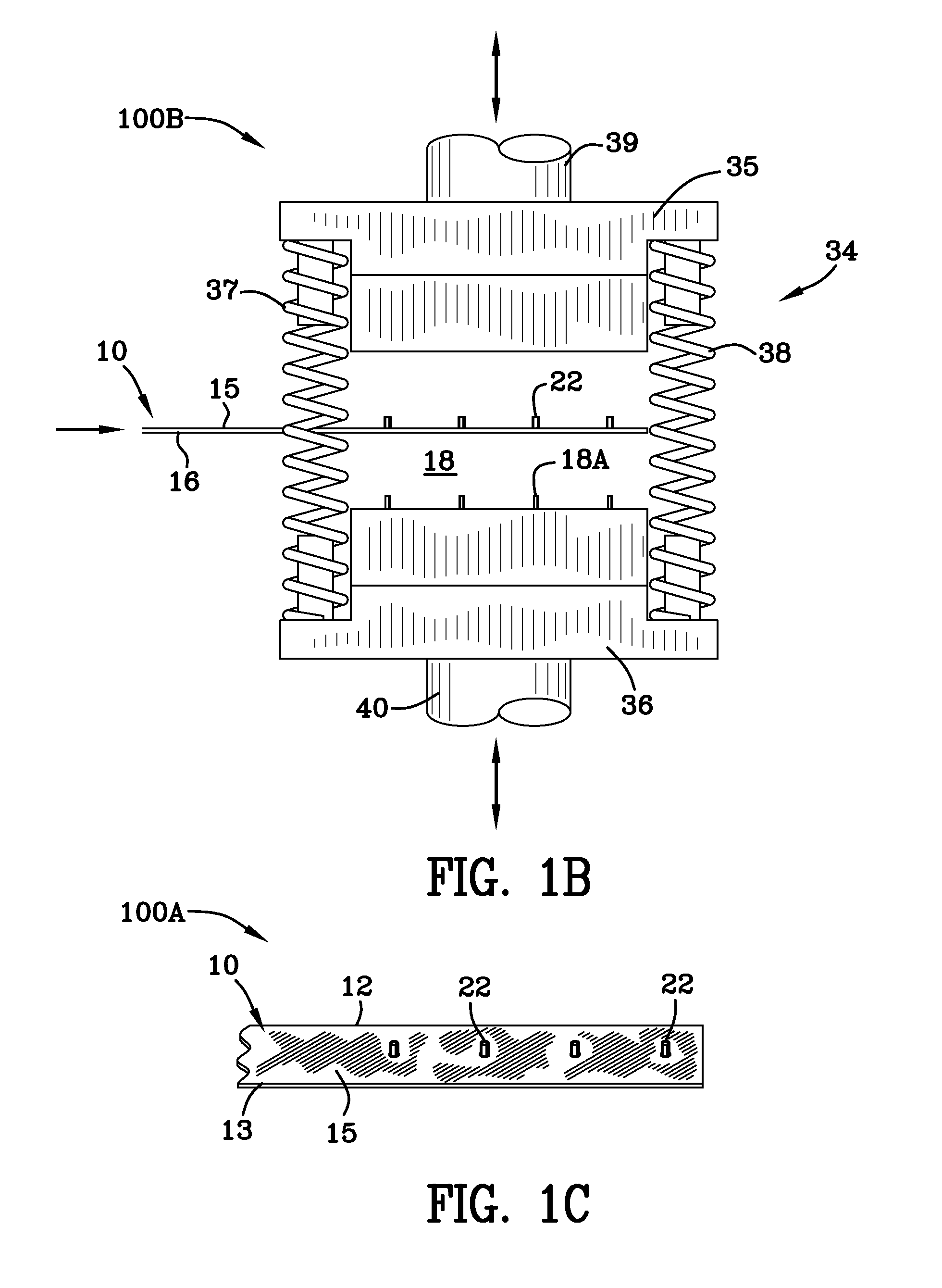
Figure 3
Abstract
Description
[0001] This application claims priority to and the benefit of copending United States Provisional Patent Application Ser. No. 61 / 433,300 filed Jan. 17, 2011. United States Provisional Patent Application Ser. No. 61 / 433,300 filed Jan. 17, 2011 is incorporated in its entirety by reference hereto.FIELD OF INVENTION
[0002] The invention is in the field of fasteners.BACKGROUND OF THE INVENTION
[0003] Existing collated fasteners are manufactured and then collated using a secondary process. One process uses a progressive die method to cut the T-Nuts off from the steel or stainless steel strip and then tap the threads in a secondary process. The secondary process commonly uses glue to hold the fasteners together for later dispensation. Fasteners which are glued together include staples, nails, screws, clips, etc.
[0004] One known method for collating T-Nuts includes adhering the T-Nuts to tape and rolling them into a coil during a secondary operation. FIG. 13 is a view 1300 illustrating a prior ar...
Examples
Embodiment Construction
[0120]Reference may be had to FIG. 4 for a quick understanding of the continuous strip of collated T-Nuts of the invention. The continuous strip comprises T-Nuts integrally connected together and spaced apart for later dispensation in a substrate. The integrally connected T-Nuts are formed on and from a continuous steel strip 10. The strip shown in FIG. 4 has been identified by the reference numeral 33. Put another way, reference numeral 33 identifies one example of the completed product, namely, a strip of collated T-Nuts with flanges and parts linked together by carry tabs and frangible portions. As stated previously, the carry tabs may be frangible or portions of the carry tabs may be frangible. The strip of deformable metal material 10 (FIG. 1) has first and second side portions 12, 13 and top and bottom portions 15, 16 and is fed into a first die station 18 (FIGS. 1, 1A, 1B) which is housed in press 34. FIGS. 1, 1A and 1B illustrate a die press at a first die station 18 in thre...