
Novel vaccine that targets tumor vessels as an efficient tool in tumor therapy
a tumor and tumor technology, applied in the field of new tumor vaccines, can solve the problems of monoclonal antibodies in mice, inability to obtain active tumor vaccines, and inconvenient use, and achieve the effect of convenient, efficient and cost-effective treatmen
- Summary
- Abstract
- Description
- Claims
- Application Information
AI Technical Summary
Benefits of technology
Problems solved by technology
Method used
Image

Examples
example
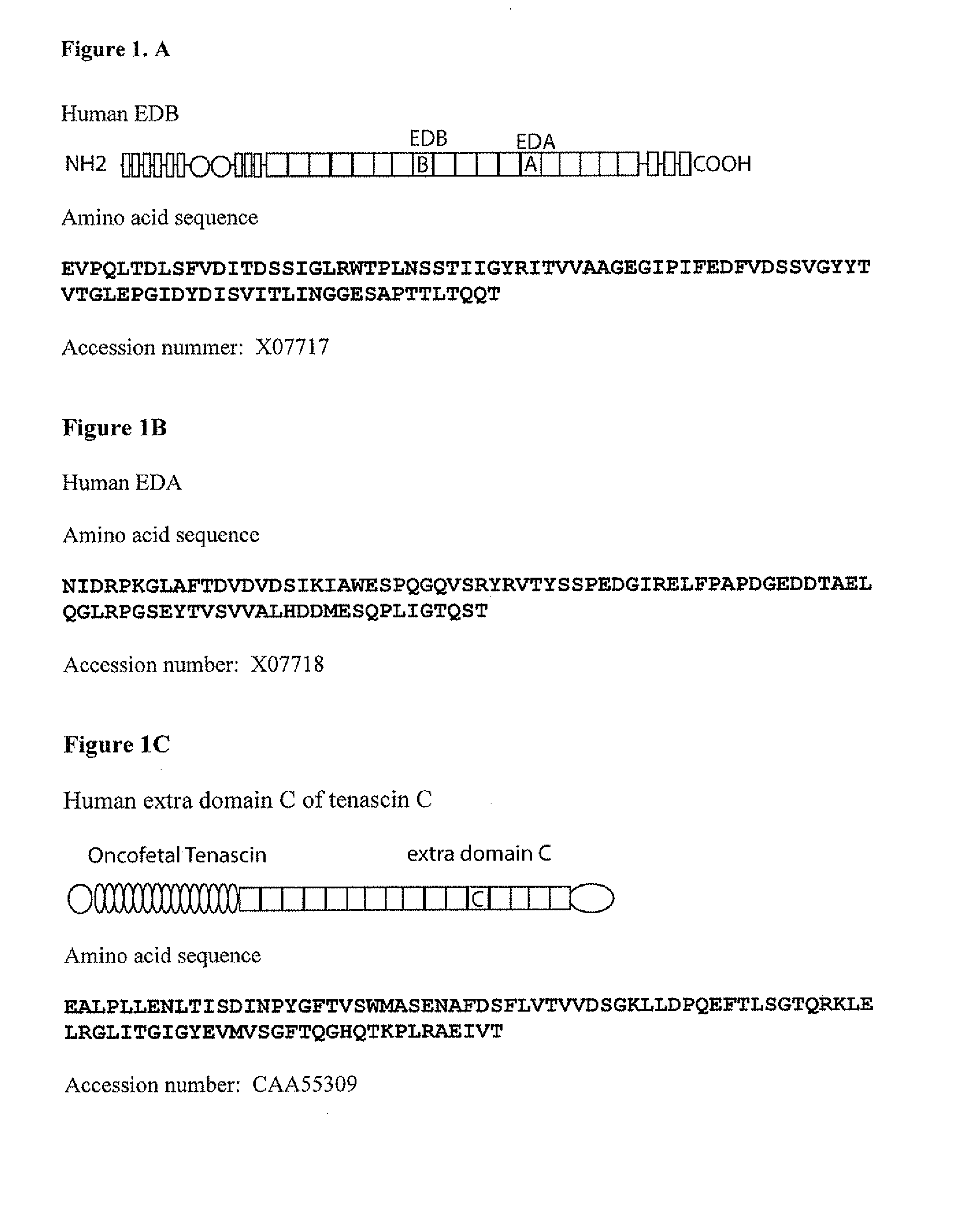
[0024]To test the efficacy of the invention a fusion protein between the 91 amino acid long extra-cellular domain B (EDB) of human and mouse fibronectin and a bacterial antigen of a size of approximately 10 kD, the E. coli thioredoxin was used as vaccine antigen to study the effect in an animal model. The EDB domain is very highly conserved and identical in almost in all placental mammals studied. This fusion protein was produced in a prokaryotic host to almost homogeneity (FIG. 2). The thioredoxin-EDB-fusion protein was then injected in mice together with an adjuvant. After three weeks the mice received a booster dose of the vaccine and after five weeks of treatment serum from these animals were tested for the amount of anti-EDB antibodies produced. As can be seen from FIG. 3 all animals showed high titers of anti-EDB antibodies whereas all the controls were negative. This shows that the vaccine has the capacity to induce production of substantial amounts of anti-EDB antibodies in ...
PUM
 Login to View More
 Abstract
Description
Claims
Application Information
 Login to View More