
Modified Hydrocyanine Dyes for the Detection of Reactive Oxygen Species
a technology of reactive oxygen species and hydrocyanine dye, which is applied in the field of probes, can solve the problems of low dhe emission wavelength, inability to detect reactive oxygen species, and inability to produce reactive oxygen species (ros) in cells,
- Summary
- Abstract
- Description
- Claims
- Application Information
AI Technical Summary
Benefits of technology
Problems solved by technology
Method used
Image

Examples
example 1
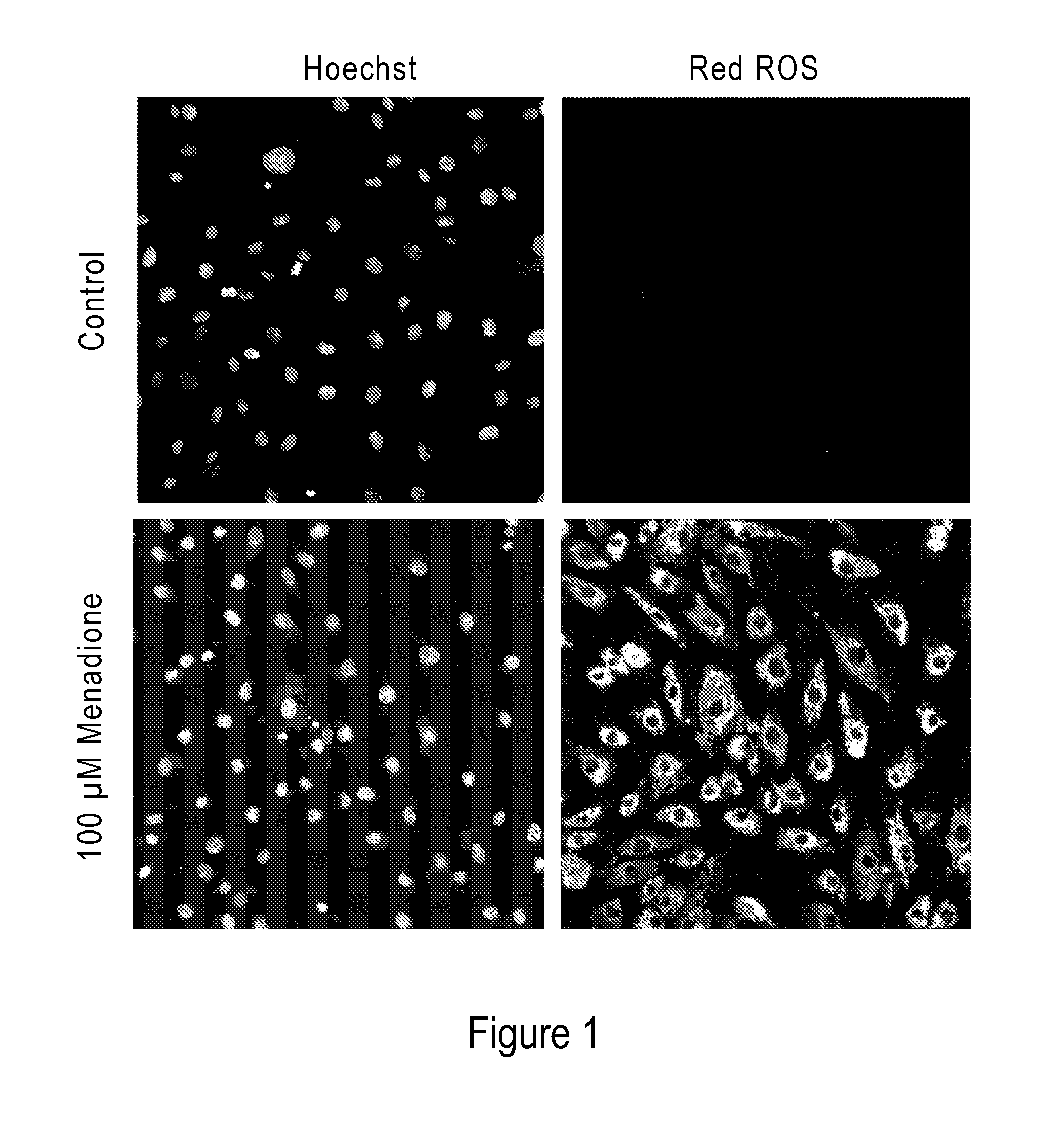
[0154]Bovine pulmonary arterial endothelial (BPAE) cells were grown at a density of 7500 cells / well overnight, treated with or without 100 μM menadione for 1 h and then stained with 5 μM Red ROS probe for 30 min. The cells were then washed 3 times with 1×PBS and imaged using a Thermo Scientific Cellomics ArrayScan® VTI HCS Reader (Thermo Fisher Scientific, Pittsburgh, Pa.) after staining with a Hoechst nuclear dye. The menadione-treated cells showed a positive response because of reactivity of the Red ROS probe to reactive oxygen species produced in the cell (see, FIG. 1).
example 2
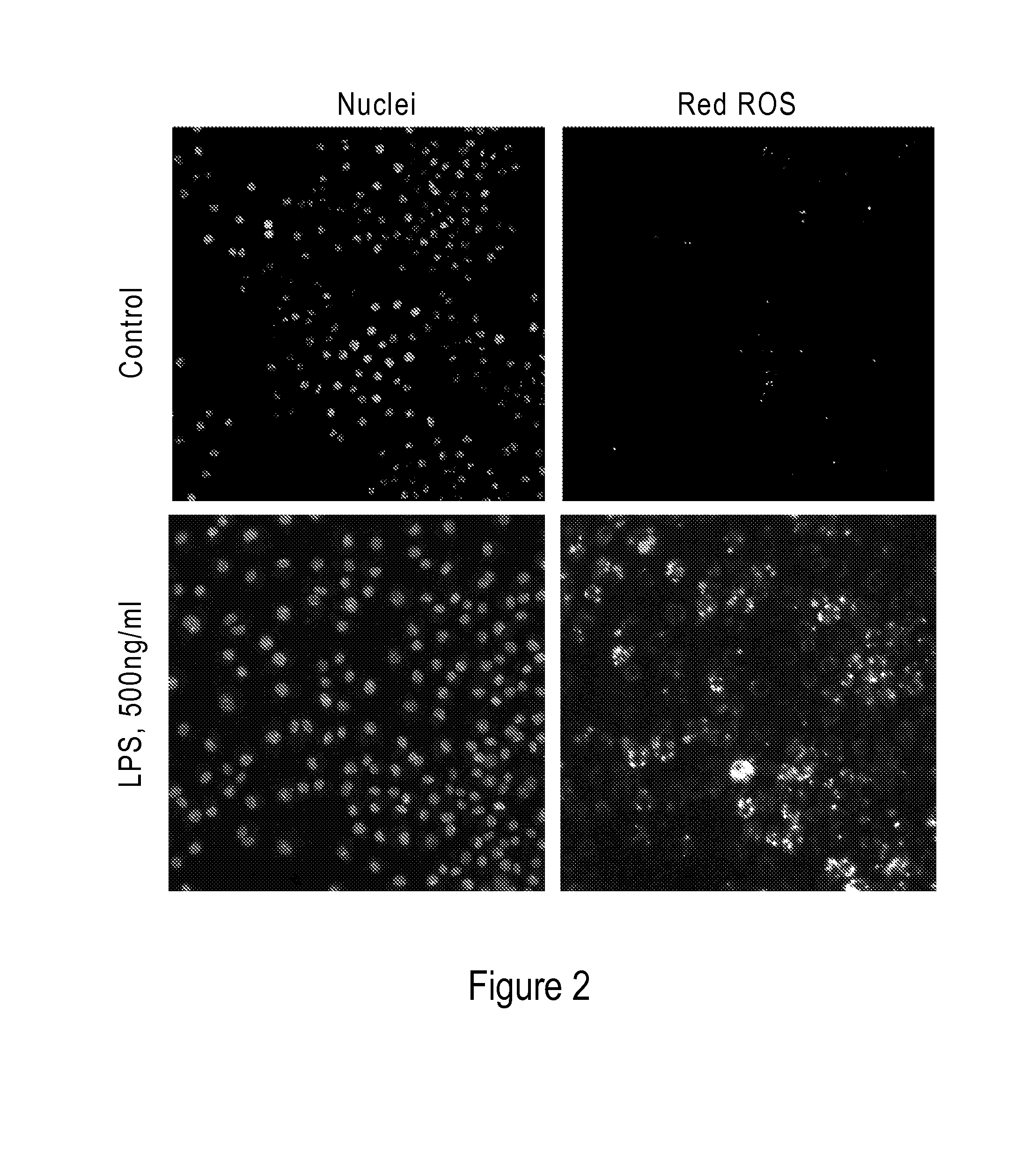
[0155]RAW macrophages were plated on a 96-well plate at a density of 10,000 cells / well, treated with 500 ng / ml of lipopolysaccharide (LPS) for 18 h, and then stained with 5 μM Red ROS probe for 30 minutes. The cells were washed 3 times with 1×PBS and then imaged using a Thermo Scientific Cellomics ArrayScan® VTI HCS Reader after staining with a Hoechst nuclear dye. LPS-treated cells showed increased fluorescence as a result of the reactivity of the Red ROS probe to reactive oxygen species produced in LPS-treated cells; no signal was seen in the control cell population (see, FIG. 2).
example 3
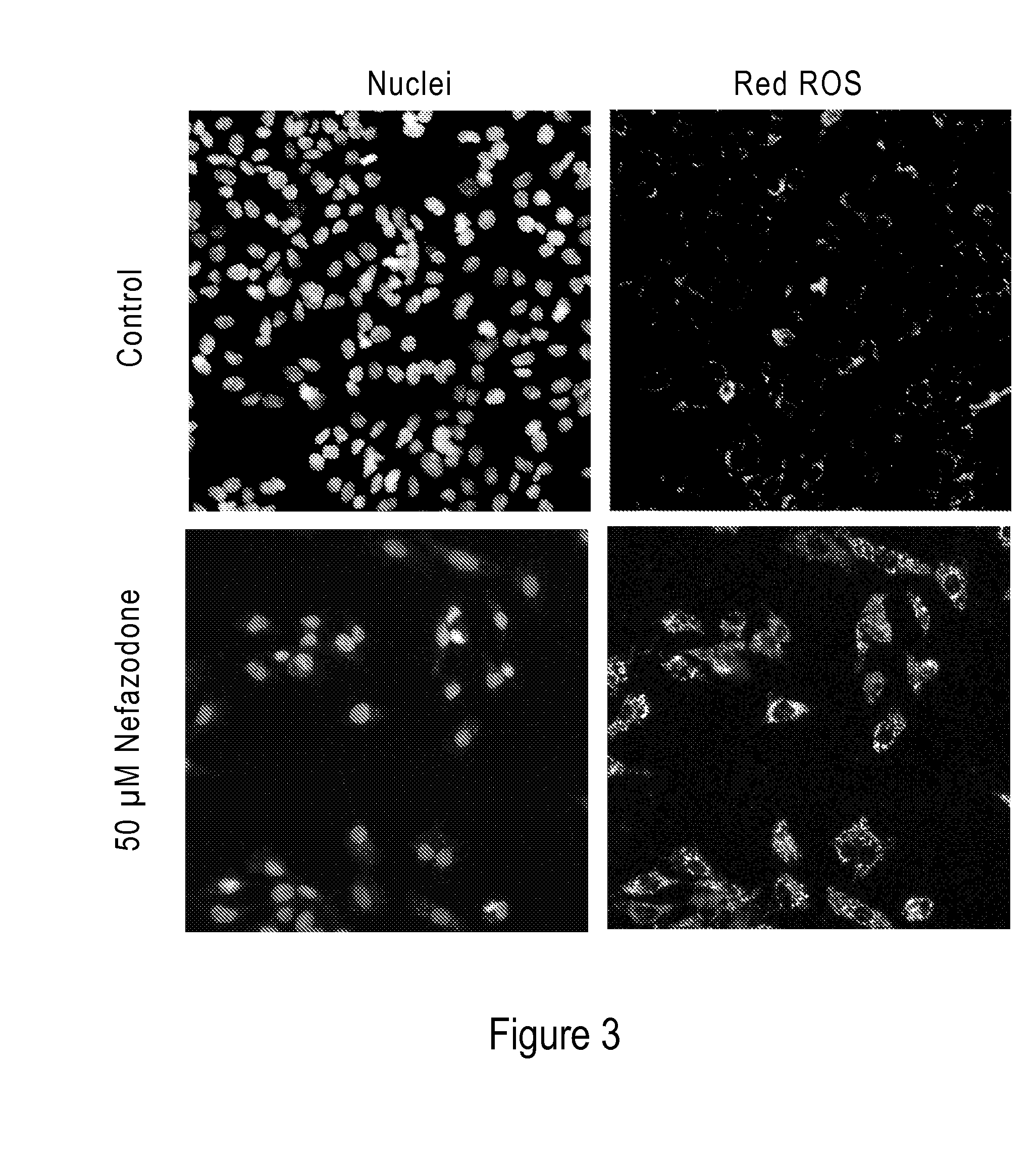
[0156]Human hepatocellular liver carcinoma (HepG2) cells were plated in collagen I-coated 96 well plates at a density of 7500 cells / well. Cells were then treated with 50 μM Nefazodone for 24 h and stained with 5 μM of Red ROS probe for 30 min. The cells were washed 3 times with 1×PBS and then imaged using a Thermo Scientific Cellomics ArrayScan® VTI HCS Reader after staining with a Hoechst nuclear dye. There was increased fluorescence intensity following Nefazodone treatment indicating that the Red ROS probe is reacting with Nefazodone-induced reactive oxygen species in cells (see, FIG. 3).
PUM
| Property | Measurement | Unit |
|---|---|---|
| density | aaaaa | aaaaa |
| fluorescence spectroscopy | aaaaa | aaaaa |
| fluorescence microscopy | aaaaa | aaaaa |
Abstract
Description
Claims
Application Information
 Login to View More