
Flexible Kesterite Photovoltaic Device on Ceramic Substrate
a photovoltaic device and flexible technology, applied in the field of flexible kesterite photovoltaic devices formed on ceramic substrates, can solve the problem of high cost of wide-scale production of cigs-based materials
- Summary
- Abstract
- Description
- Claims
- Application Information
AI Technical Summary
Benefits of technology
Problems solved by technology
Method used
Image


Examples
example 1
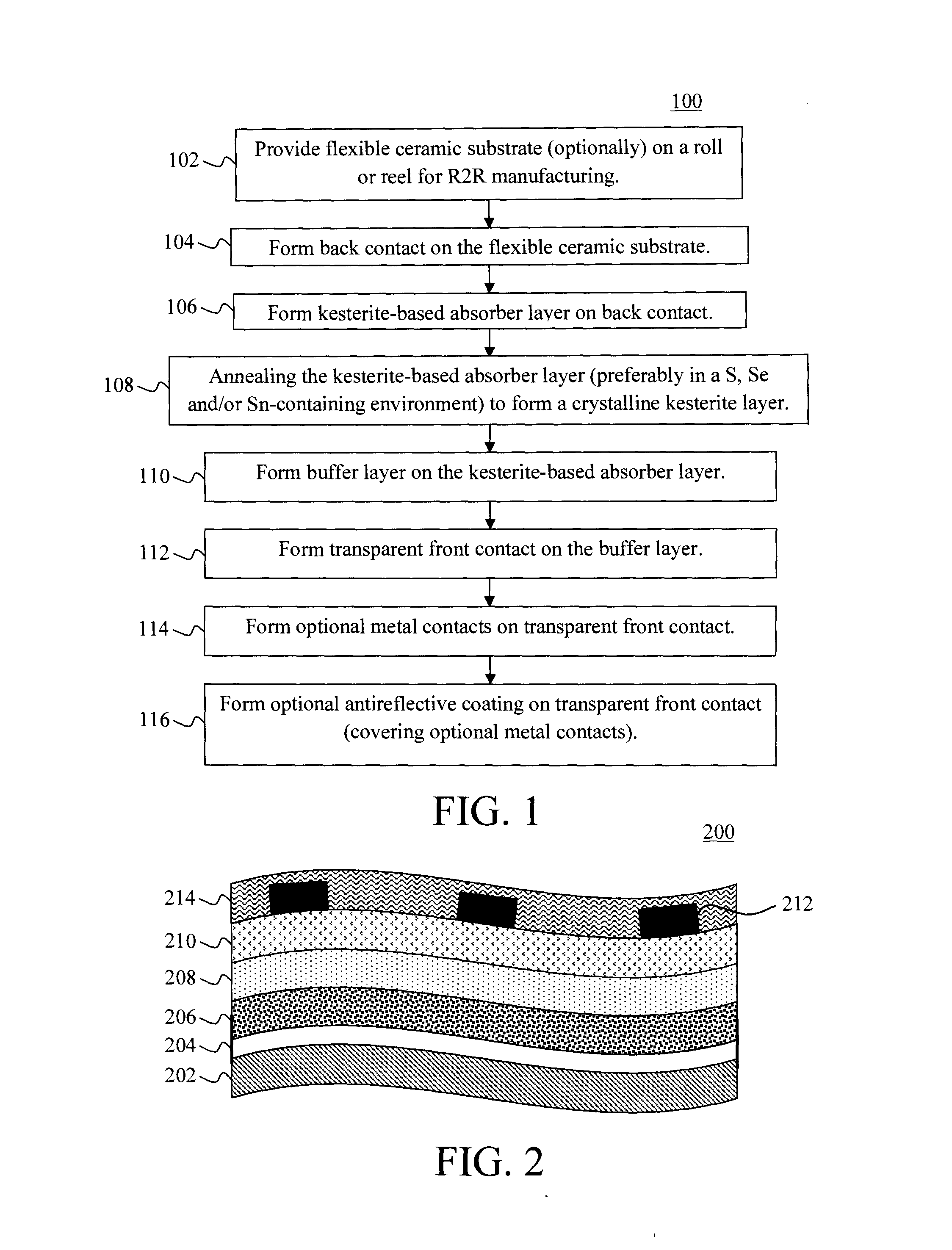
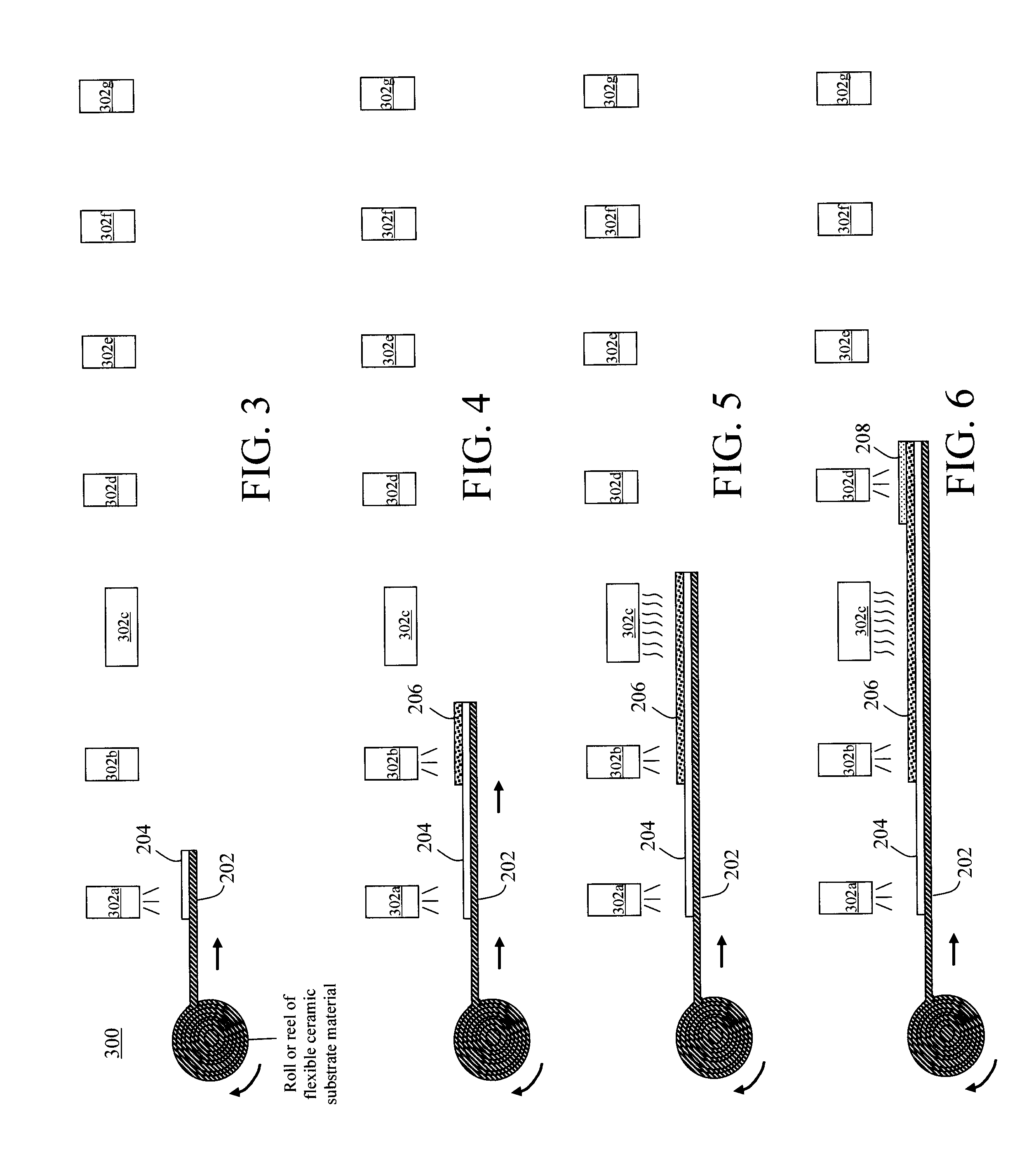
[0081]Zirconia discs (40-μm thick, 40 millimeter (mm) available from ENrG inc., Buffalo, N.Y.) were deposited with Mo layers by sputtering. Kesterite Cu2ZnSn(Se,S)4 layers were fabricated by spin-coating hydrazine solutions (method adapted from U.S. Patent Application Publication Number 2014 / 0096826). After a hot plate anneal in a sulfur-containing atmosphere at a temperature greater than about 540° C., solar cells were fabricated from the above-described Cu2ZnSn(Se,S)4 films by deposition of a 60 nanometer (nm) CdS buffer layer by chemical bath deposition, 100 nm insulating ZnO and 130 nm ITO (indium-doped zinc oxide) by sputtering, followed by nickel / aluminum metal contacts deposited by electron-beam evaporation.
[0082]A scanning electron micrograph (SEM) image of a solar cell produced according to Example 1 is shown in FIG. 13. This solar cell had a photovoltaic efficiency of 9.06% at 1.5 AM conditions, with open-circuit voltage (Voc)=0.483 Volts, short-circuit current density (Js...
example 2
[0083]flexible Zirconia substrates (available from ENrG inc., Buffalo, N.Y.) were deposited with Mo layers by sputtering. Kesterite Cu2ZnSn(Se,S)4 layers were fabricated by spin-coating hydrazine solutions (method adapted from U.S. Patent Application Publication Number 2014 / 0096826). After a hot plate anneal in a sulfur-containing atmosphere at a temperature greater than about 540° C., solar cells were fabricated from the above-described Cu2ZnSn(Se,S)4 films by deposition of a 60 nm CdS buffer layer by chemical bath deposition, 100 nm insulating ZnO and 130 nm ITO (indium-doped zinc oxide) by sputtering, followed by nickel / aluminum metal contacts deposited by electron-beam evaporation and finally a 110 nm antireflection coating of magnesium fluoride (MgF2).
[0084]A SEM image of a solar cell produced according to Example 2 is shown in FIG. 14. This solar cell had a photovoltaic efficiency of 11.5% at 1.5 AM conditions, with open-circuit voltage (Voc)=452 millivolts, short-circuit curr...
PUM
 Login to View More
 Abstract
Description
Claims
Application Information
 Login to View More