
Determining code coverage of an application by test(s)
a technology of code coverage and test results, applied in the field of code testing, can solve problems such as the complexity of application cod
- Summary
- Abstract
- Description
- Claims
- Application Information
AI Technical Summary
Benefits of technology
Problems solved by technology
Method used
Image

Examples
Embodiment Construction
[0029]The present invention, in some embodiments thereof, relates to code testing and, more specifically, but not exclusively, to code coverage techniques.
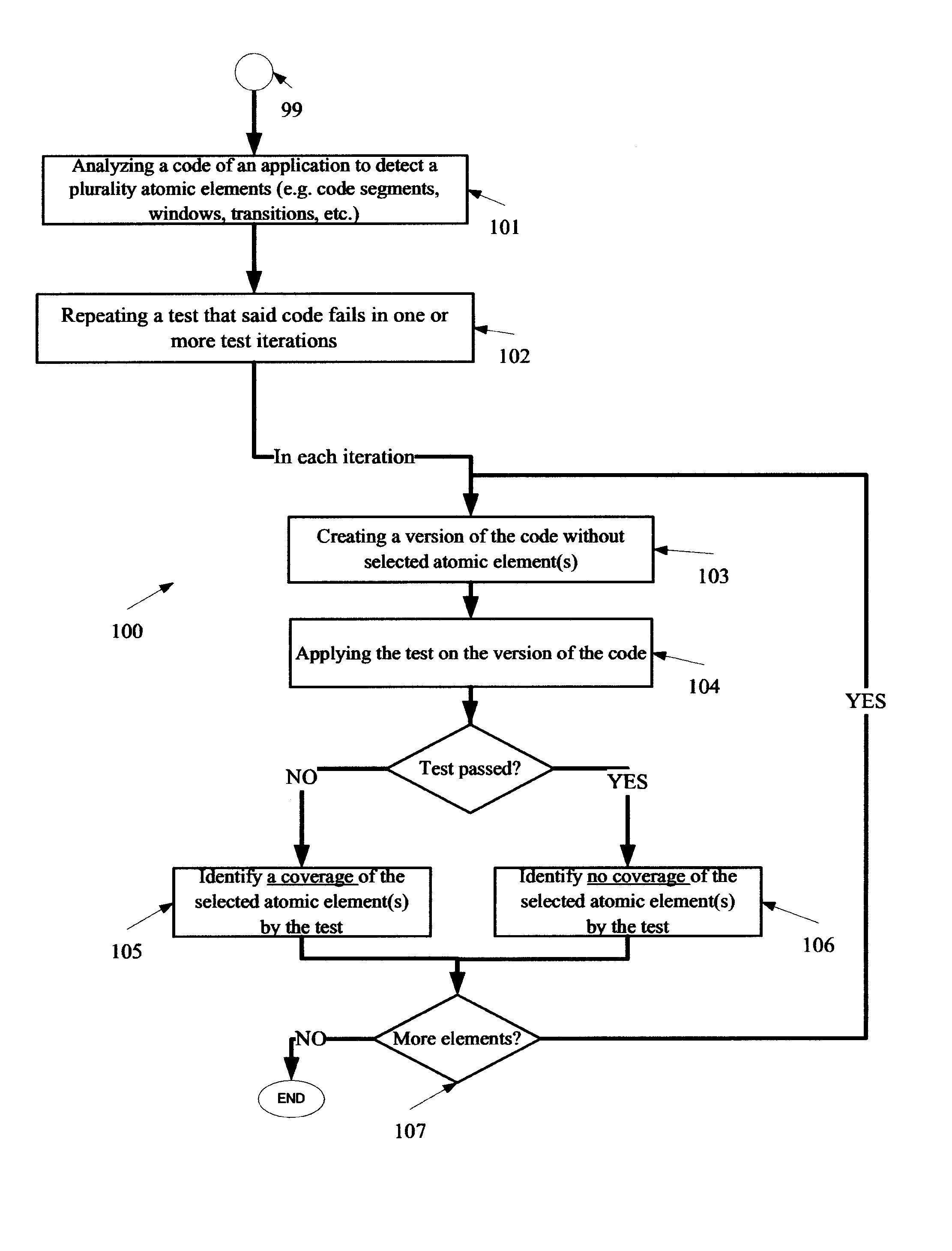
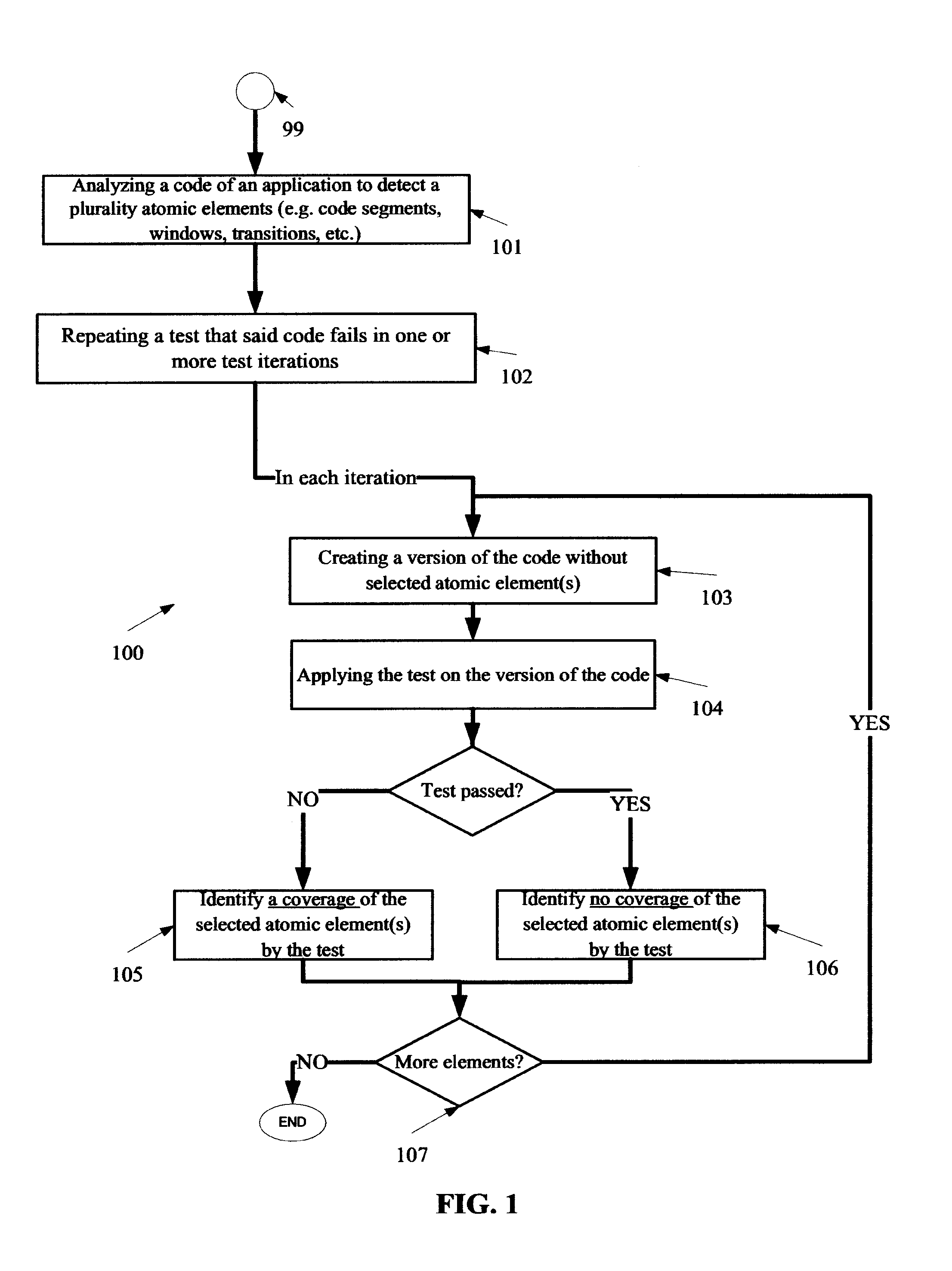
[0030]According to some embodiments of the present invention, there are provided methods and systems of determining code coverage of an application by test(s) by iteratively testing versions of a tested code, wherein in each version different atomic code elements are disabled. This methods and systems allows identifying which of the versions lead the code test to fail and which of the versions lead the code test to pass and to classify the respective missing atomic code elements (e.g. temporarily removed, deleted, ignored, edited, and / or otherwise disabled atomic code elements in the versions) accordingly.
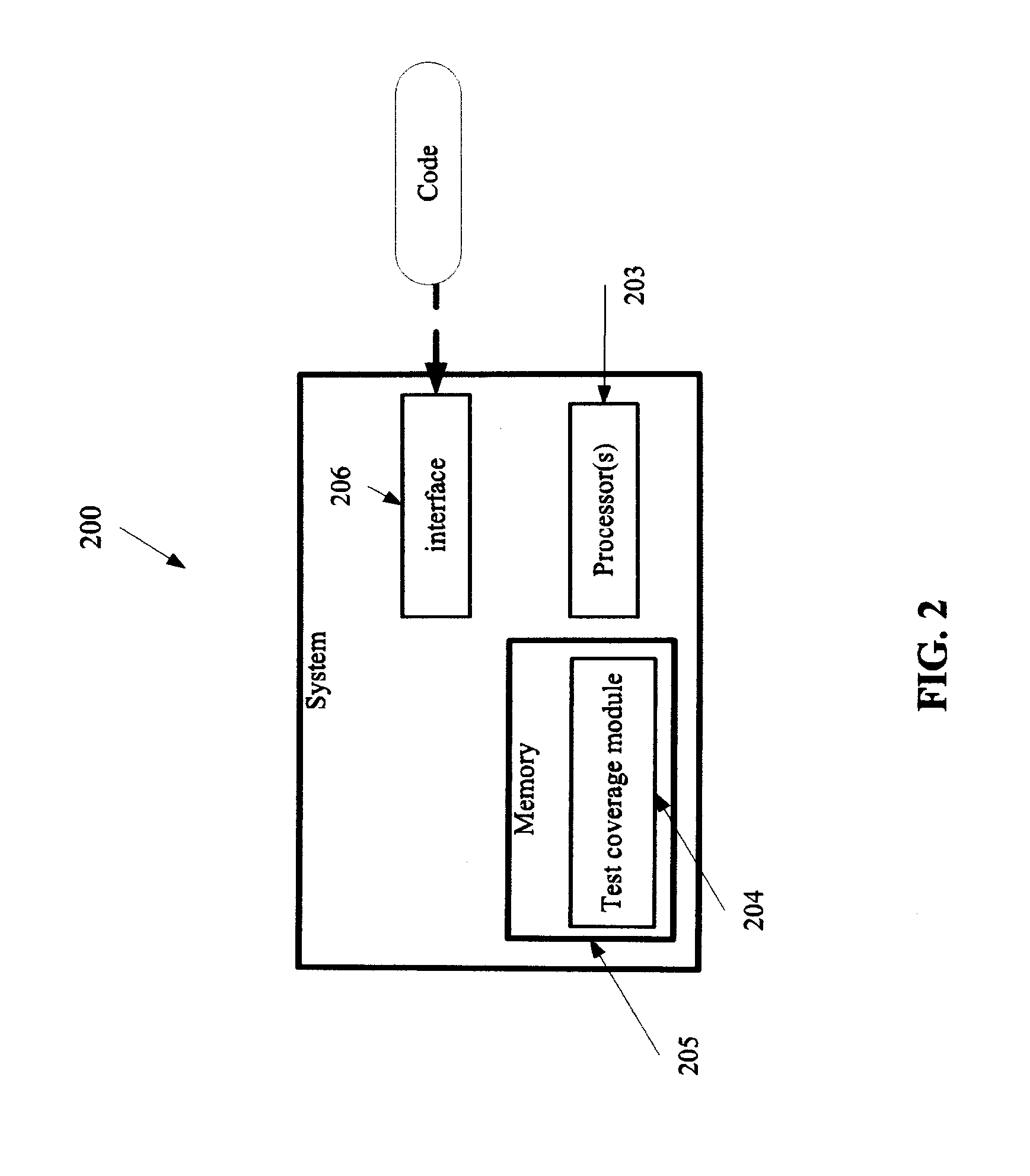
[0031]The atomic code elements may be code fractions of application screens, transactions between application screens, graphical user interface elements, events and / or the like. The versions may be generated by automatically inst...
PUM
 Login to View More
 Abstract
Description
Claims
Application Information
 Login to View More