
Non-invasive physiological quantification of stress levels
a physiological and non-invasive technology, applied in the field of non-invasive physiological quantification of stress levels, can solve the problems of inability to quantify acute and/or chronic stress, inability to meet the needs of patients,
- Summary
- Abstract
- Description
- Claims
- Application Information
AI Technical Summary
Benefits of technology
Problems solved by technology
Method used
Image

Examples
example 1
USER EXAMPLE 1
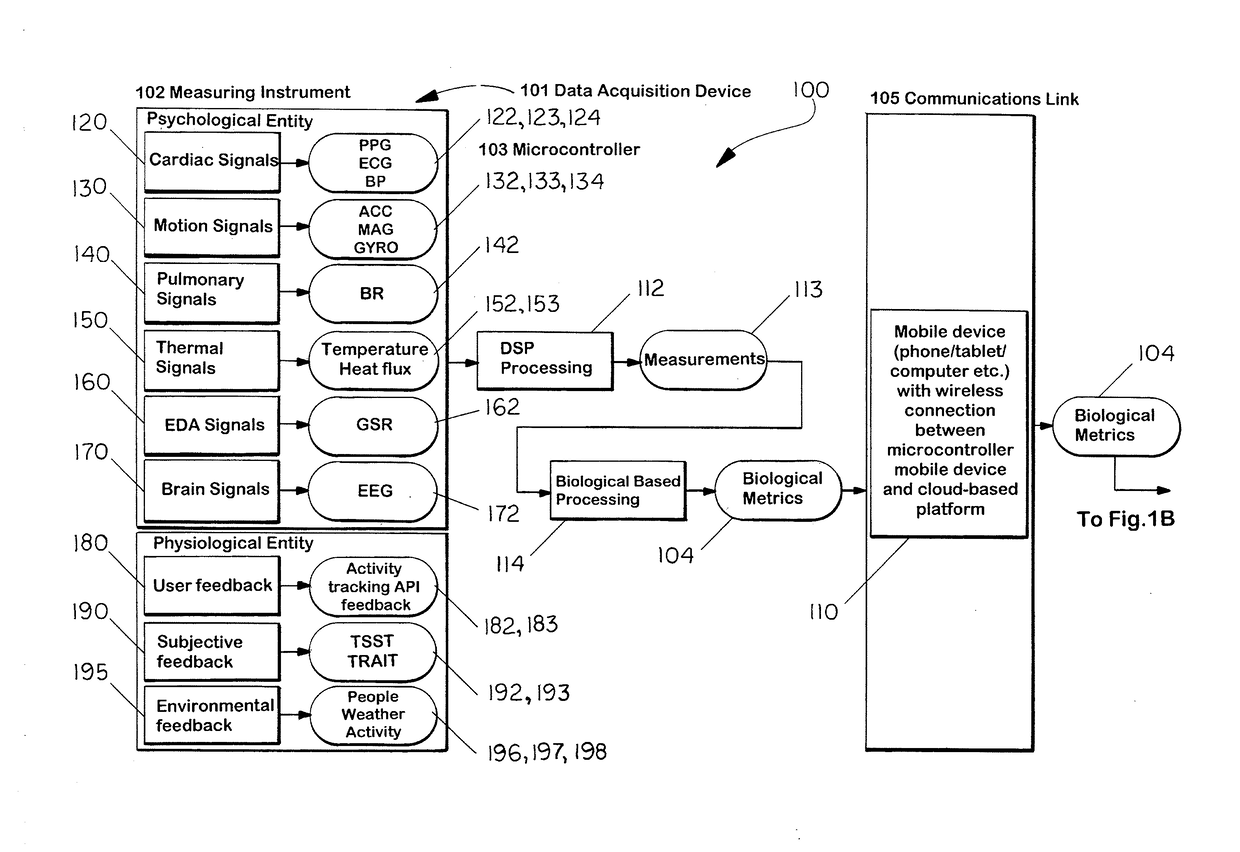
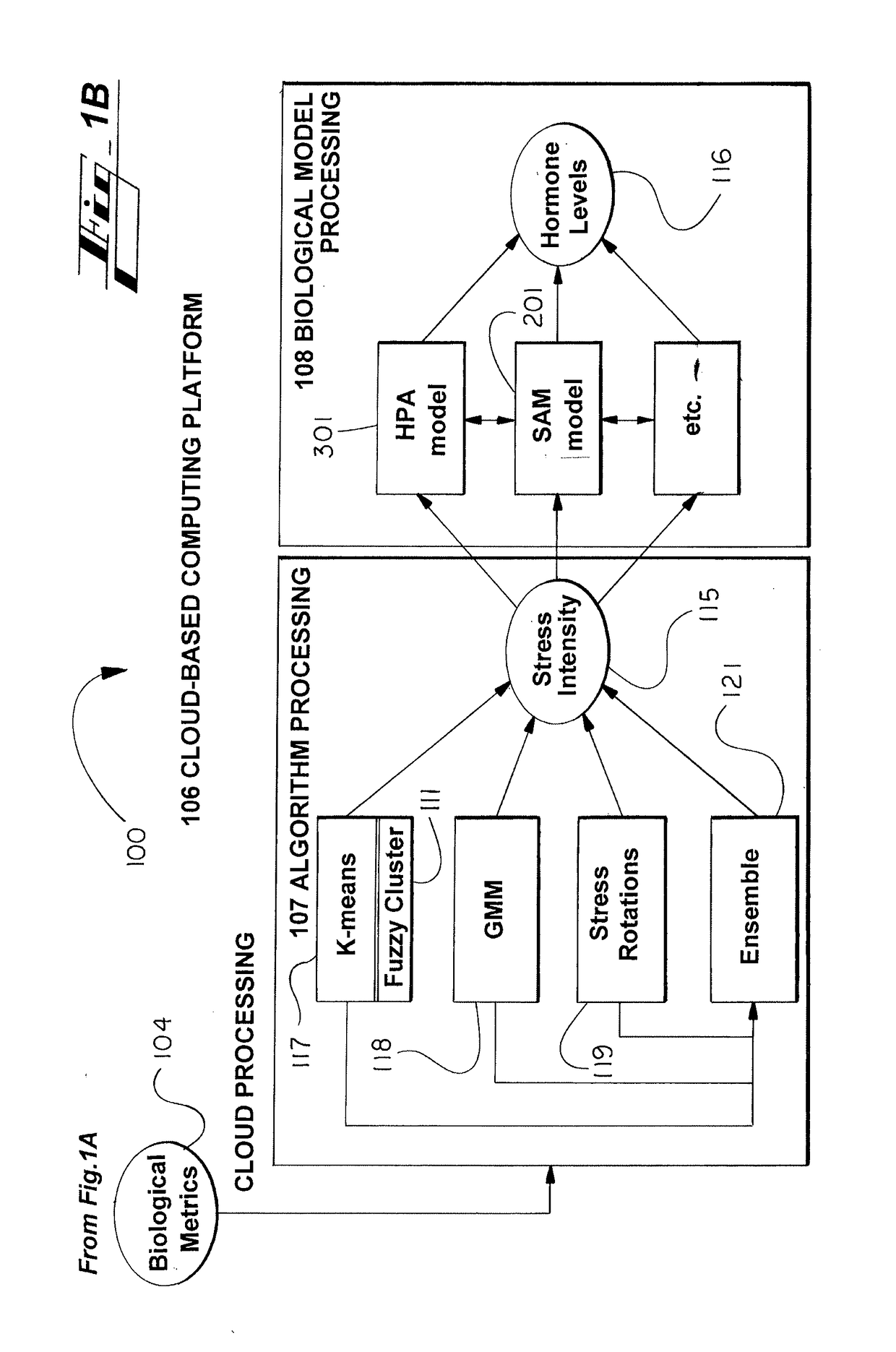
[0033]In one embodiment of the invention, the data acquisition device 405 gathers physiological signals from a human subject wearing the data acquisition device 405. The subject provides context for stress events 404 (FIG. 4) via brief interactions with the interface of the data acquisition device 405 or the mobile device 406. Examples of the context include persons with whom the patient interacted, meetings, social settings, or any other information that might have relevance to the occurrence of the stress state. The subject receives daily, weekly, and monthly statistics on his or her stress levels. Examples of stress levels may include, but are not limited to, the average level of stress and the intensity as well as duration of the stressor, and the quantifiable stress metrics 402. The more context the user provides, the more relevant the information provided to the user can be. The clinical third parties 407 may access the contextual data on a third party database a...
example 2
USER EXAMPLE 2
[0034]In one embodiment of the invention, the data acquisition device 405 gathers physiological signals on a psychiatry or psychology patient and infers periods of likely biological stress. In lieu of the data acquisition device 405 and the physiological quantification system 400, such a stressful experience would typically be analyzed as part of a psychiatry / psychology session where the patient recalls the context surrounding the event weeks after the fact (if at all) to aid the clinician towards an optimal treatment program. With the physiological stress quantification system 400 of the present invention, the stress state could be validated or questioned by the user and the context surrounding it can be gathered later the same day under less stressful circumstances as identified by the data acquisition device 405 (FIG. 4), using a brief interaction with the mobile device 406 in contact with the data acquisition device 405 or directly through the interface of the data...
PUM
 Login to View More
 Abstract
Description
Claims
Application Information
 Login to View More