

Folding step for use with mobility device
a technology for mobility devices and folding steps, which is applied in the direction of step stools, walking aids, physical therapy, etc., can solve the problems of inconvenient placement at the end of the table, and achieve the effects of less ambulatory, less ambulatory, and a bit higher step up
- Summary
- Abstract
- Description
- Claims
- Application Information
AI Technical Summary
Benefits of technology
Problems solved by technology
Method used
Image

Examples
Embodiment Construction
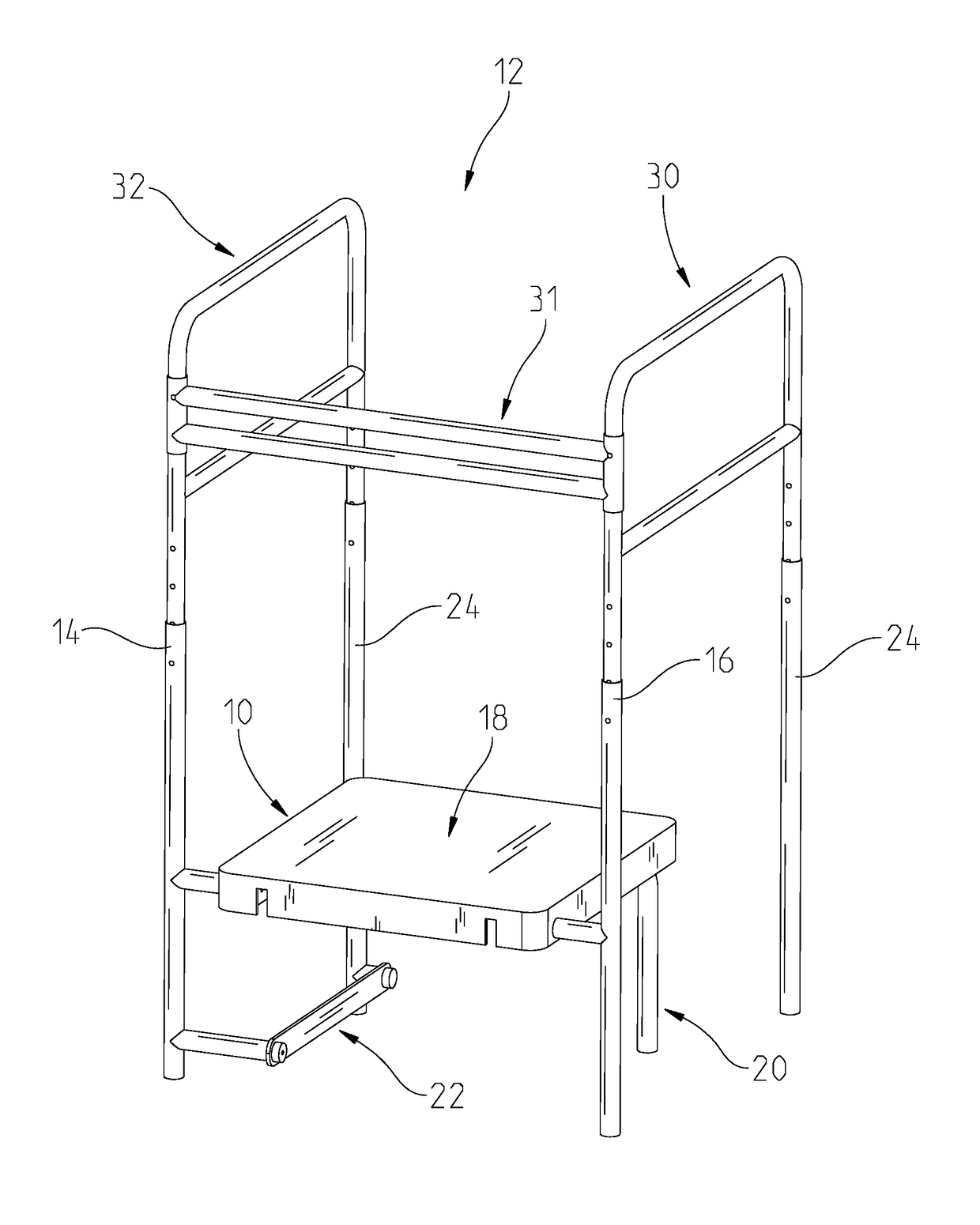
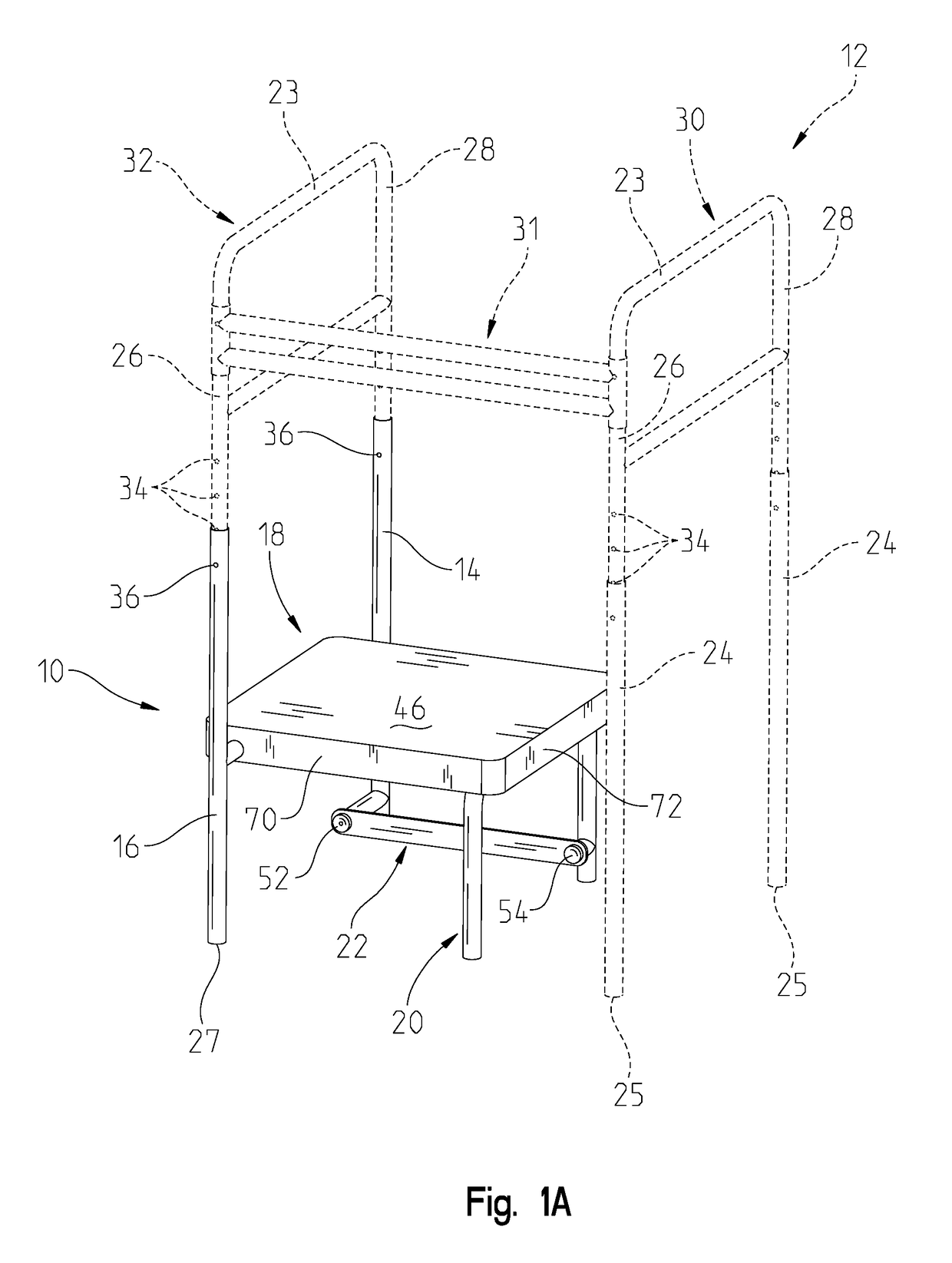
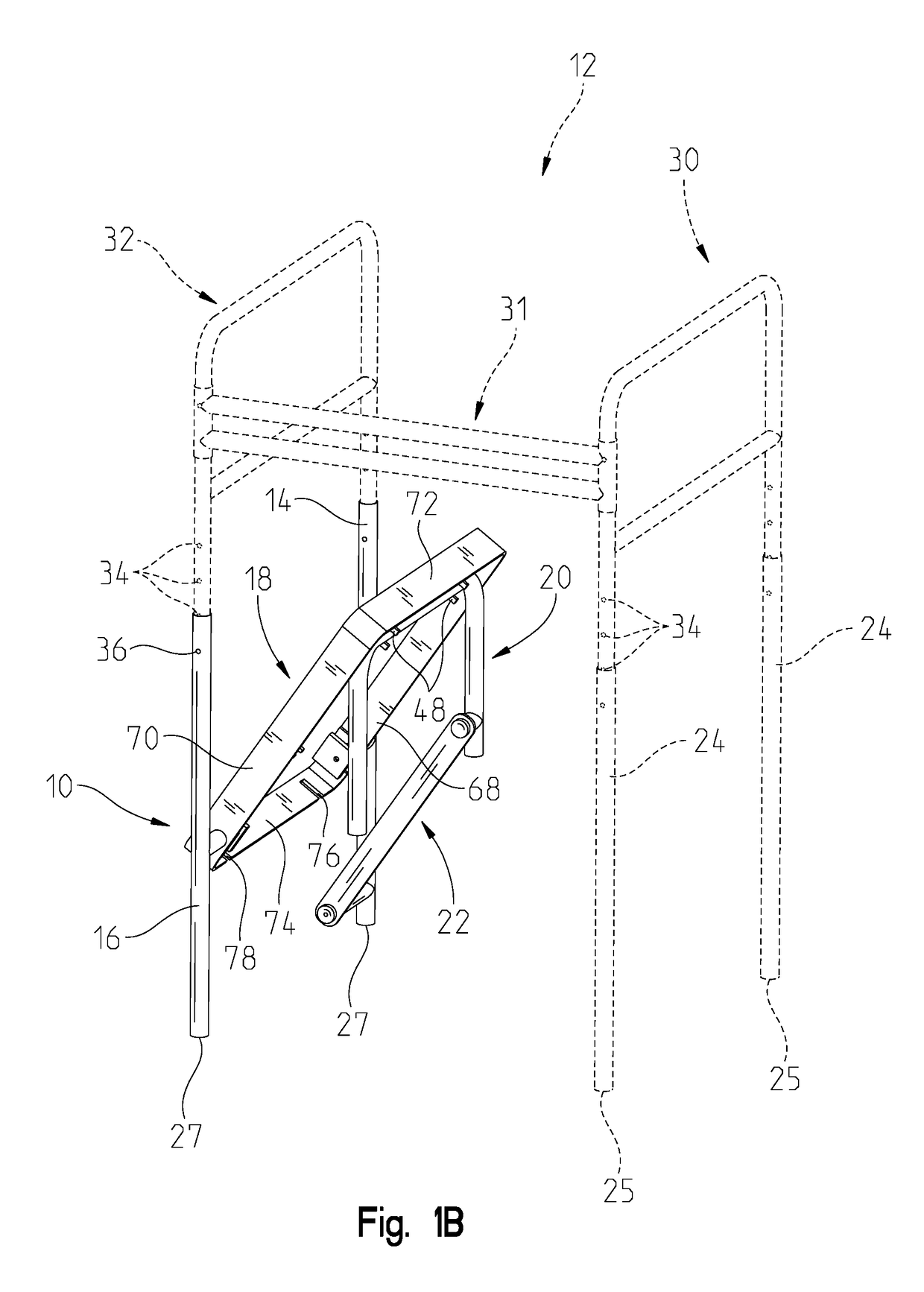
[0022]As shown in FIG. 1A and 1B, a folding step 10 for a walker 12 is composed of a first leg, 16, a second leg, 14, a movable platform 18, a unified leg, 20, and a linkage, 22. The folding step 10 is designed to mate with an existing walker 12, shown in FIG. 1A-1C. The existing walker 12 typically has telescopically adjustable legs 24 that adjust the overall height of the handle portions 23. Specifically, the adjustable legs 24 receive or are received by a front tube portion 26 and a rear tube portion 28. The left side 30 is substantially a mirror image of the right side 32 and the two sides are connected by a front side 31. As shown in FIGS. 1, 2, 5, and 7, the left side 30 has the original adjustable legs 24 that are telescopically moveable to their respective tube portions 26, 28. The adjustable legs 24 have feet 25 that are designed to securely rest on the ground or other horizontal surface. In FIGS. 1A-1C, the right side 32 has the folding step 10 installed, but it is contemp...
PUM
 Login to View More
 Abstract
Description
Claims
Application Information
 Login to View More