Check patentability & draft patents in minutes with Patsnap Eureka AI!

Object value range optimization based on inter-object relationships

a value range and optimization technology, applied in multi-programming arrangements, data processing applications, finance, etc., can solve problems such as failure of one participant, ripple effect of failure on the solvency of the other participant, and unnecessary use of infrastructure and network bandwidth for transaction requests

Pending Publication Date: 2018-04-19
CHICAGO MERCANTILE EXCHANGE
View PDF12 Cites 3 Cited by
  • Summary
  • Abstract
  • Description
  • Claims
  • Application Information

AI Technical Summary

Benefits of technology

The patent text describes a data transaction processing system that includes a range reduction system for reducing the range of values associated with a target object. This system ensures that transaction requests associated with other data stored within the system are not violated, or become invalid, by reducing the range of values associated with the target object. The technical effect of this system is improved efficiency and validity in processing data transactions within the system.

Problems solved by technology

For computers handling multiple inter-related objects having different rules and restrictions, it is a challenge to efficiently process and compute final values for the objects.
When a transaction request, which is associated with data such as a specified value, submitted by a user becomes impossible to perform, e.g., due to a value selected for a target object, the transaction request becomes an unnecessary use of infrastructure and network bandwidth.
Accordingly, the resulting problem is a problem arising in computer systems due to the high volume of disparate data relating to inter-related objects processed by an exchange computing system.
The later months may have less liquidity, and their settlement price cannot be easily determined.
In those markets, the failure of one participant can have a ripple effect on the solvency of the other participants.
Conversely, CME's mark-to-the-market system does not allow losses to accumulate over time or allow a market participant the opportunity to defer losses associated with market positions.
It may be difficult to quickly and efficiently select the best settlement price when multiple potential settlement prices can be used.
For example, when multiple potential settlement prices can be used, differentiating between the multiple potential settlement prices may be a time-consuming task, or the logic for determining the best settlement price may be context or case specific.
In addition, it should be appreciated that electronic trading systems further impose additional expectations and demands by market participants as to transaction processing speed, latency, capacity and response time, while creating additional complexities relating thereto.
When a computer processor attempts to compute a large number of data sets in an environment including rules constraints and data constraints, the number of possible solutions or combinations of values can become unwieldy.
Oil refineries may trade a crack spread to hedge the price risk of their operations, while speculators attempt to profit from a change in the oil / gasoline price differential.
As an intermediary to electronic trading transactions, the exchange bears a certain amount of risk in each transaction that takes place.
In some cases, the outright market for the deferred month or other constituent contract may not be sufficiently active to provide market data (e.g., bid-offer data) and / or trade data.
Moreover, the system environment may impose restrictions on the values of the composite objects.
However, the received values may define a broad range, with no guidance as to which of the value in the range should be selected as the final value for the target object.
Thus, settling on a final value for months or objects K1, K2, K3 and K4 may be easy and uncontroversial.
Other objects, such as T1, T2 and T3, may have received a wide range of data, such that it is difficult or illogical to determine a final settlement price for these objects.
Moreover, storing a large data set, such as 44.1, 44.2, 44.3, . . . , 51.7, 51.8, 51.9 and 52.0 changing in 0.1 price increments, for target object T may be an inefficient use of memory, storage space, and computing resources.
A route that becomes means impossible to satisfy means that at least one, and possibly all, of the composite object pairs that make up a route cannot be performed.
That transaction request becomes incompatible with other portions of a system that must all fit together.
When a value for target object T is selected that is incompatible with a route range, or makes one or more of the received transaction requests impossible to perform, then the data associate with such received transaction requests may become irrelevant to the exchange computing system.
Additionally, the illustrations are merely representational and may not be drawn to scale.

Method used

the structure of the environmentally friendly knitted fabric provided by the present invention; figure 2 Flow chart of the yarn wrapping machine for environmentally friendly knitted fabrics and storage devices; image 3 Is the parameter map of the yarn covering machine
View more

Image

Smart Image Click on the blue labels to locate them in the text.
Viewing Examples
Smart Image
  • Object value range optimization based on inter-object relationships
  • Object value range optimization based on inter-object relationships
  • Object value range optimization based on inter-object relationships

Examples

Experimental program
Comparison scheme
Effect test

Embodiment Construction

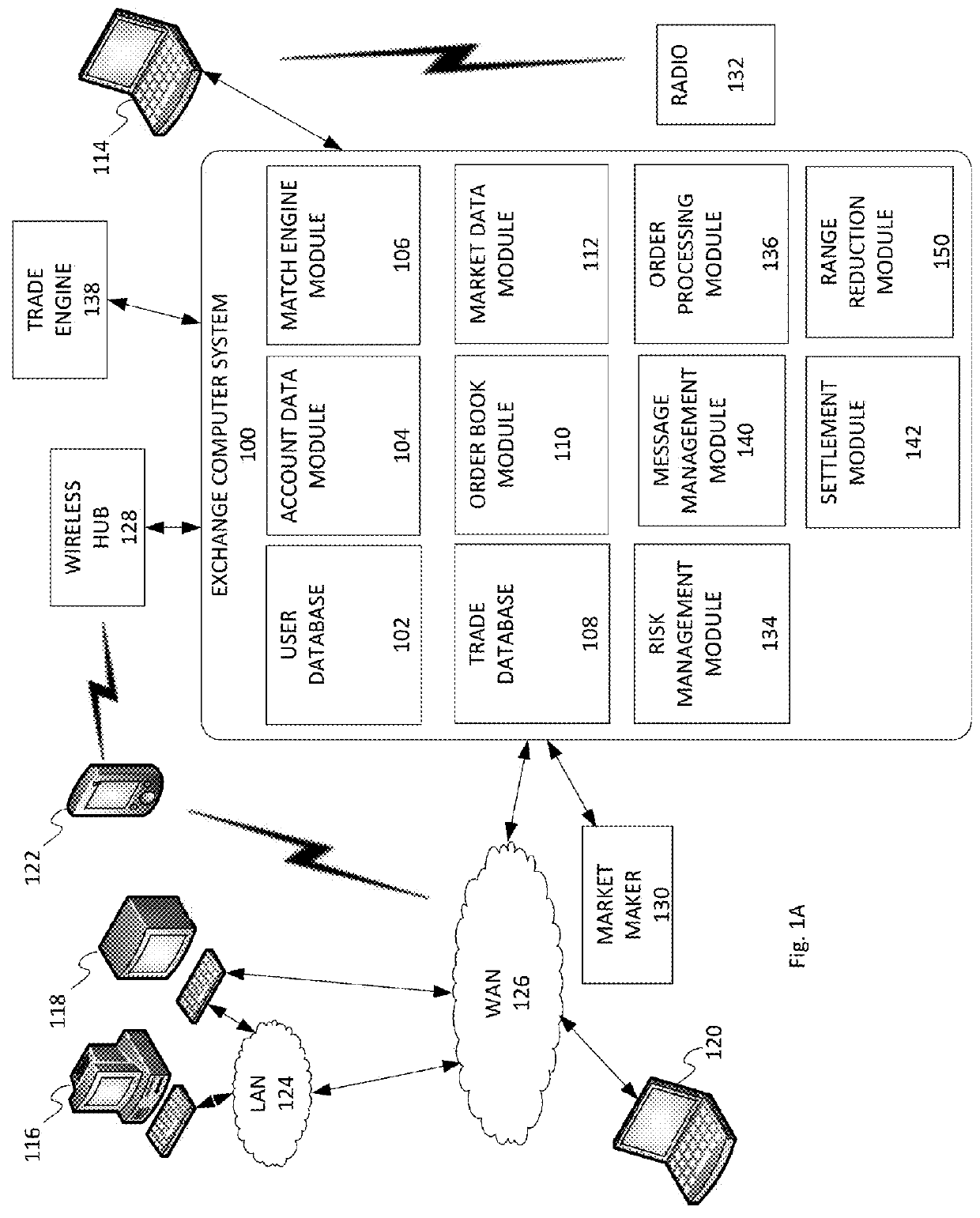
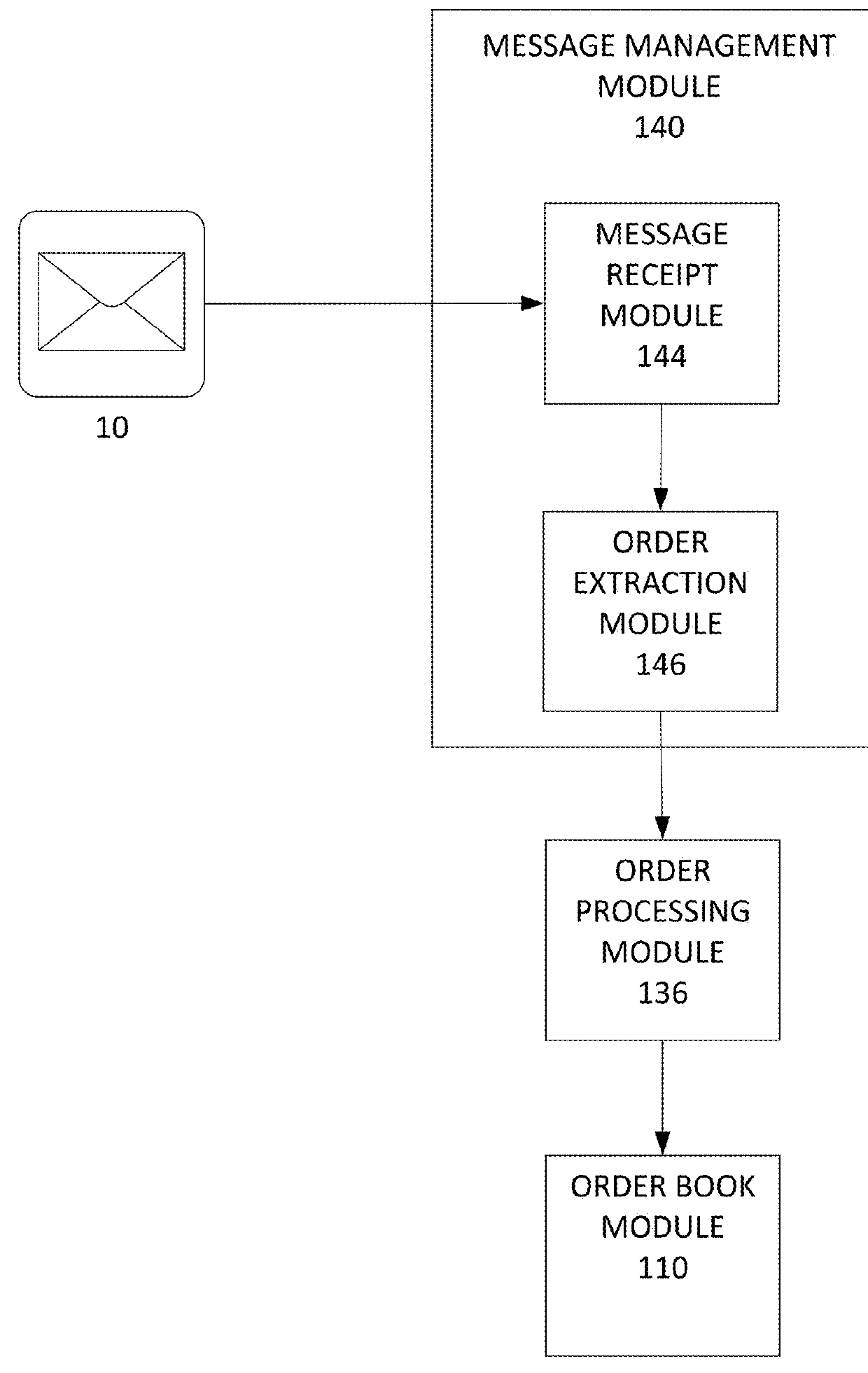
[0016]The disclosed embodiments may be implemented in a data transaction processing system that processes data items or objects. Customer or user devices (e.g., computers) may submit electronic data transaction request messages, e.g., inbound messages, to the data transaction processing system over a data communication network. The electronic data transaction request messages may include, for example, transaction matching parameters, such as instructions and / or values, for processing the data transaction request messages within the data transaction processing system. The instructions may be to perform transactions with respect to, or which may result in a change to, one or more data objects, e.g., buy or sell a quantity of a product at a given value. Products, e.g., financial instruments, or order books representing the state of an electronic marketplace for a product, may be represented as data objects within the exchange computing system. The instructions may also be conditional, ...

the structure of the environmentally friendly knitted fabric provided by the present invention; figure 2 Flow chart of the yarn wrapping machine for environmentally friendly knitted fabrics and storage devices; image 3 Is the parameter map of the yarn covering machine
Login to View More

PUM

No PUM Login to View More

Abstract

A range reduction system reduces the range and size of possible values for a target object within an exchange computing system by identifying all possible routes from known object values to the target object. Each route may include a pair of high and low values, and each route may expand the target object range. The reduced range allows selection of a value that ensures that all of the transaction requests associated with base objects remain valid, such that they can still be satisfied by the exchange computing system, and that the transaction requests remain compatible with the target object's reduced range and value selected therein.

Description

BACKGROUND[0001]Data transaction processing systems process transactions for a variety of interrelated objects which may have associated values computed or otherwise assigned thereto. A value assigned to an object may depend on data received by the data transaction processing system, as well as pre-defined rules and relationships amongst the objects. An efficient data transaction processing system may seek to ensure that transaction requests, related to an object and / or a value assigned, or to be assigned, thereto, received by the system and associated with data remain valid, or can still be performed, even after a value is assigned to the object.[0002]Some computing systems include many, e.g., hundreds or thousands, of objects of differing types, and attempt to compute values for the objects, based partially on data received by the computing system. Some of the objects may be related or based on other objects, and the system environment may impose rules and restrictions on the obje...

Claims

the structure of the environmentally friendly knitted fabric provided by the present invention; figure 2 Flow chart of the yarn wrapping machine for environmentally friendly knitted fabrics and storage devices; image 3 Is the parameter map of the yarn covering machine
Login to View More

Application Information

Patent Timeline
no application Login to View More
IPC IPC(8): G06Q40/04G06F9/46
CPCG06F9/466G06Q40/04
Inventor JANG, SEO WOOKMCDONALD, MICHAEL
Owner CHICAGO MERCANTILE EXCHANGE
Features
  • R&D
  • Intellectual Property
  • Life Sciences
  • Materials
  • Tech Scout
Why Patsnap Eureka
  • Unparalleled Data Quality
  • Higher Quality Content
  • 60% Fewer Hallucinations
Social media
Patsnap Eureka Blog
Learn More