
Acceleration of cache-to-cache data transfers for producer-consumer communication
a technology of cache-to-cache data and producer-consumer communication, which is applied in the direction of memory architecture accessing/allocation, instruments, computing, etc., can solve the problem of increasing the proportion of communication misses, increasing the effect of cache-to-cache latency for communication traffic between caching agents
- Summary
- Abstract
- Description
- Claims
- Application Information
AI Technical Summary
Benefits of technology
Problems solved by technology
Method used
Image

Examples
Embodiment Construction
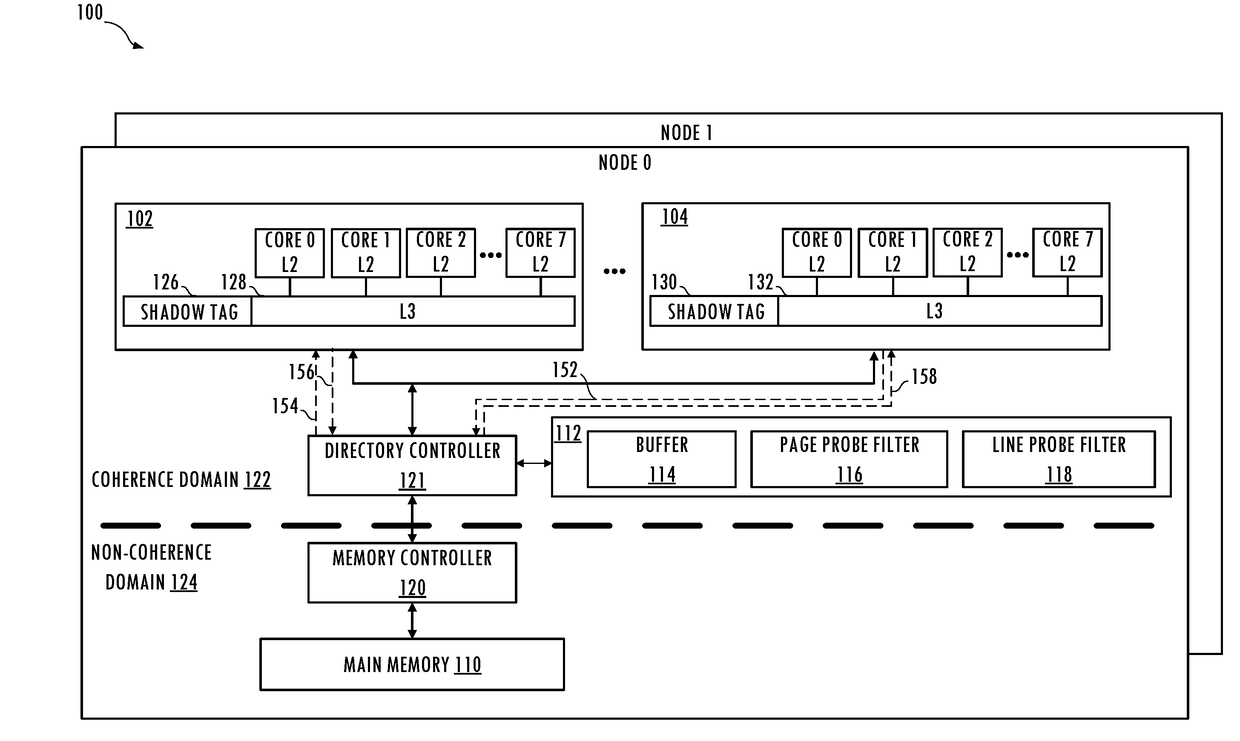
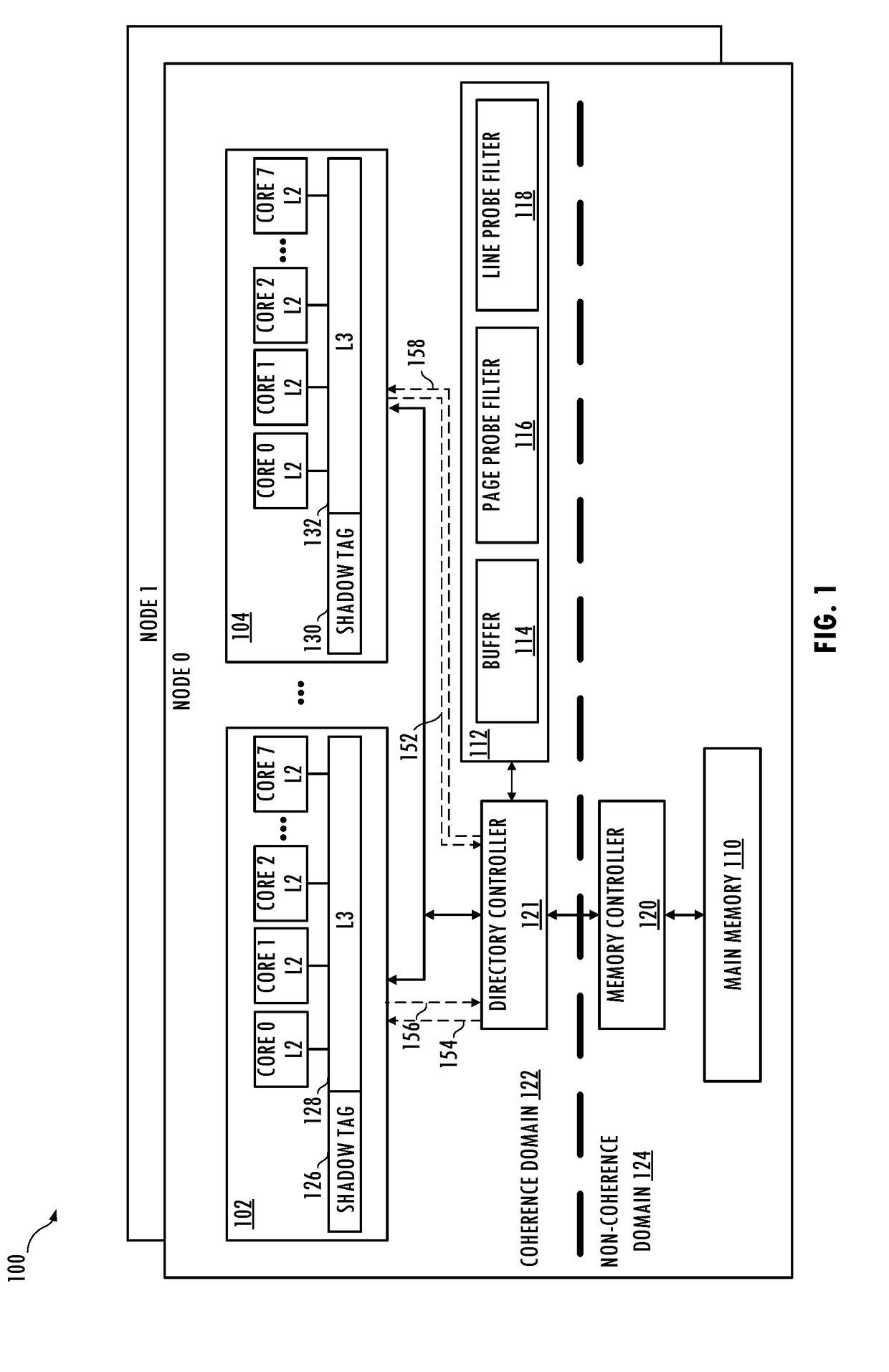
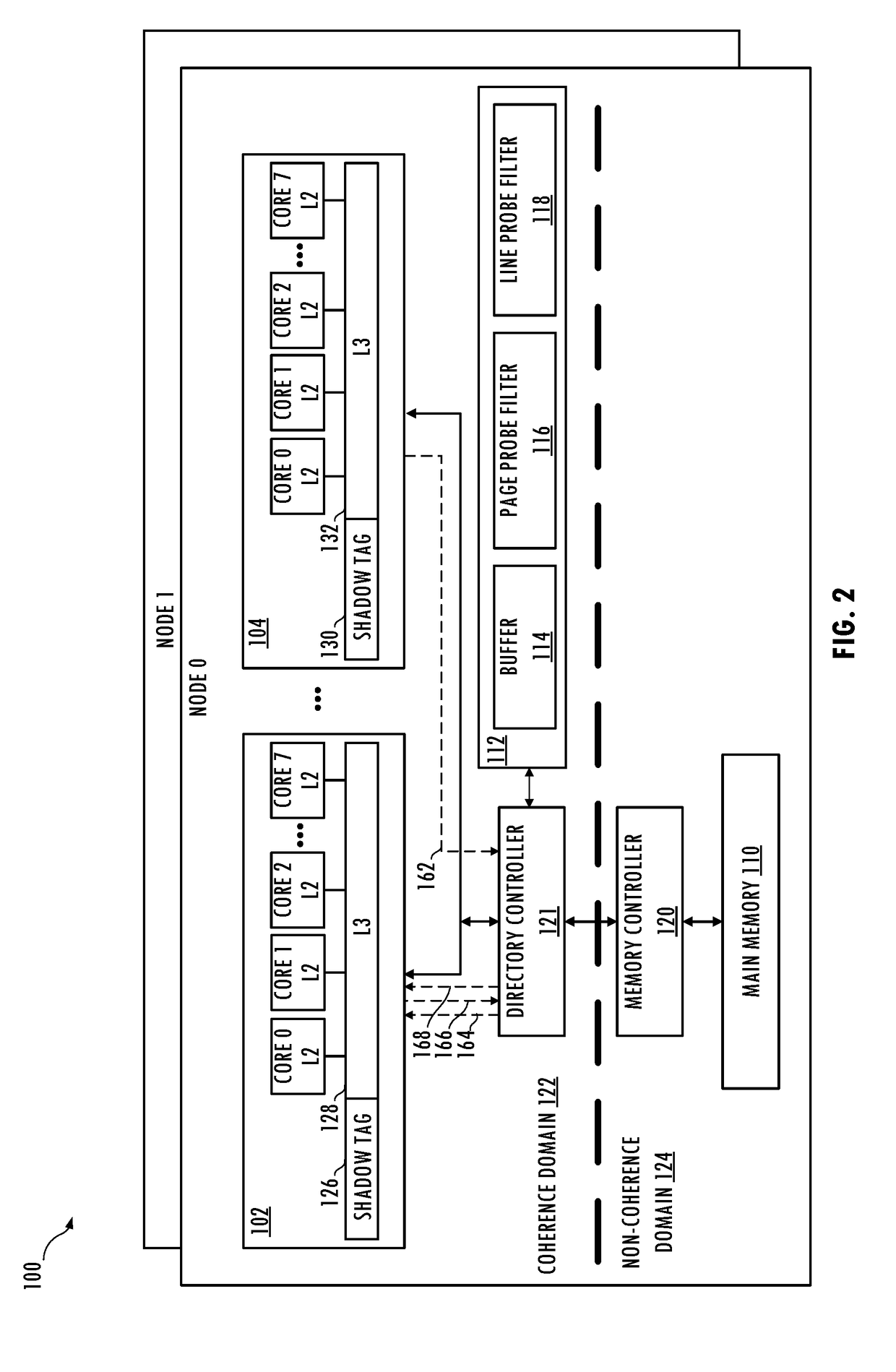
[0004]In at least one embodiment of the invention, a method includes storing a communication attribute in a shadow tag entry associated with a cache line stored in a penultimate-level cache of a first caching agent having a first last-level cache. The method includes bypassing the first last-level cache in response to the cache line having a modified state, the cache line being evicted from the penultimate-level cache, and the communication attribute having a first state. The first state of the communication attribute indicates prior communication of the cache line with a second caching agent having a second last-level cache. The method may include storing the cache line in the first last-level cache in response to the cache line having the modified state, the cache line being evicted from the penultimate-level cache, and the communication attribute having a second state.
[0005]The bypassing may include issuing a victim packet including a communication bypass attribute and the cache ...
PUM
 Login to View More
 Abstract
Description
Claims
Application Information
 Login to View More