
Optical information recording and reproducing apparatus having volume holographic memory
a technology which is applied in the field of optical information recording and reproducing apparatus having volume holographic memory, can solve the problems of interchangeability drawbacks of conventional volume holographic memory, and achieve the effect of high density and retain interchangeability
- Summary
- Abstract
- Description
- Claims
- Application Information
AI Technical Summary
Benefits of technology
Problems solved by technology
Method used
Image

Examples
Embodiment Construction
Embodiments of the present invention will now be described with reference to the drawings.
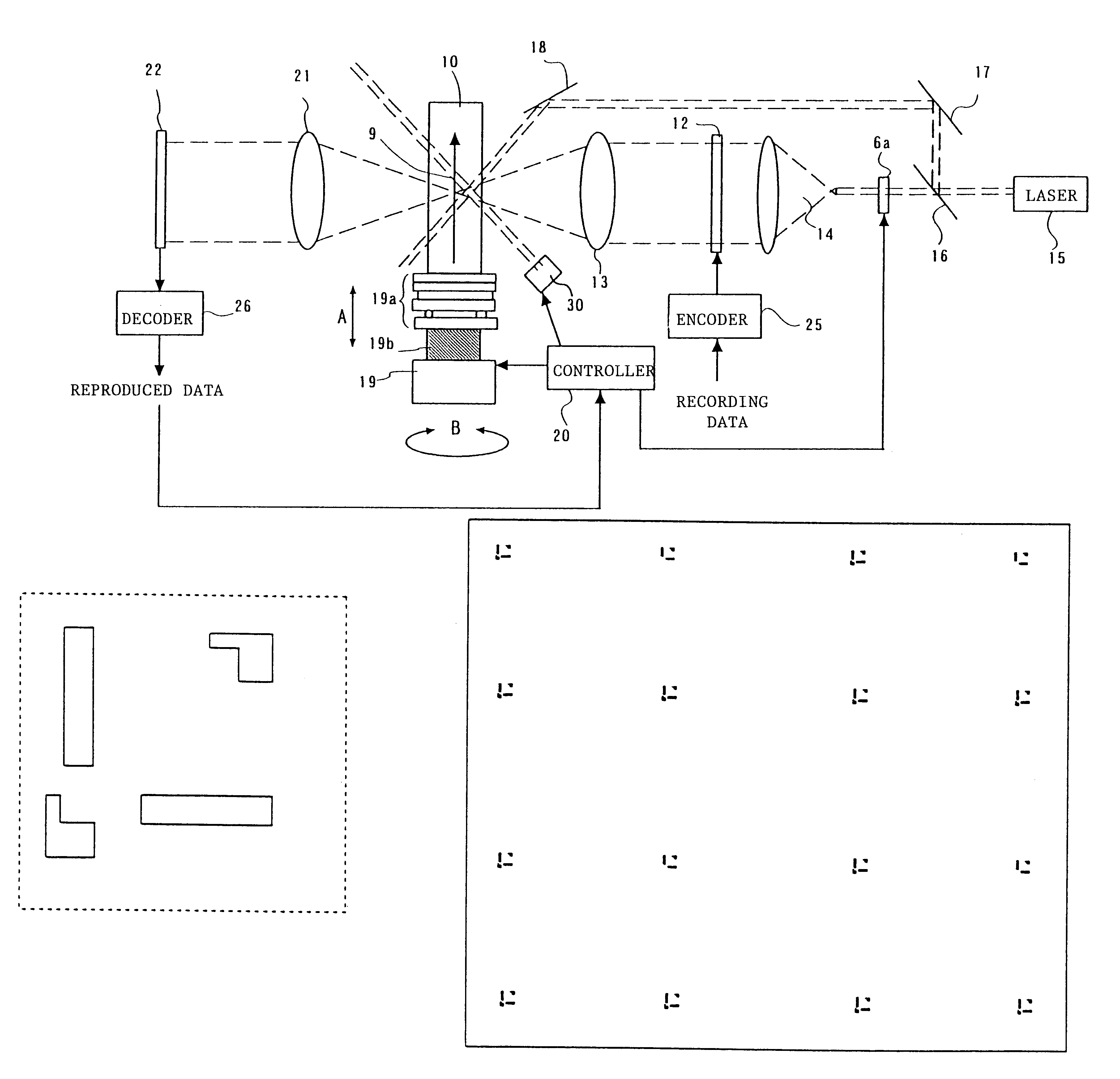
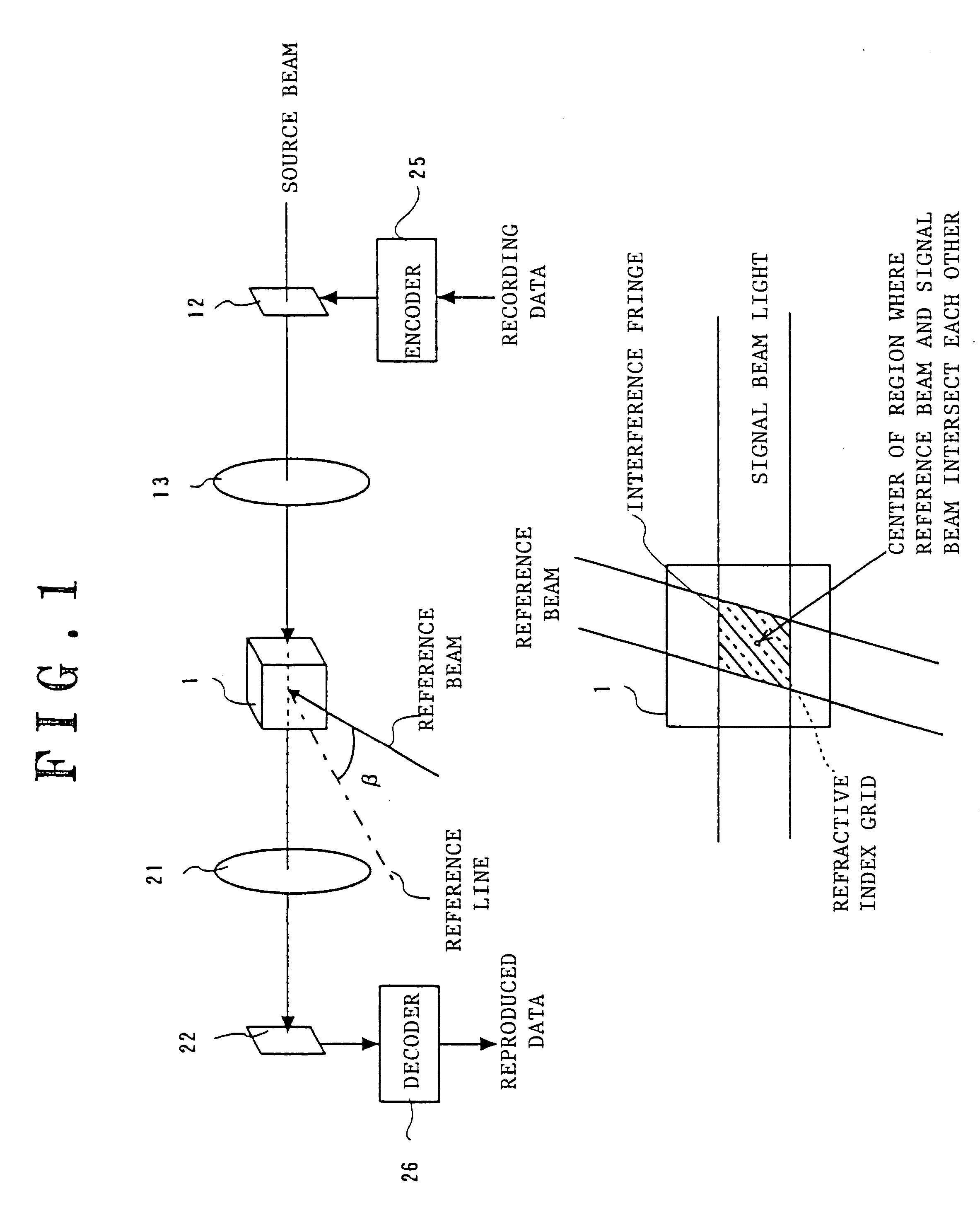
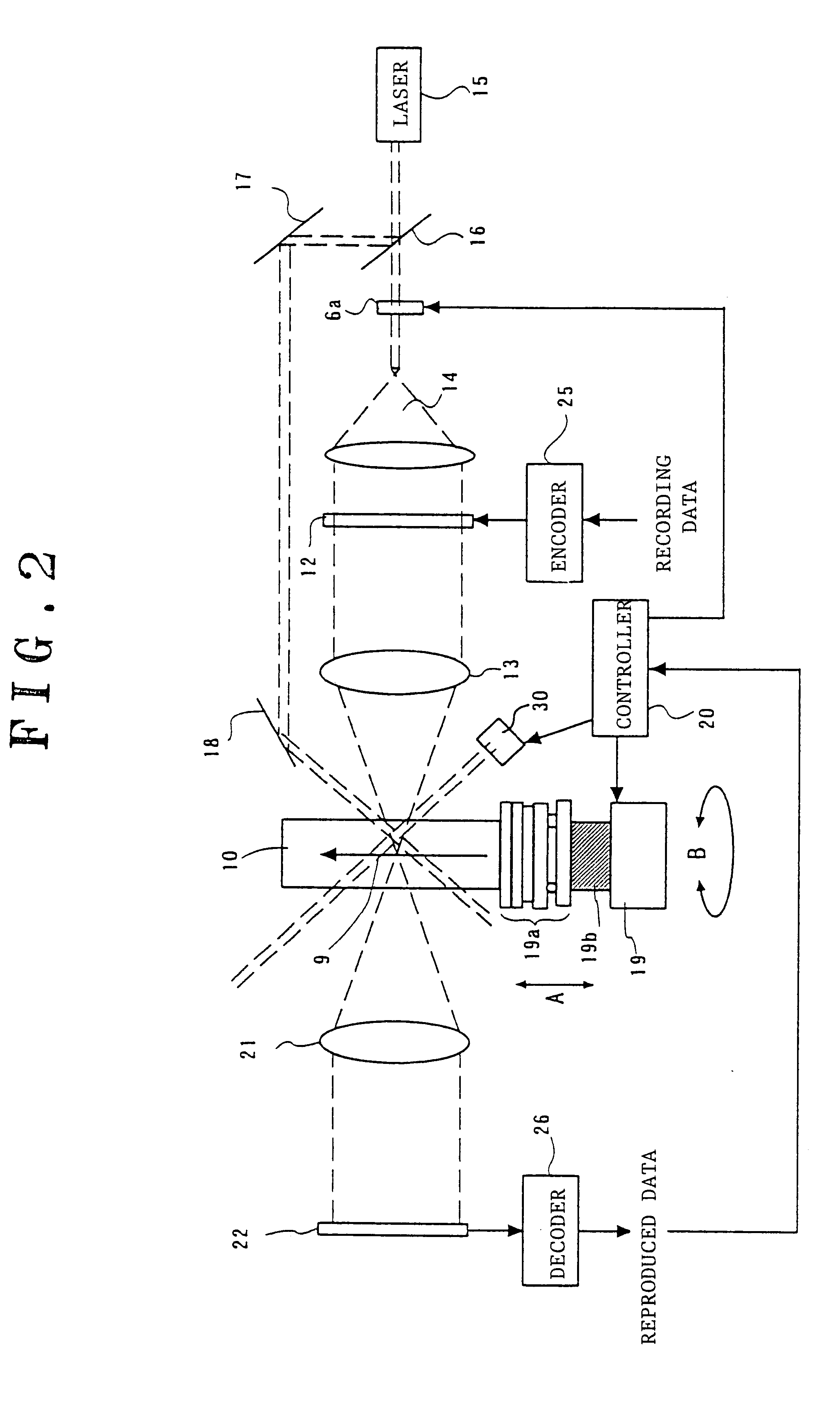
FIG. 2 shows an example of an optical information recording and reproducing apparatus using a volume holographic memory according to the present invention.
At the time of recording, a beam splitter 16 divides a light beam or a source beam emitted from a laser 15 into two beams, that is, a signal light beam (hereinafter, referred simply to as signal beam), which goes straight ahead, and a reference light beam (hereinafter, referred simply to as reference beam), which is deflected upward, the respective beams being conducted to optical paths for a signal light beam optical system and a reference light beam optical system.
A source beam having passed through the beam splitter 16 is made incident on a volume holographic memory 10 through a shutter 6a, a light beam expander 14, an SLM 12 and a Fourier transform lens 13. An automatic shutter controlled by a controller restricts a period of time, during...
PUM
| Property | Measurement | Unit |
|---|---|---|
| refractive index | aaaaa | aaaaa |
| refractive index | aaaaa | aaaaa |
| first wavelength | aaaaa | aaaaa |
Abstract
Description
Claims
Application Information
 Login to View More