
Stent having cover with drug delivery capability
a technology of stent and drug delivery, which is applied in the field of intraluminal prosthesis, can solve the problems of largely unsuccessful attempts, undesirable local thrombosis, and restenosis still occurring with such stents in place, and achieve the effect of preventing or minimizing the proliferation or inflammatory material of host tissu
- Summary
- Abstract
- Description
- Claims
- Application Information
AI Technical Summary
Benefits of technology
Problems solved by technology
Method used
Image

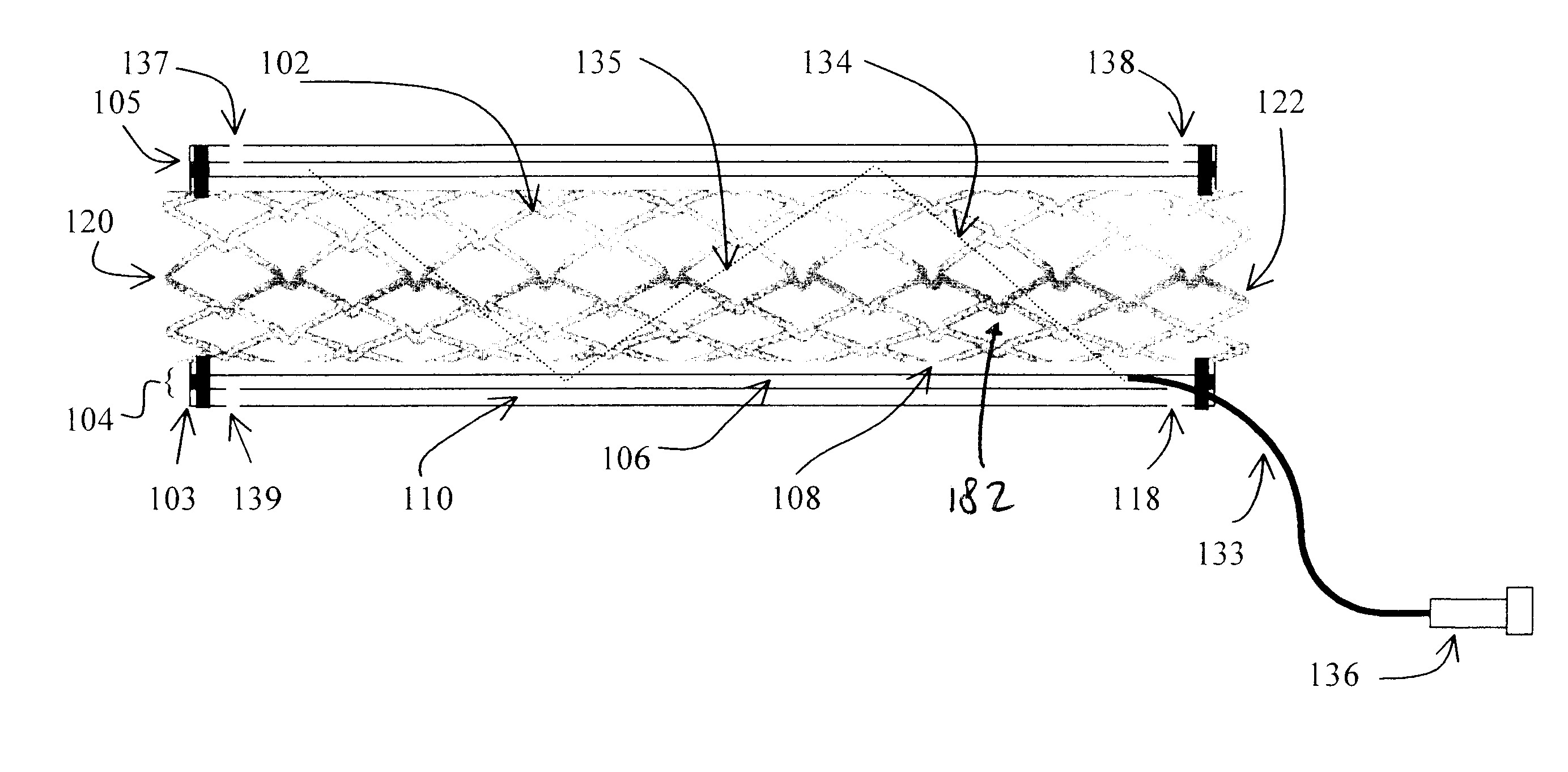
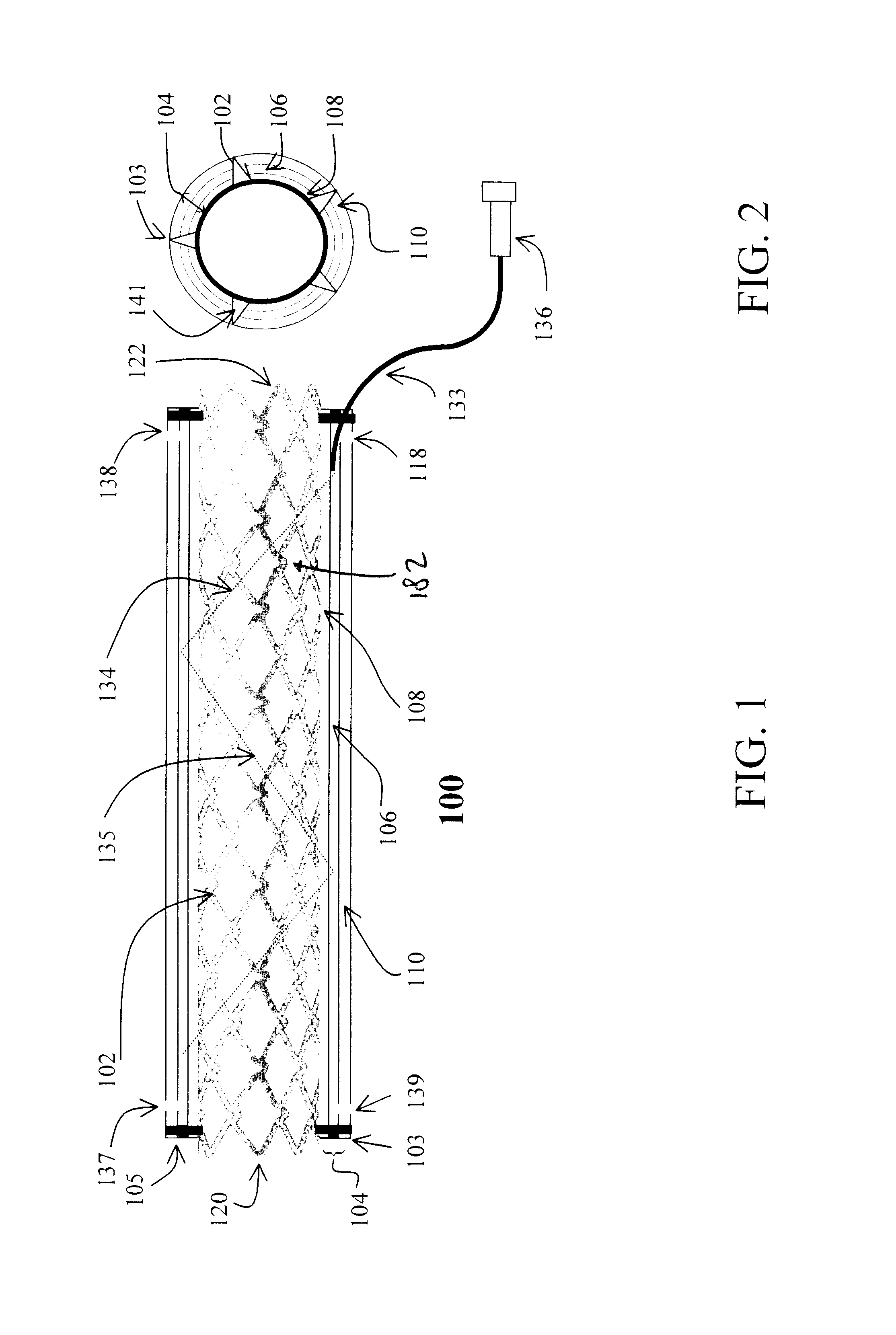
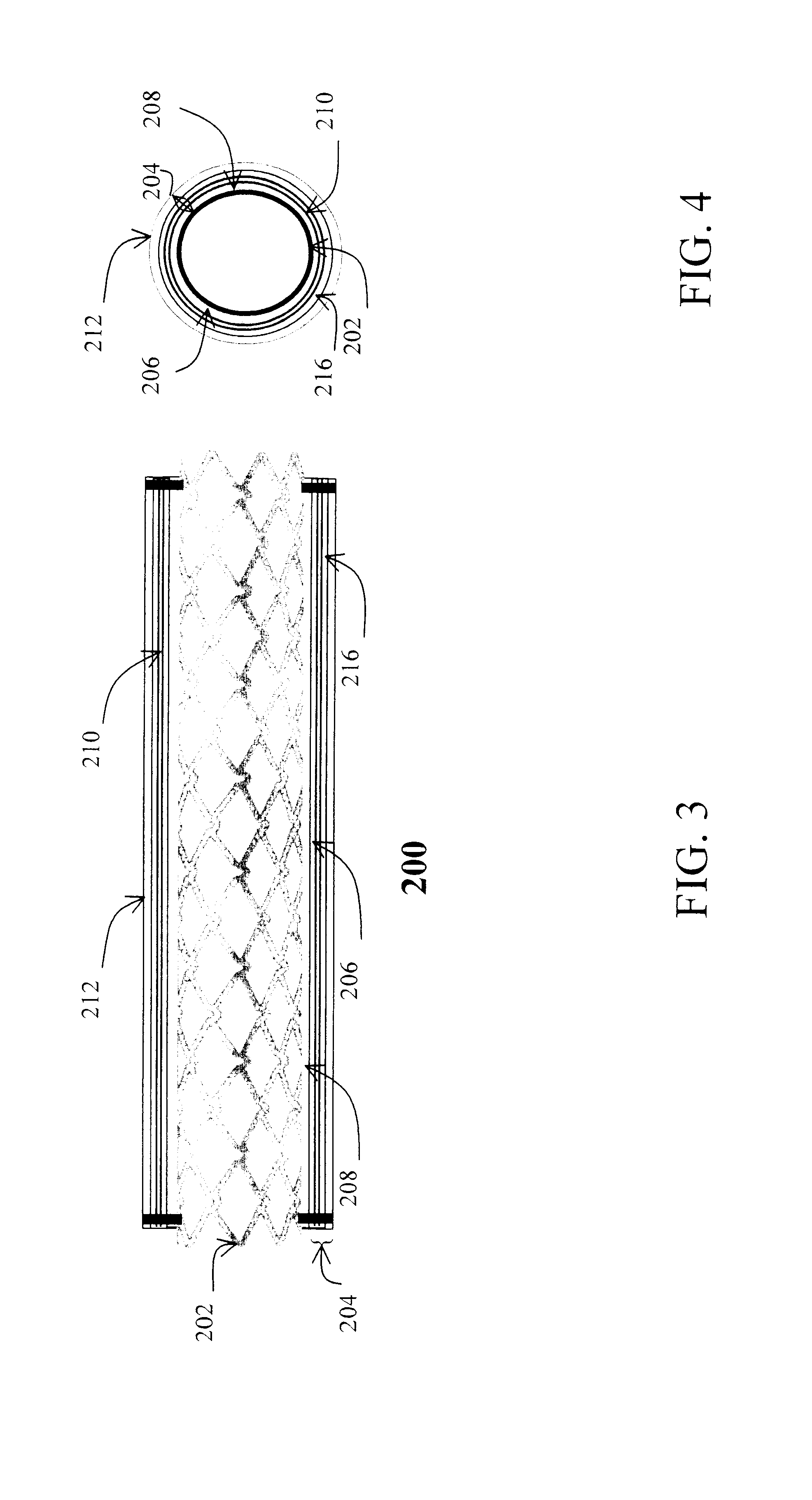
Examples
example 2
Flexible polyurethane forms the outer layer 110 and porous polyurethane forms the inner layer 108 of the cover 104. The edges of the two layers 108, 110 are sealed, and heparin (low molecular weight heparin loaded at 100 unit / cover) is loaded. Heparin is only released to the internal passageway.
example 3
Expandable PTFE forms the outer layer 110, which is sealed with polyurethane. This outer layer 110 is not drug permeable. The inner layer 108 is made of a porous ePTFE. The two layers 108, 110 are sealed at high temperature. 5 ug of Antithrombin D-Phe-Pro-Arg Chloromethy ketone (PPACK) are loaded to the chamber 106. The drug is gradually released to the internal passageway.
To varying degrees, an atheromatous lesion is comprised of a lipid-rich core, a cap of fibrous tissue, vascular muscle cells expressing collagen and elastin that impart tensile strength to an extracellular matrix, and inflammatory cells that produce various enzymes and procoagulant factors. For illustration purposes in the present invention, an atherosclerotic plaque is generally divided into two categories: a vulnerable plaque and a stable plaque. A stable plaque is generally characterized by the most conspicuous stenoses, that is, the angiographically significant (greater than 70% diameter narro...
PUM
 Login to View More
 Abstract
Description
Claims
Application Information
 Login to View More