
Hot mirroring in a computer system with redundant memory subsystems
a computer system and subsystem technology, applied in the direction of electrical equipment construction details, fault response, instruments, etc., can solve the problems of system operations halting, process time-consuming and bothersome, and challenging maintaining a computer system fully and continuously operational
- Summary
- Abstract
- Description
- Claims
- Application Information
AI Technical Summary
Benefits of technology
Problems solved by technology
Method used
Image

Examples
Embodiment Construction
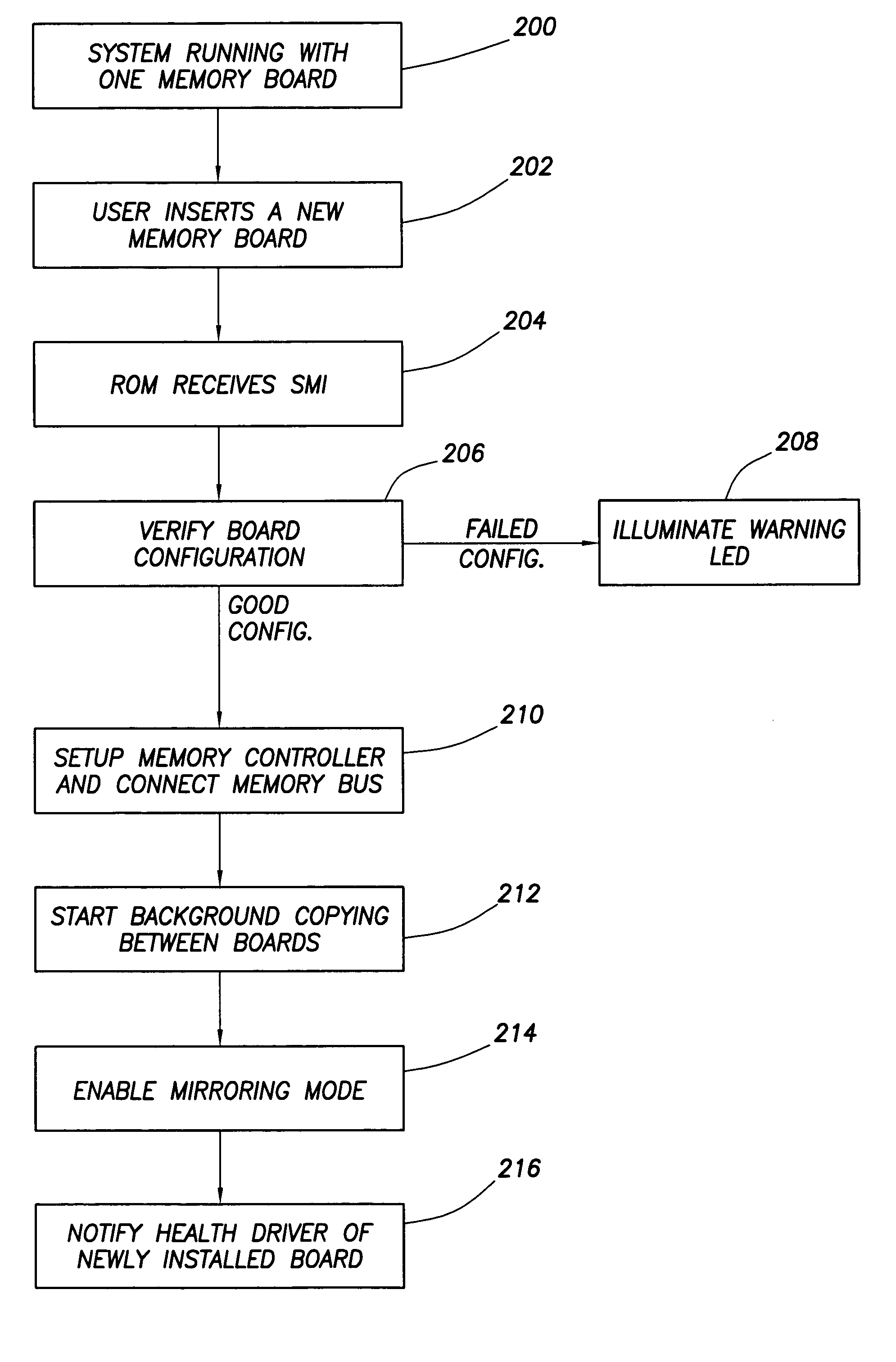
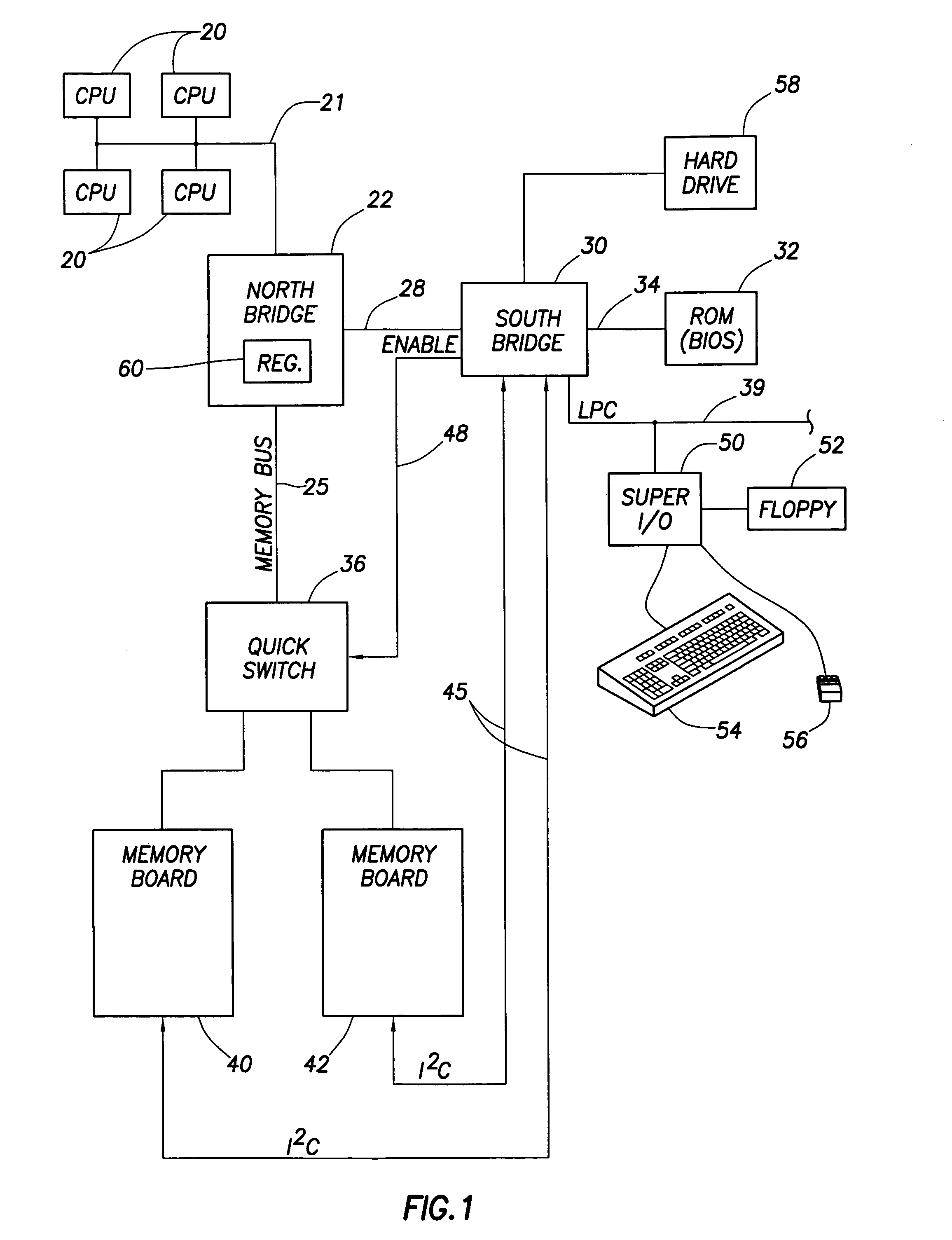
[0010]The problems noted above are solved in large part by a computer system that implements “hot mirroring.” That is, the computer system permits a user to hot plug a new memory board into the system and the system will respond by switching to a mirrored memory mode in which write cycles are performed to both memory boards (new and old). Once a new board is hot plugged into the system, the contents of the old board are copied over, in a background mode, to the new board so that both boards will have the same data. Because this background copying process may take a non-trivial amount of time and may detrimentally interfere with other system traffic (e.g., reads and writes caused by applications running on the system), the system permits a user to program a register associated with the memory controller to exert control over the relative speed of the background copying relative to other system traffic so as to trade-off the time it takes to switch over to the mirroring mode versus th...
PUM
 Login to View More
 Abstract
Description
Claims
Application Information
 Login to View More