

Method for hands only weaving
a technology of weaving and hands, applied in the field of weaving process, can solve the problems of difficult to keep the warp strands in place, limit the ease of use, prohibit instruction opportunities,
- Summary
- Abstract
- Description
- Claims
- Application Information
AI Technical Summary
Benefits of technology
Problems solved by technology
Method used
Image

Examples
Embodiment Construction
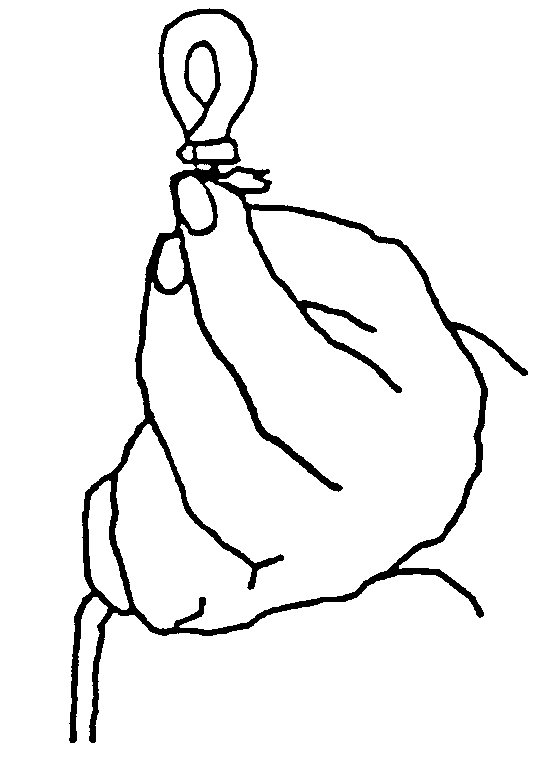
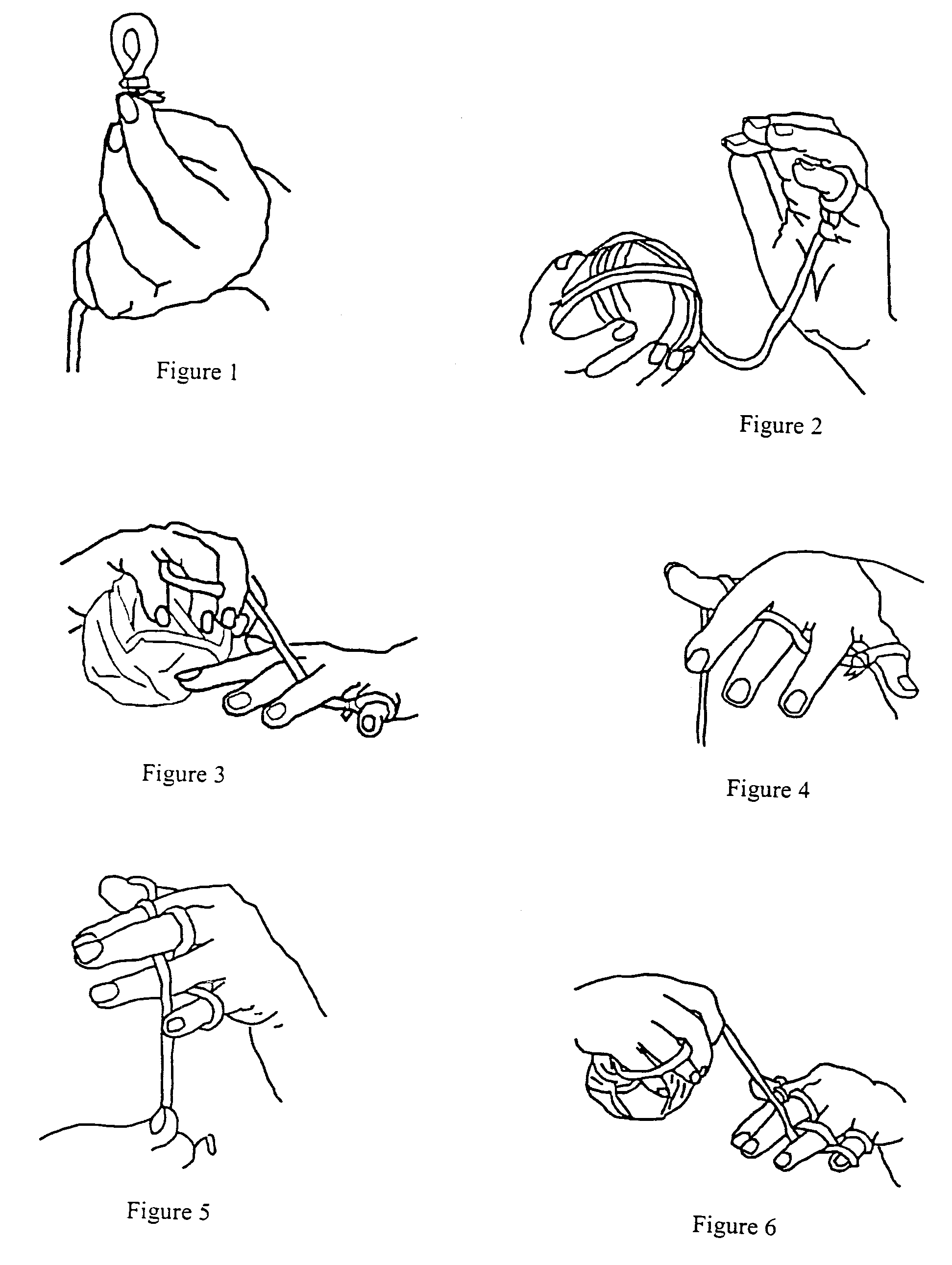
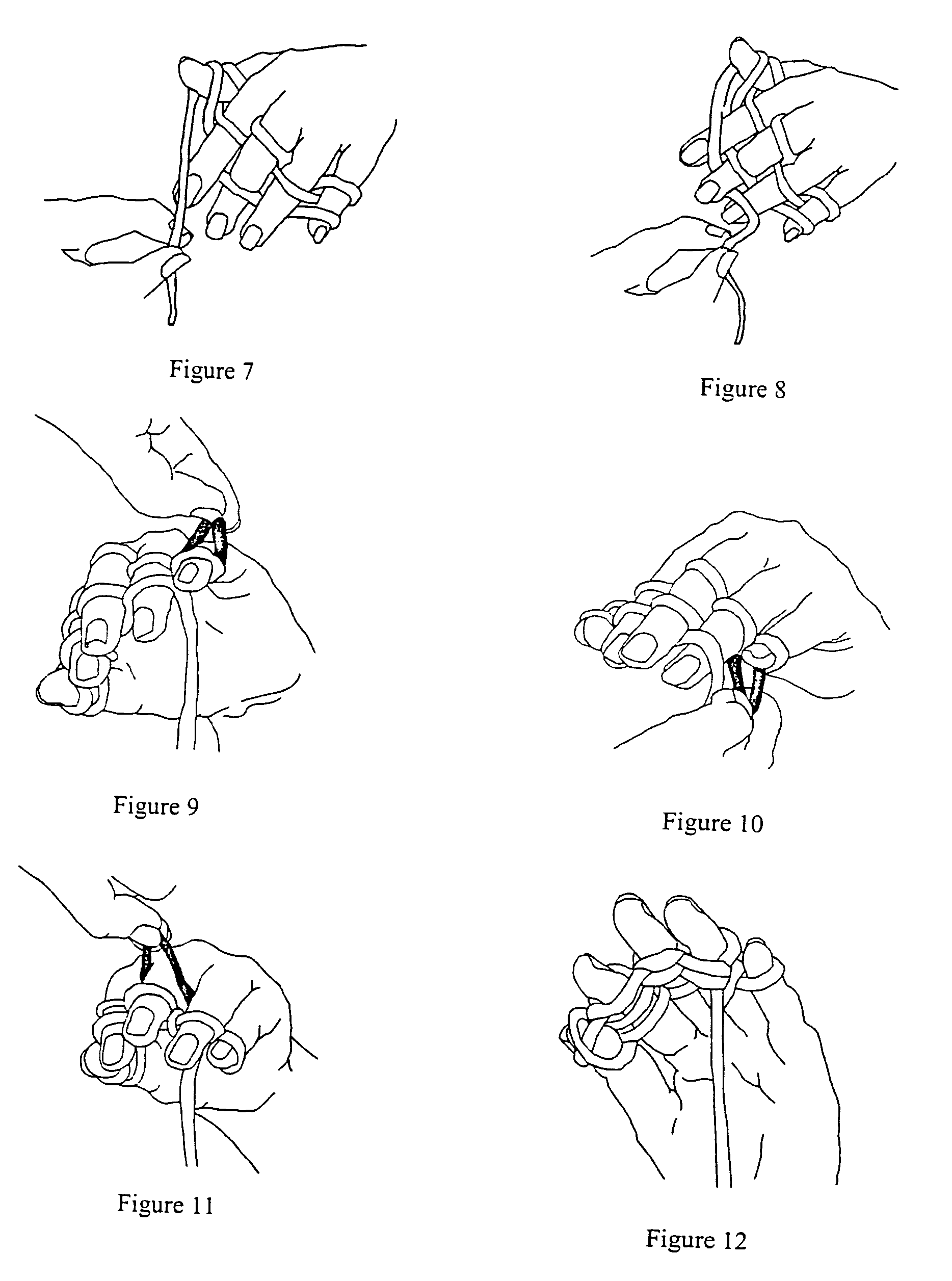
[0018]FIGS. 1–48 illustrate the various steps involved for the present invention hands only weaving process including the steps used to join two or more ribs to create the potential for fashioning the weaving into many different articles which includes, but is not limited to, blankets, sweaters, etc. Initially, to better understand the present invention process a list of terms, along with their definitions, will be provided: (1) Definitions for General Weaving Terms Include:
[0019]a. Loom—a structure that is used as a form for weaving.
[0020]b. Shuttle—a structure that is used to pass material through the weaving loom.
[0021]c. Warp—the part of a structure that is woven around.
[0022]d. Weft—the part of the weaving that is added to the warp.
[0023](2) Terms Specially Defined for the Present Invention Hands Only Weaving Process Include:
[0024]Holding hand—the non-dominant hand which serves as the loom. Though not limiting, the left hand can serve as the holding hand for a right handed prac...
PUM
 Login to View More
 Abstract
Description
Claims
Application Information
 Login to View More