Method and apparatus for managing the execution of a broadcast instruction on a guest processor

a guest processor and broadcast instruction technology, applied in multi-programming arrangements, memory adressing/allocation/relocation, instruments, etc., can solve the problems of out of interpretive execution mode, high cost of computer resources, and certain performance problems

US7197585B2Inactive Publication Date: 2007-03-27IBM CORP
13 Cites 64 Cited by

Patent Information

Authority / Receiving Office
US · United States
Current Assignee / Owner
Publication Date
2007-03-27
Estimated Expiration
Not applicable · inactive patent

Smart Images

  • Figure 1
    Figure 1
  • Figure 2
    Figure 2
  • Figure 3
    Figure 3
Patent Text Reader

Abstract

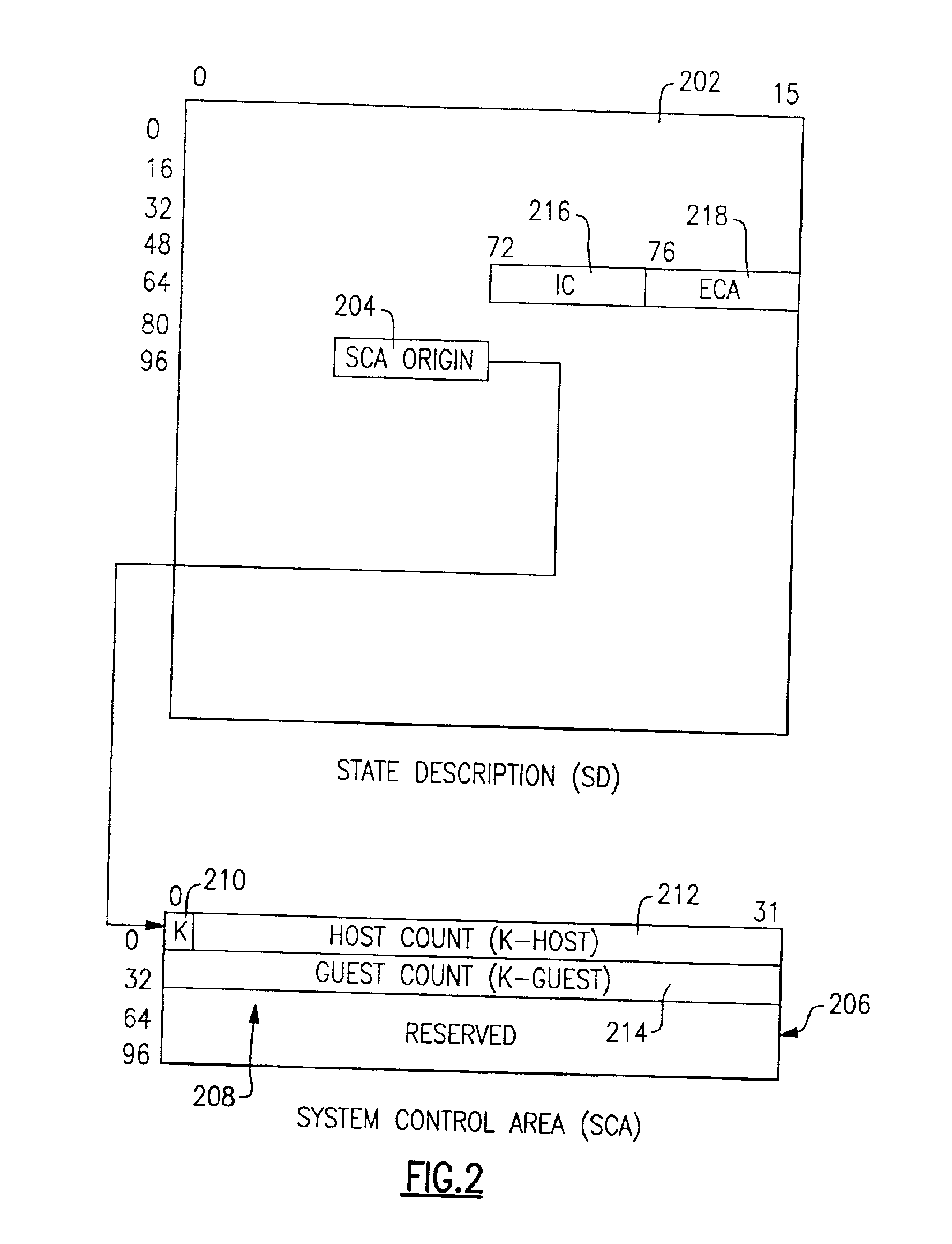
A method and apparatus for managing the execution on guest processors of a broadcast instruction requiring a corresponding operation on other processors of a guest machine. Each of a plurality of processors on an information handling system is operable either as a host processor under the control of a host program executing on a host machine or as a guest processor under the control of a guest program executing on a guest machine. The guest machine is defined by the host program executing on the host machine and contains a plurality of such guest processors forming a guest multiprocessing configuration. A lock is defined for the guest machine containing an indication of whether it is being held by a host lock holder from the host program and a count of the number of processors holding the lock as guest lock holders. Upon decoding a broadcast instruction executing on a processor operating as a guest processor, the lock is tested to determine whether it is being held by a host lock holder. If the lock is being held by a host lock holder, an instruction interception is recognized and execution of the instruction is terminated. If the lock is not being held by a host lock holder, the lock is updated to indicate that it is being held by the guest processor as a shared lock holder, the instruction is executed, and then the lock is updated a second time to indicate that it is no longer being held by the guest processor as a shared lock holder.
Need to check novelty before this filing date? Find Prior Art

Description

BACKGROUND OF THE INVENTION

[0001] 1. Field of the Invention

[0002] This invention relates to a method and apparatus for controlling the execution of a broadcast instruction on a guest processor of a guest multiprocessing configuration. More particularly, it relates to a method and apparatus for controlling the execution, on a guest processor operating in interpretive execution mode, of an instruction for invalidating table entries of a dynamic address translation (DAT) system or for purging contents of buffers used for address translation. The invention also relates more generally to a method and apparatus for managing a lock.

[0003] 2. Description of the Related Art

[0004] This invention relates to the execution on guest processors of instructions relating to dynamic address translation. A brief discussion of the concepts of dynamic address translation and virtual or guest machines as they relate to the present invention follows.

[0005] Dynamic address translation is a well-known mechanism ...

Examples

Embodiment Construction

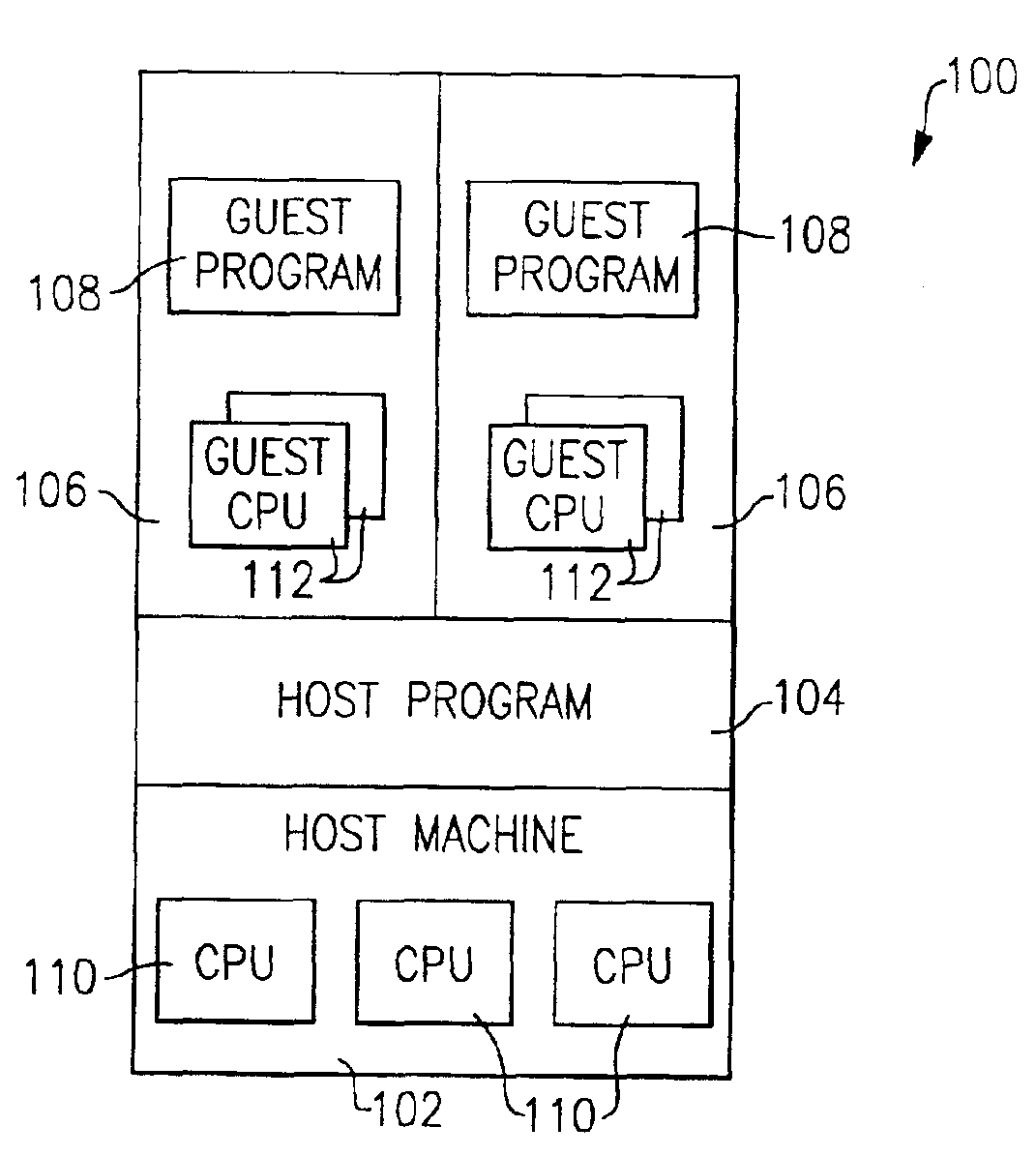
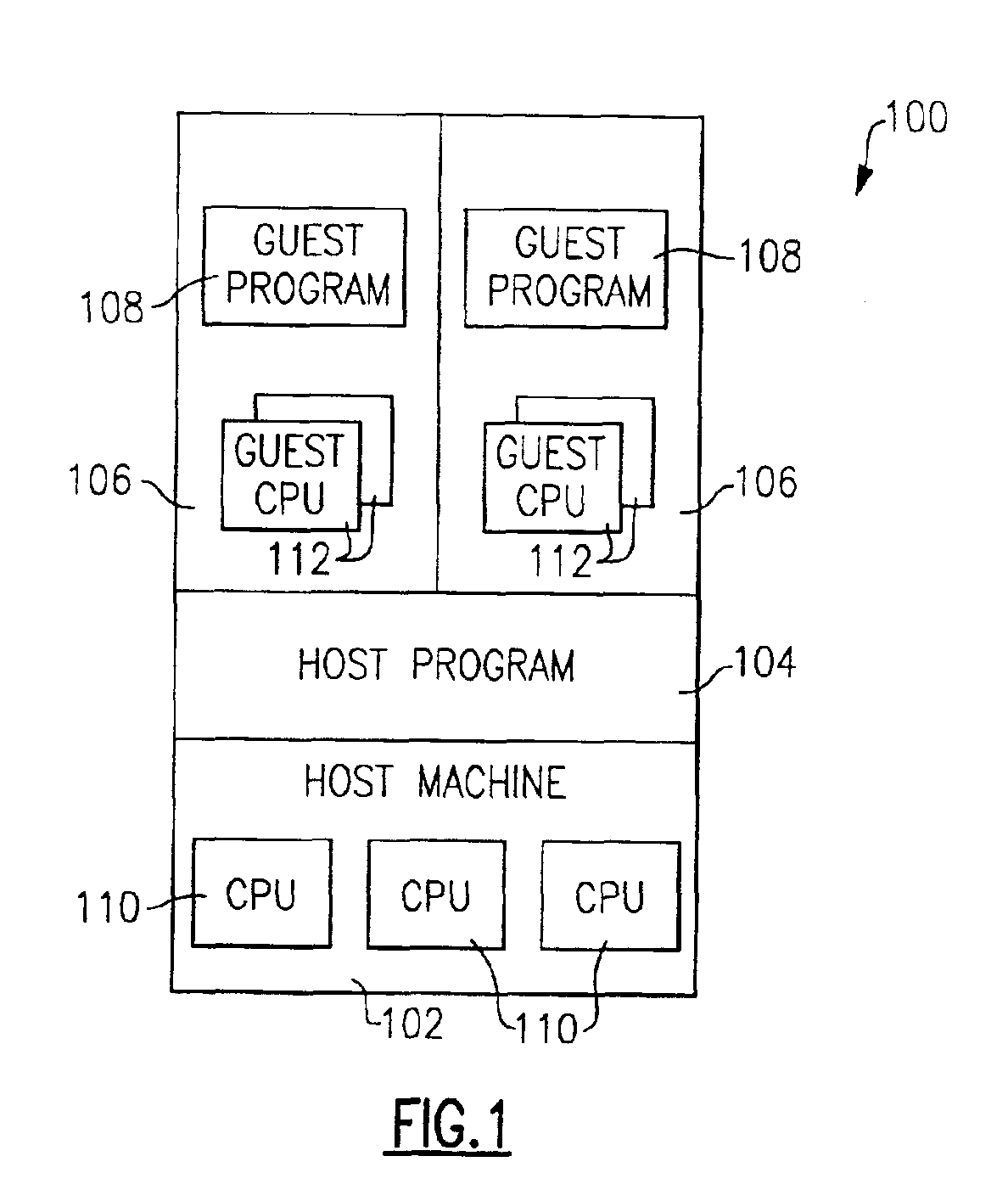
[0022]FIG. 1 shows a computer system 100 incorporating the present invention. Computer system 100 comprises a host machine 102 having a host program 104 executing thereon. Together the host machine 102 and the host program 104 define one or more virtual or guest machines 106, each of which has a guest program 108 executing thereon. As described above, host machine 102 may be an IBM eServer S / 390 or zSeries server, while host program 104 may be an IBM VM / ESA or z / VM operating system, or the Processor Resource / Systems Manager (PR / SM) feature of an IBM eSeries S / 390 or zSeries server. Where PR / SM is used for the host program 104, the guest machines 106 created are generally referred to a logical partitions, but the term “guest machine” or “virtual machine” will generally be used herein for the sake of uniformity. Each guest program 108, which may be the same or different for each guest machine 106, may be any suitable operating system such as OS / 390, z / OS, Linux or the like.

[0023]Host ...