[0028]Such that when the nesting season approach, this innate sense of belonging and pre-mediated conditioning ingrained into the conscious and sub-conscious mind urges nesting swiftlets to return home to its colony and birth-place to roost, congregate, mate, build new nests, lay eggs,
brood, hatch and rear the next generation of young. Special survival techniques and live training exercises may be provided to
juvenile birds in a controlled environment to help them survive better when foraging for food in the vicinity of the avian farm.
[0029]An object of the present invention is to provide a method and
system including facilities and techniques for the large scale
domestication, breeding and rearing of swiftlets for their nests, commercial production techniques, managed sustainable harvesting and safe collection of edible bird's nests to satisfy the
appetite of connoisseurs and to meet market demand without harming
wildlife. A
scientific method of farming including the provision of apparatus and techniques beneficial to avian husbandry and the conservation of wild swiftlets capable of producing edible bird's nests. Scarcity of supply relative to global demand serves to artificially inflate the high prices of this “
delicacy.” It is a fact that edible bird's nests comprises an essential ingredient in Asian culinary delights and “
traditional medicine” practices, a tonic and an invigorating
health food for the rich and affluent to pep up their energy levels.
[0030]The method as disclosed may create a new niche or spin-off industry in
animal husbandry for high volume production of edible bird's nests in commercial farms comprising specialized production facilities. Providing the traditional edible bird's nest industry steeped in harvesting of wild nests with an alternative supply of commercially farmed edible bird's nests. A cleaner, healthier and high quality source of
health food product produced in a controlled environment by means of modern scientific farming techniques. Commercial farming possess advantages such as economics of scale,
high productivity and efficiency; safe breeding environment for swiftlets and safe harvesting of edible bird's nests by collectors trained in the use of
mountaineering equipment and mechanized lifting systems; including other specialized equipment, facilities and techniques designed, configured and tailor made for the edible bird's nest production facility; modern management techniques, deployment of professional expertise such as veterinarians and ornithologists, avian medications,
vaccination against
disease and sickness, etc. Favorable conditions that only a farm environment can provide. Such advantages may be used to maximize the avian
population by minimizing mortality rates, thus increasing productivity and efficiency of the production facility. Farmed edible bird's nest provides connoisseurs with a choice of consuming such nests with a clear conscience, secure in the knowledge that they had not harmed wild-life. But had in fact, helped in the conservation of
wild species of swiftlets by making a conscious personal choice in choosing farmed products, in preference, over
wild life related products.
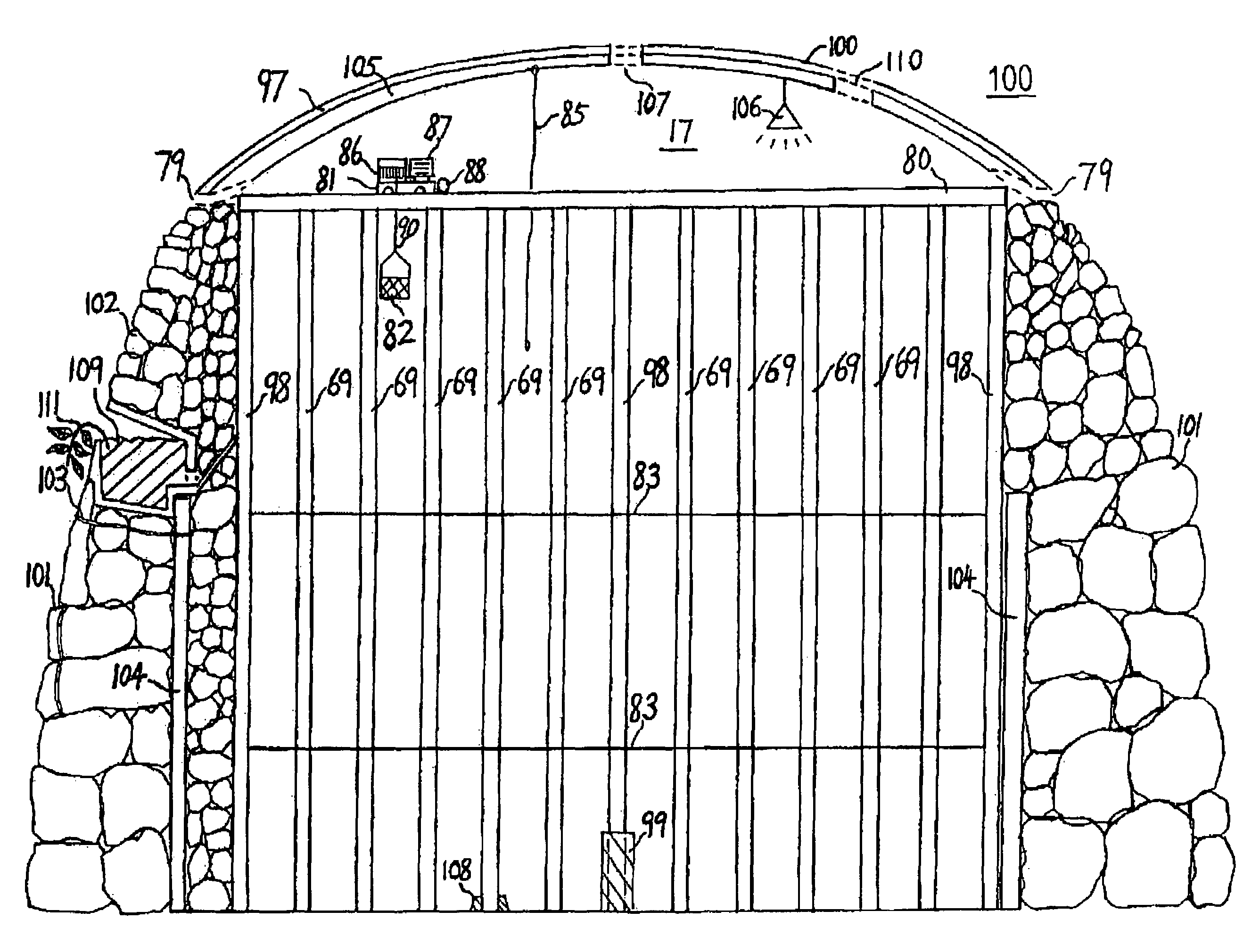
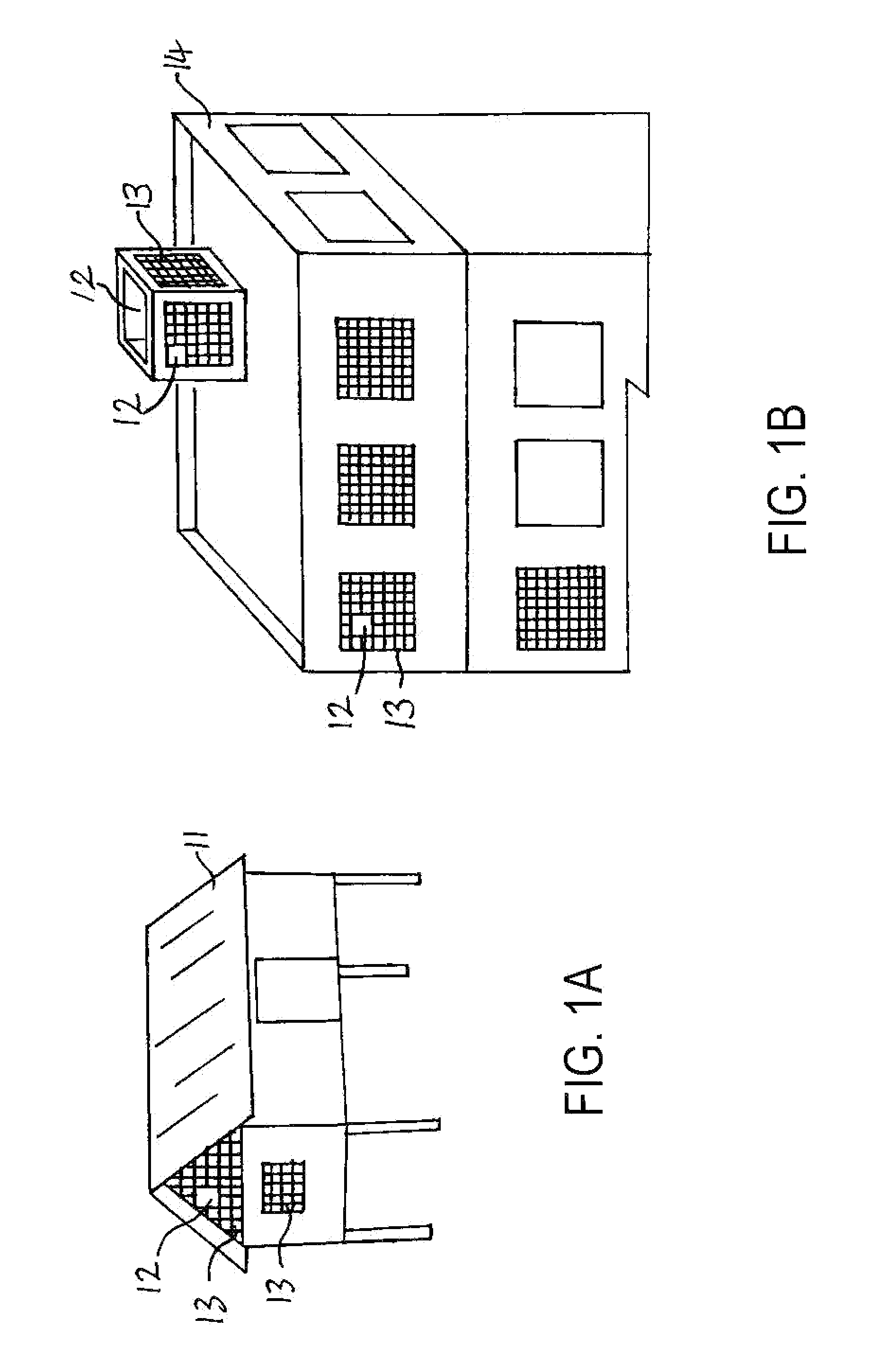
[0031]Included in the swiftlet's breeding and edible bird's nests production facility of present invention are specialized equipment such as predator traps; arrangement to exclude or keep out predators from the nesting
habitat; commercial breeding and production facilities for worms, gigantic enveloping cages protecting the roosting habitat;
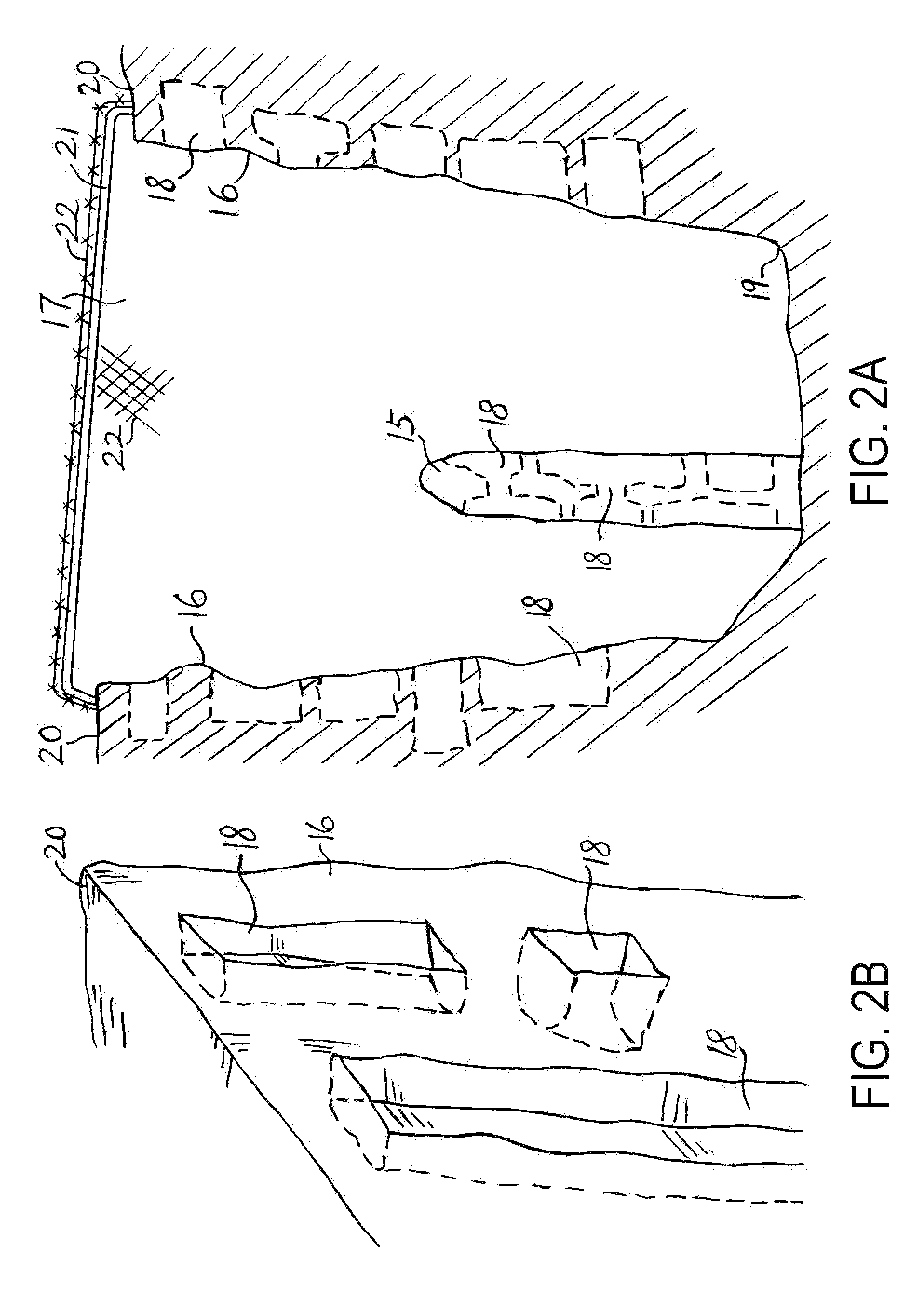
adaptation, modification and integration of nesting habitat into natural formations like rock cliffs and mountain valleys forming ecologically and
environmentally friendly avian eco-farms; artificial nesting cavities built into natural cliffs; man made roosting structures and cavities, wholly man made artificial “caves” for breeding swiftlets; nesting panels specifically designed for swiftlets to
perch vertically and to build nests during the breeding season; designs incorporating safety features into the constructions, apparatus and safety devices to minimize fledgling mortality rates;
pest control measures including
fumigation with
chlorine gas and cleaning of nesting panels with
high pressure water jets; mechanized lifting systems,
safety equipment and apparatus for safely collecting and harvesting edible bird's nests from great heights, hundreds of meters
above ground level.


 Login to View More
  Login to View More