
Communications system with direct access mailbox
a communication system and mailbox technology, applied in the field of telecommunications systems, can solve the problem of providing no means for the called party to control
- Summary
- Abstract
- Description
- Claims
- Application Information
AI Technical Summary
Benefits of technology
Problems solved by technology
Method used
Image

Examples
second embodiment
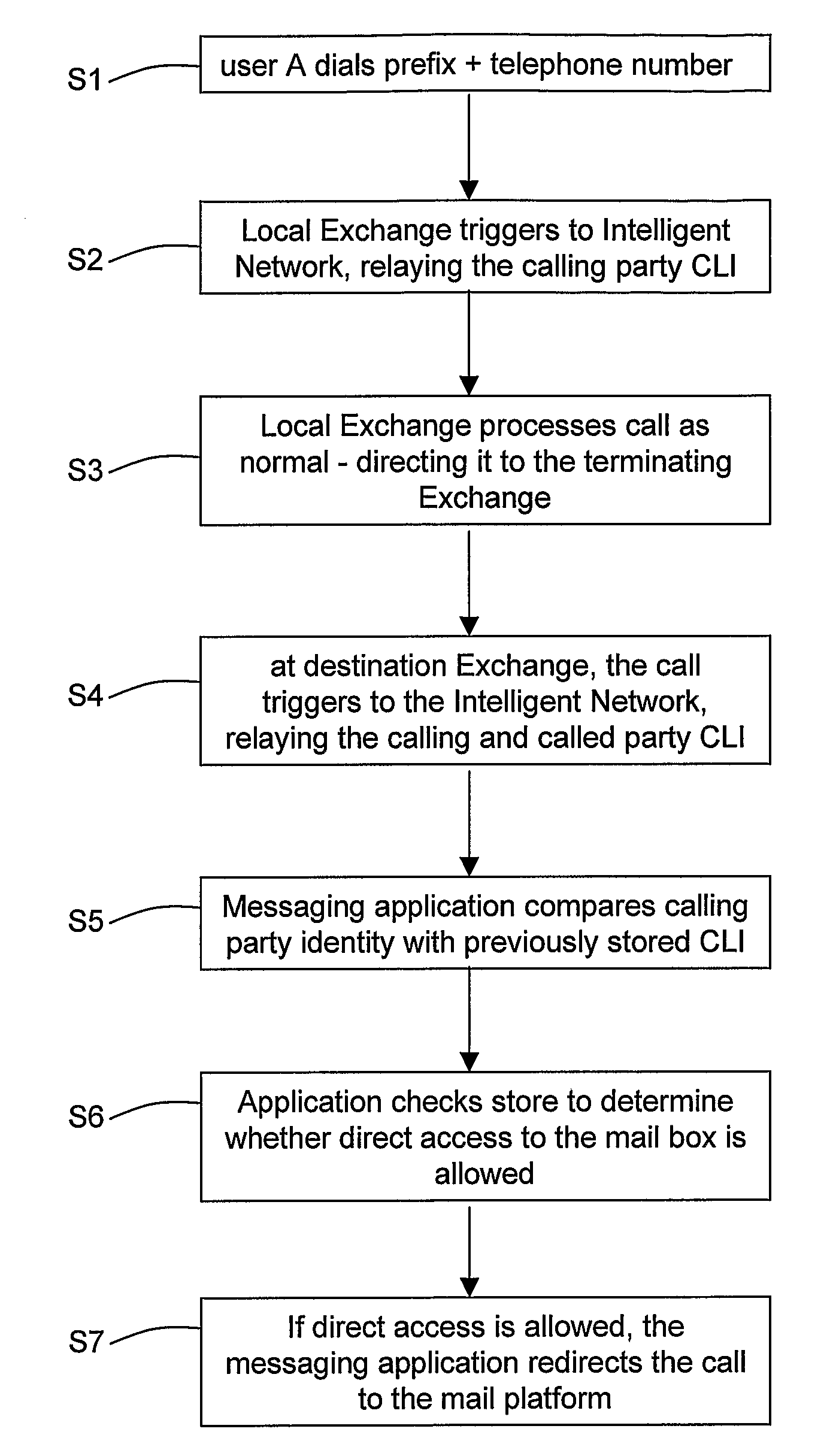
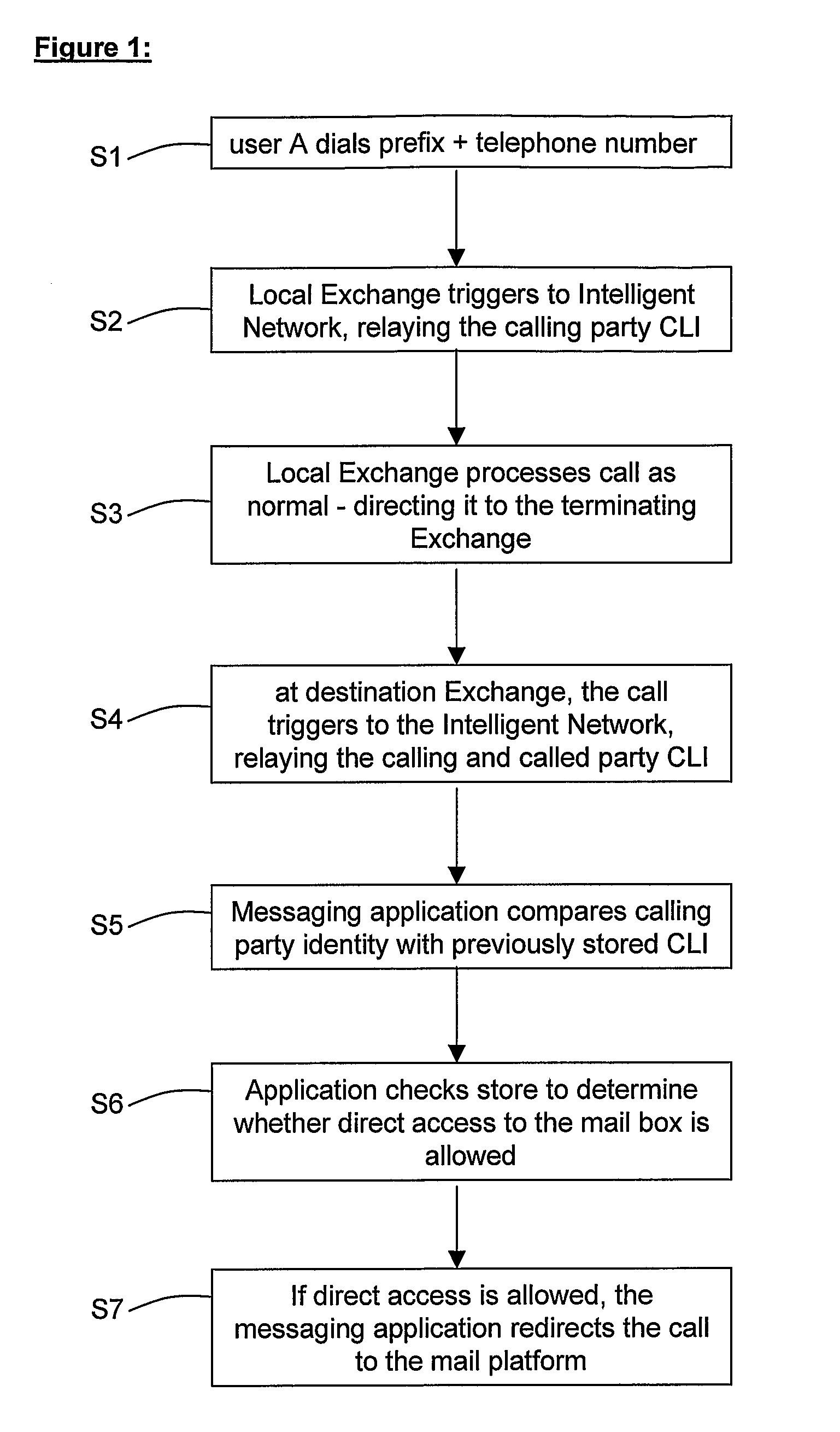
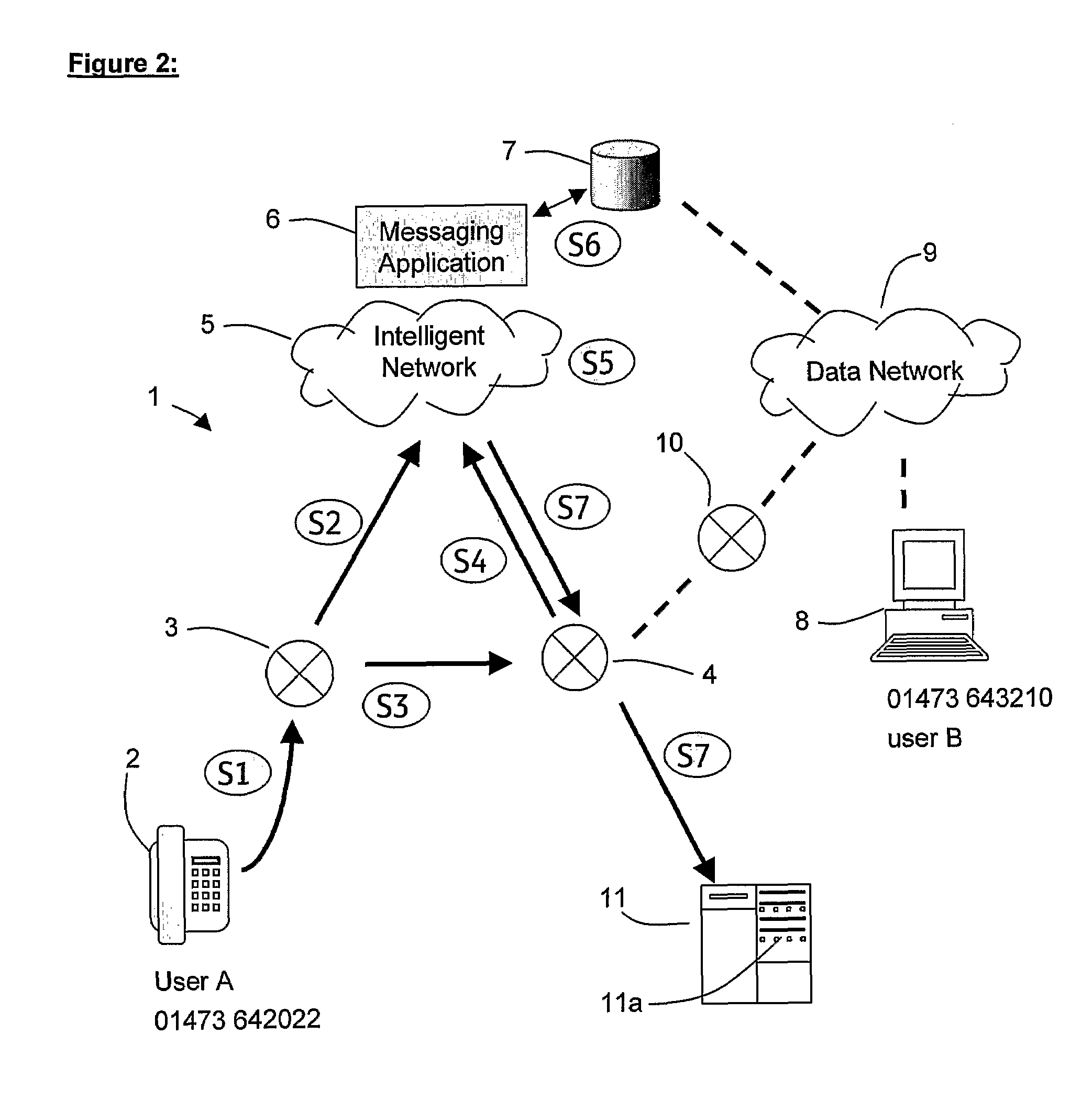
[0055]Whilst FIG. 2 showed a first example of a system in which a first user can send an audio-visual communication directly to the mailbox of a second user, FIG. 7 shows an alternative arrangement of a system in which this can also be performed. FIGS. 6 and 7 show a procedure and communication system 20 in which a first user (A) of a communication device 2 can elect to send an audio-visual communication directly to a mailbox 21a of a second user (B). User A's telephone 2 is connected in a conventional manner to a public switched telephone network (PSTN) via a digital local exchange (DLE) 23. The PSTN network comprises a multiplicity of exchanges as is conventionally known in the art, but for clarity only one other is illustrated in FIG. 7, DLE 24.
[0056]In step S20, user A decides they would like to leave a voice mail message for user B and uses telephone 2 to dial a three digit prefix [171] followed by the telephone number [01473 643210] they would usually dial to reach user B. The...
third embodiment
[0059]Whilst FIGS. 2 and 7 showed first and second examples respectively of systems in which a first user can send an audio-visual communication directly to the mailbox of a second user, FIG. 9 shows a further alternative system in which this can be performed. FIGS. 8 and 9 show a procedure and communication system 30 in which a first user (A) of a communication device 2 can elect to send an audio-visual communication directly to a mailbox 31a of a second user (B). User A's telephone 2 is connected in a conventional manner to a public switched telephone network (PSTN) via a digital local exchange (DLE) 33. The PSTN network comprises a multiplicity of exchanges as is conventionally known in the art, but for clarity only one other is illustrated in FIG. 7, DLE 34.
[0060]In step S30, user A decides they would like to leave a voice mail message for user B and uses telephone 2 to dial a three digit prefix [171] followed by the telephone number [01473 643210] they would usually dial to rea...
PUM
 Login to View More
 Abstract
Description
Claims
Application Information
 Login to View More