
Method and system for verifying power-optimized electronic designs using equivalency checking
a technology of equivalency checking and verification method, applied in the field of equivalency checking techniques, to achieve the effect of saving power
- Summary
- Abstract
- Description
- Claims
- Application Information
AI Technical Summary
Benefits of technology
Problems solved by technology
Method used
Image

Examples
Embodiment Construction
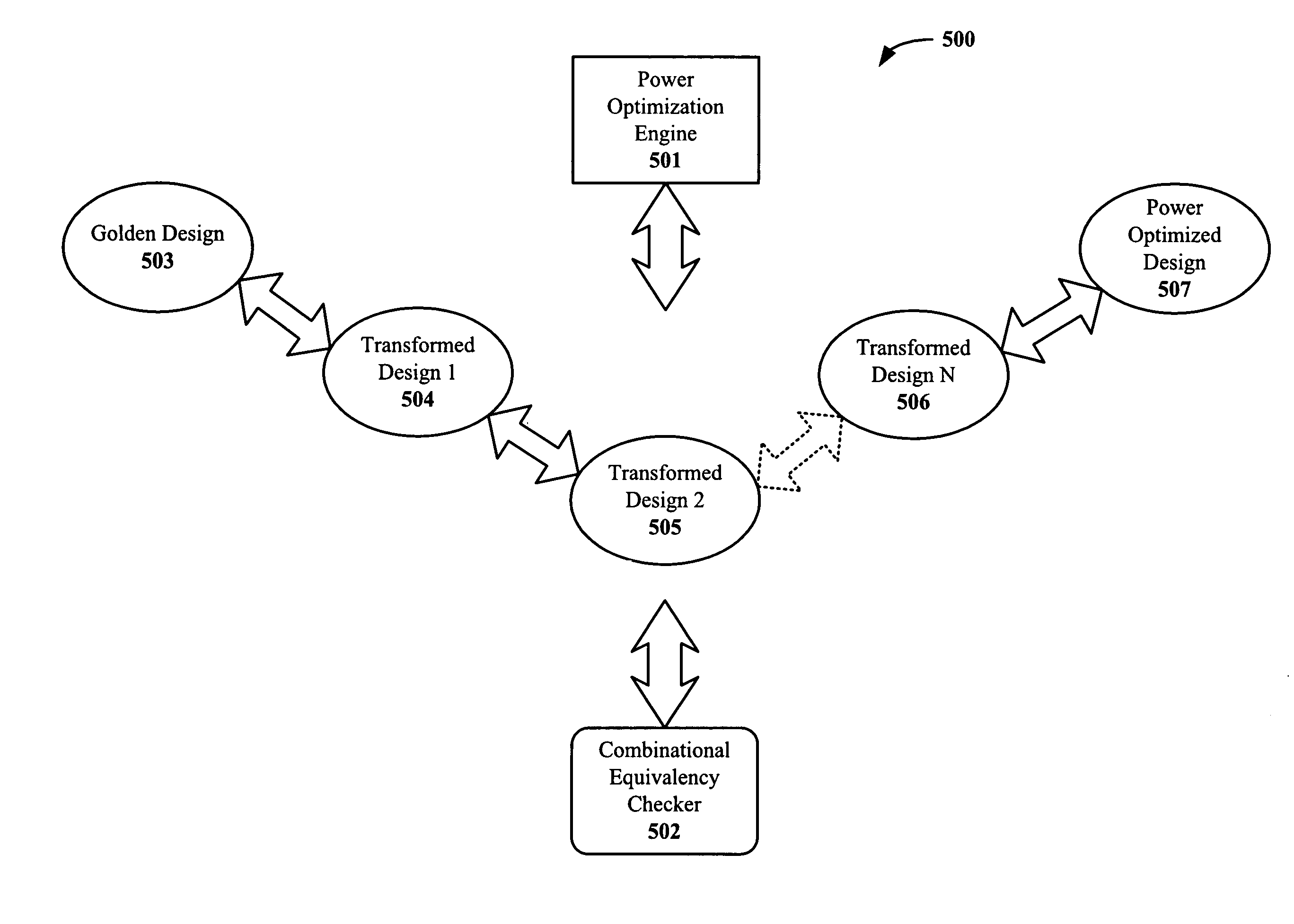
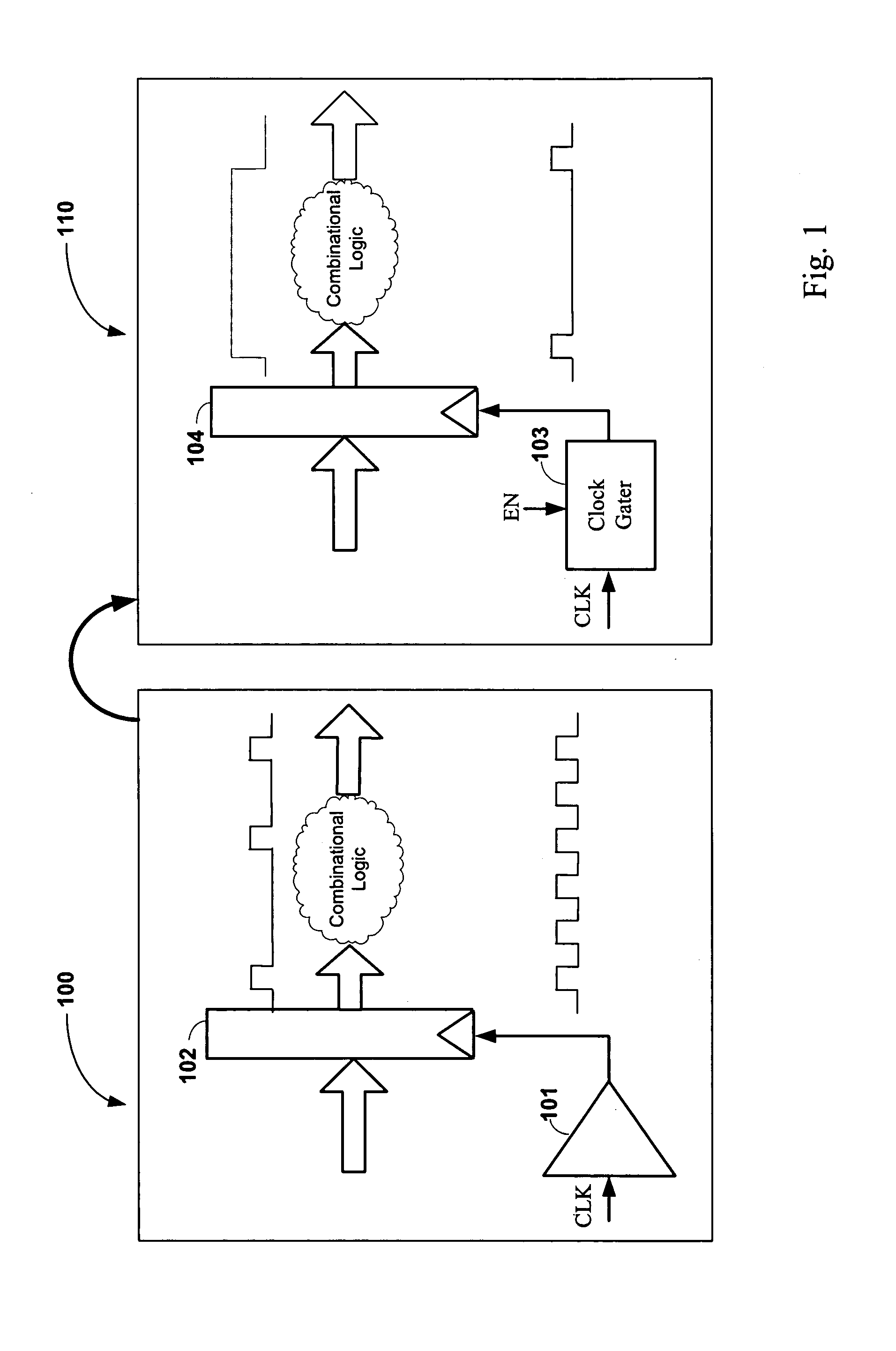
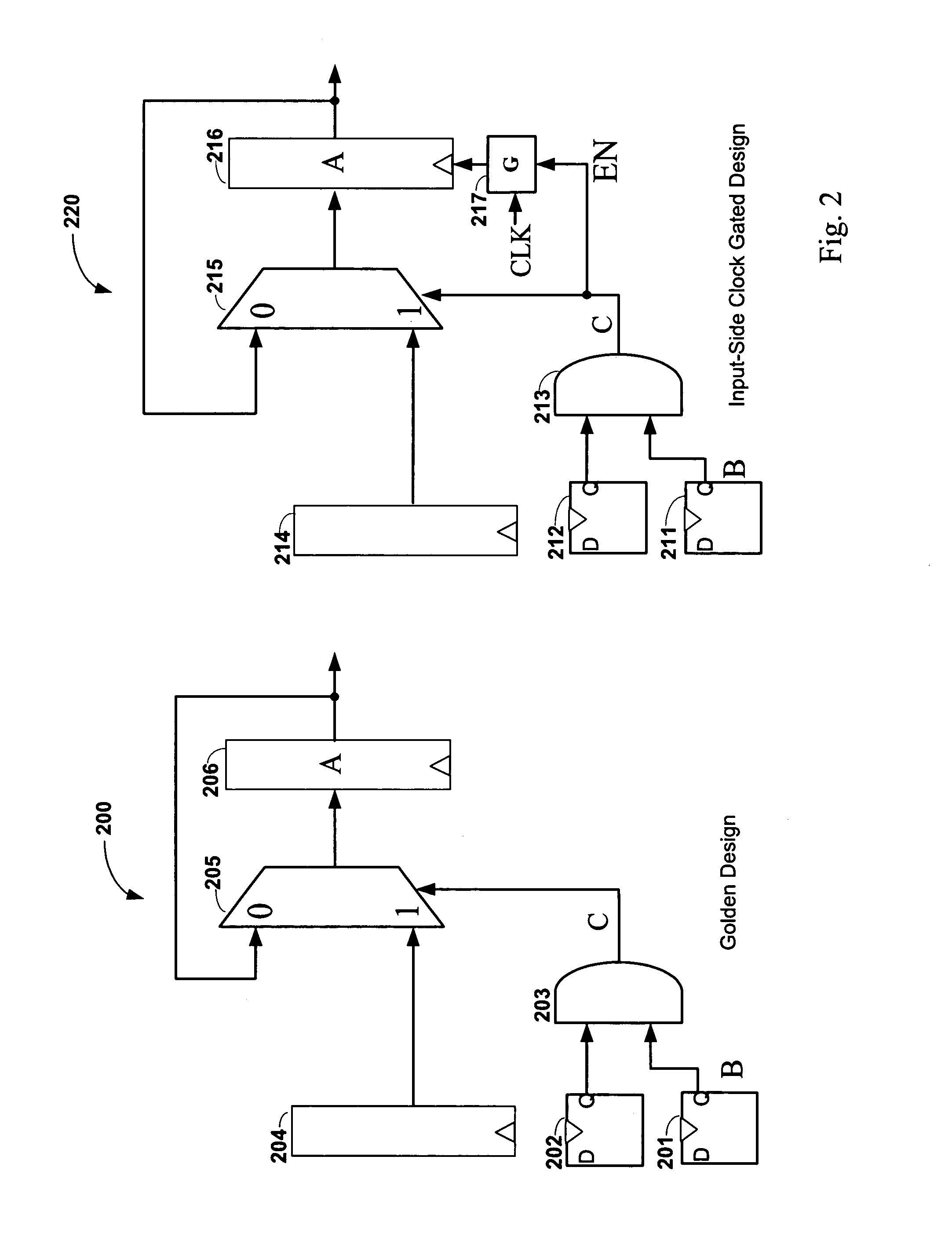
[0022]In the following description, for purpose of explanation, specific details are set forth in order to provide an understanding of the invention. It will be apparent, however, to one skilled in the art that the invention may be practiced without these details. Reference is made to the preferred embodiments of the invention. While the invention is described in conjunction with the preferred embodiments, the invention is not intended to be limited by these preferred embodiments. On the contrary, the invention is intended to cover alternatives, modifications and equivalents, which may be included within the spirit and scope of the invention as defined by the appended claims. For example, the present invention may apply to system-on-chip designs, FPGAs, custom ASIC and processor designs, structured ASICs and discrete electronic designs. Furthermore, in the following detailed description of the invention, numerous specific details are set forth in order to provide a thorough understa...
PUM
 Login to View More
 Abstract
Description
Claims
Application Information
 Login to View More