
Switch fabric
a technology of ethernet switches and fabric, applied in the field of computer networking, can solve the problems of low cost of switches, network congestion, and shortcoming associated with switches, and achieve the effects of high availability, high capacity, and high capacity
- Summary
- Abstract
- Description
- Claims
- Application Information
AI Technical Summary
Benefits of technology
Problems solved by technology
Method used
Image

Examples
Embodiment Construction
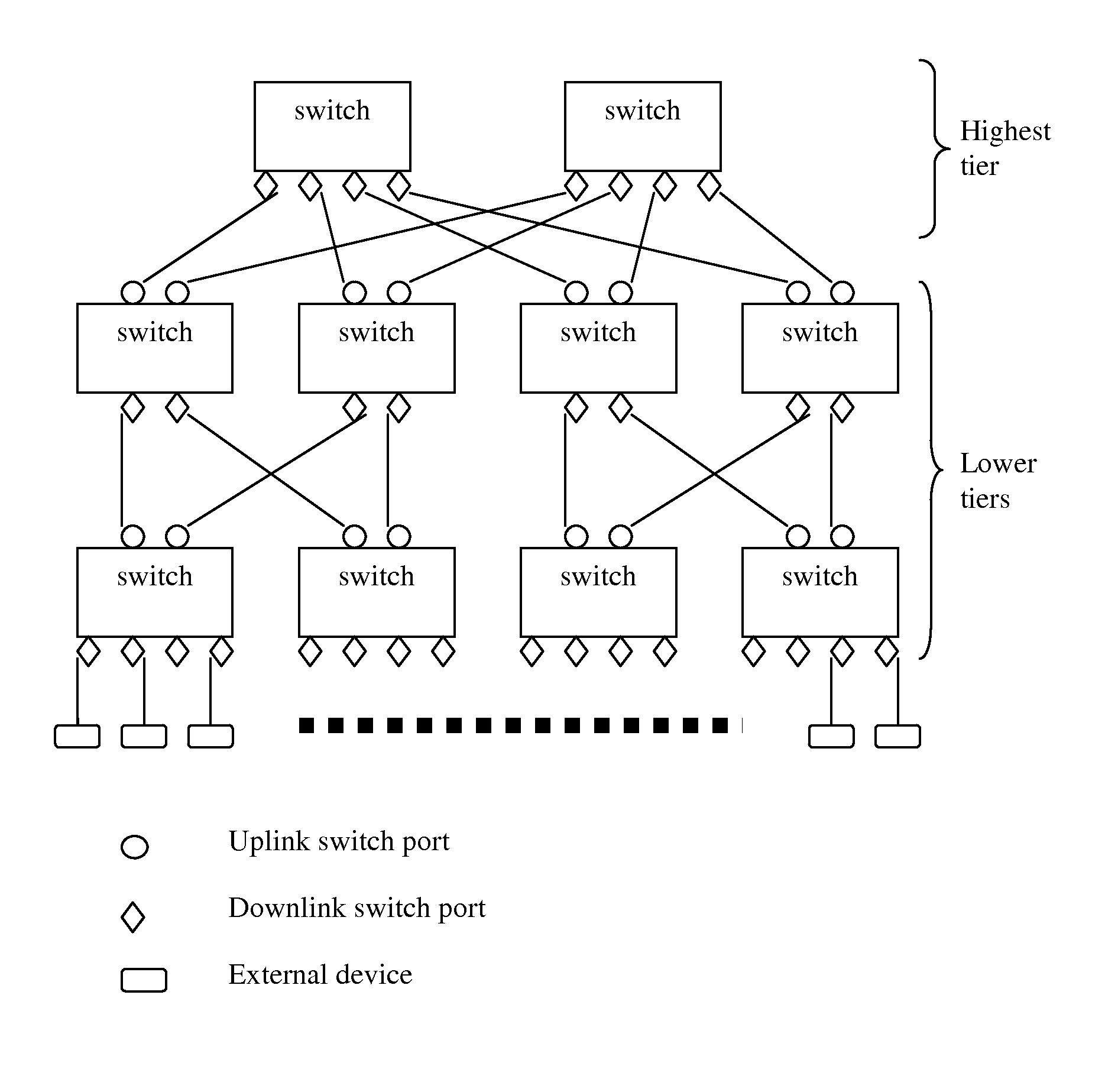
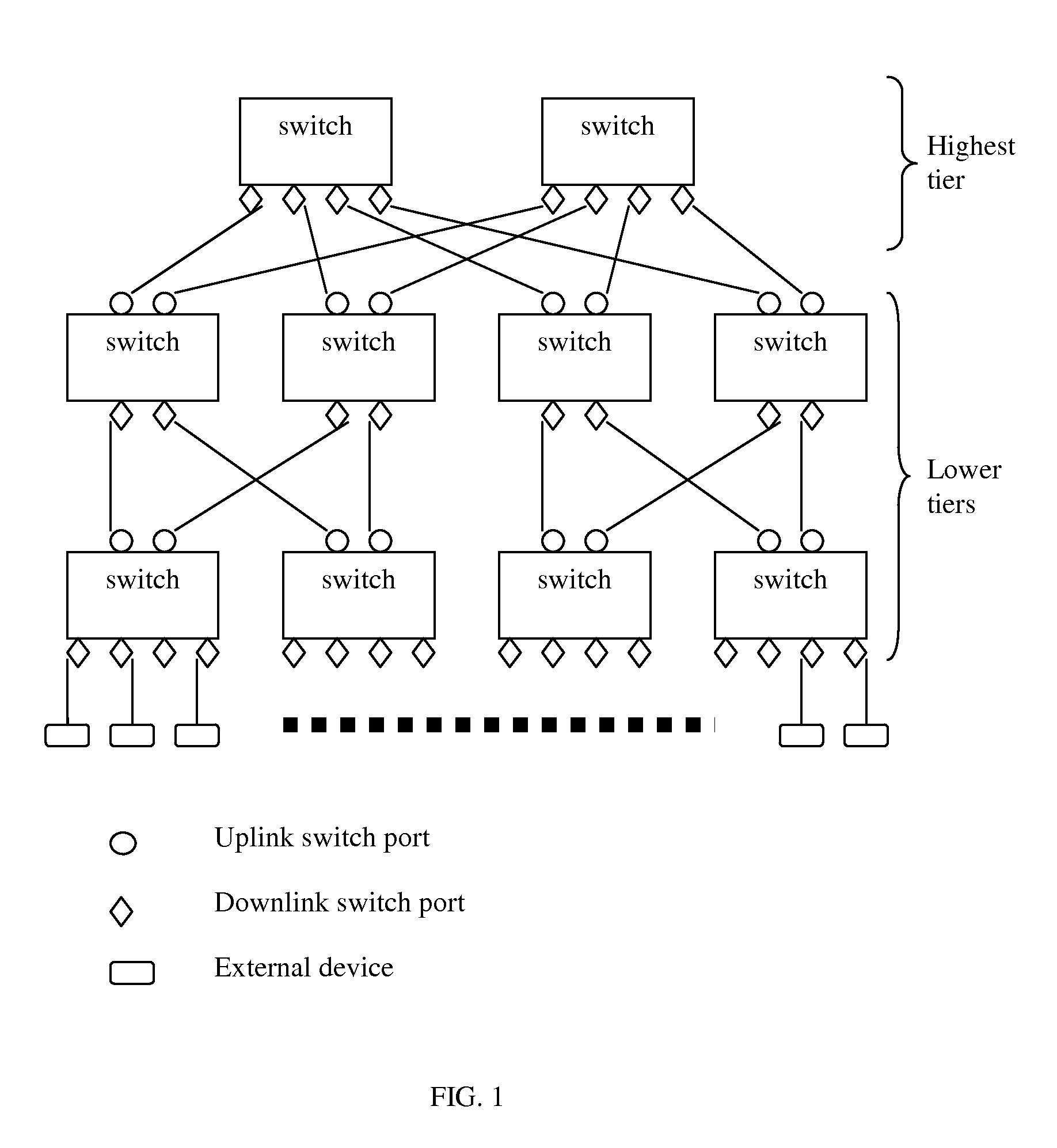
[0023]The system comprises a plurality of switches organized in tiers. There should be at least one tier. To scale the system, however, there should be multiple tiers. A switch has a limited number of switch ports. In other words, there are a limited number of connections that can be made to a switch. To support many external devices connected to the system, the system should have many switches. The switches should be interconnected to provide communications among the external devices. Organizing the switches in tiers would achieve inter-connectivity. Packets from an external device may enter a switch in the lowest tier and be forwarded to switches in higher tiers, then eventually to a switch in the highest tier. On the switch in the highest tier, the packets may be subject to typical switching and routing operations. Then the packets are forwarded to switches in the lower tiers, to a switch in the lowest tier, and eventually to the destined external device. Usually, a switch in a h...
PUM
 Login to View More
 Abstract
Description
Claims
Application Information
 Login to View More