
Process for removal of dissolved hydrogen sulfide and reduction of sewage BOD in sewer or other waste systems
a technology of dissolved hydrogen sulfide and sewage bod, which is applied in the direction of biological water/sewage treatment, sustainable biological treatment, multi-stage water/sewage treatment, etc., can solve the problem of instantaneous removal of hydrogen sulfide, and achieve the elimination or substantial reduction of hydrogen sulfide and other minor odors
- Summary
- Abstract
- Description
- Claims
- Application Information
AI Technical Summary
Benefits of technology
Problems solved by technology
Method used
Image

Examples
example
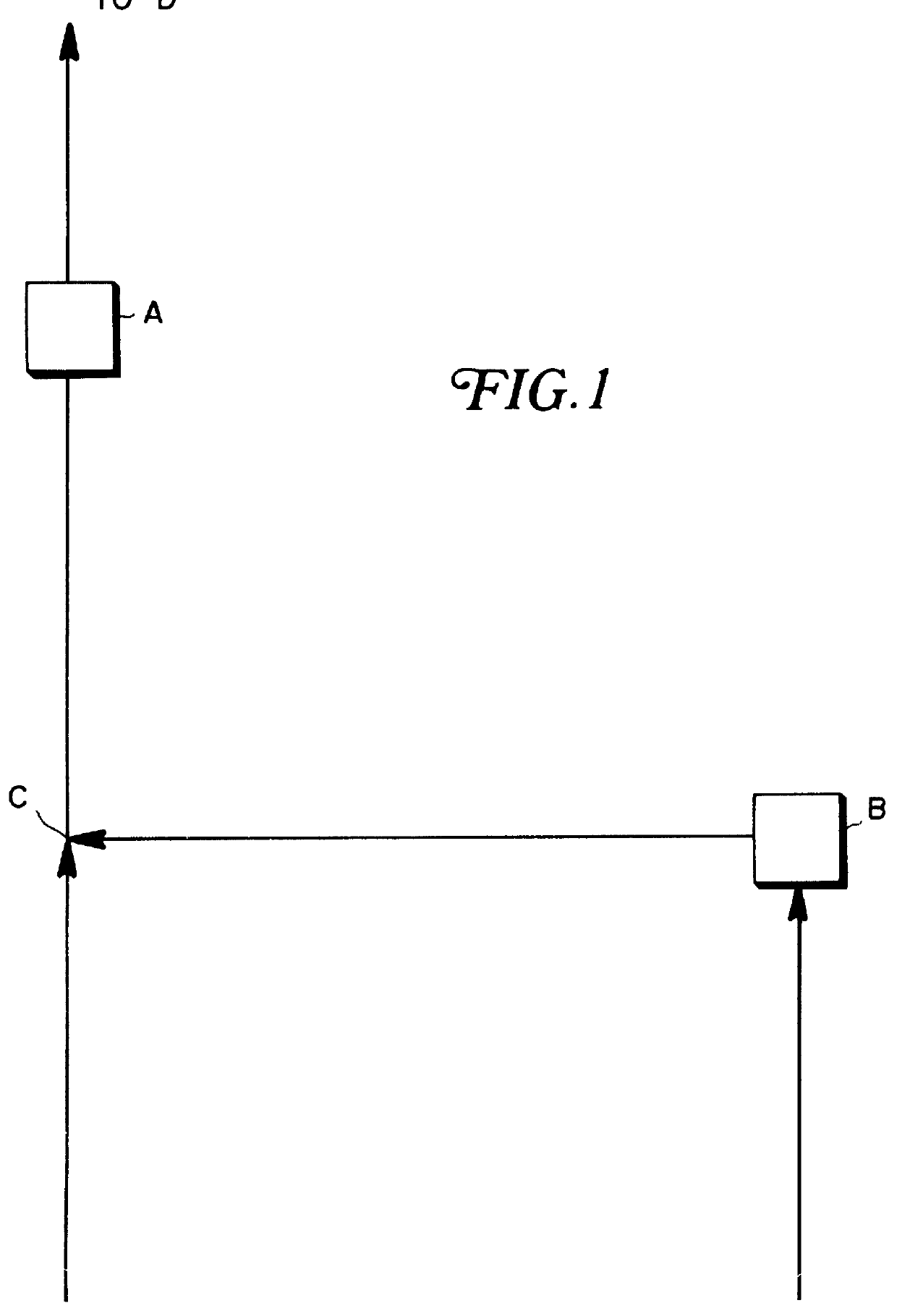
With reference to the FIGURE, sodium nitrate was added to a sewer system in Jacksonville, Florida at a master pump station, or feed point B, upstream of a second master pump station comprising a monitoring point A. The feed point B was at a point removed from an intersection C of the feed line and main sewage line, as indicated in the FIGURE.
The treated sewage continued to a downstream waste water treatment plant in Jacksonville, indicated as point D.
Average detention times (based on average daily flows, line sizes and lengths are as follows:
B.fwdarw.C 7 hours
C.fwdarw.A 3.3 hours
B.fwdarw.A 10.3 hours
In terms of the description provided above, the B.fwdarw.C distance and retention time of 7 hours constitutes the incubation period, coupled with the distance C.fwdarw.A and associated retention time of 3.3 hours comprises a total of 10.3 hours from addition of the nitrate station at point B to the monitoring at point A, thereby permitting sufficient time for the bacteria to culture.
The ...
PUM
 Login to View More
 Abstract
Description
Claims
Application Information
 Login to View More