Antibody profiling sensitivity through increased reporter antibody layering

a reporter antibody and antibody layer technology, applied in chemical methods analysis, instruments, enzymology, etc., can solve the problems of blood typing tests, other blood group antigens or isozymes present in body fluids suffer from the same disadvantages, and the method is limited

a reporter antibody and antibody layer technology, applied in chemical methods analysis, instruments, enzymology, etc., can solve the problems of blood typing tests, other blood group antigens or isozymes present in body fluids suffer from the same disadvantages, and the method is limited

USRE46351E1Inactive Publication Date: 2017-03-28BATTELLE ENERGY ALLIANCE LLC

Image

Smart Image Click on the blue labels to locate them in the text.
Viewing Examples
Smart Image
  • Antibody profiling sensitivity through increased reporter antibody layering
  • Antibody profiling sensitivity through increased reporter antibody layering
  • Antibody profiling sensitivity through increased reporter antibody layering

Examples

Experimental program
Comparison scheme
Effect test

example 1

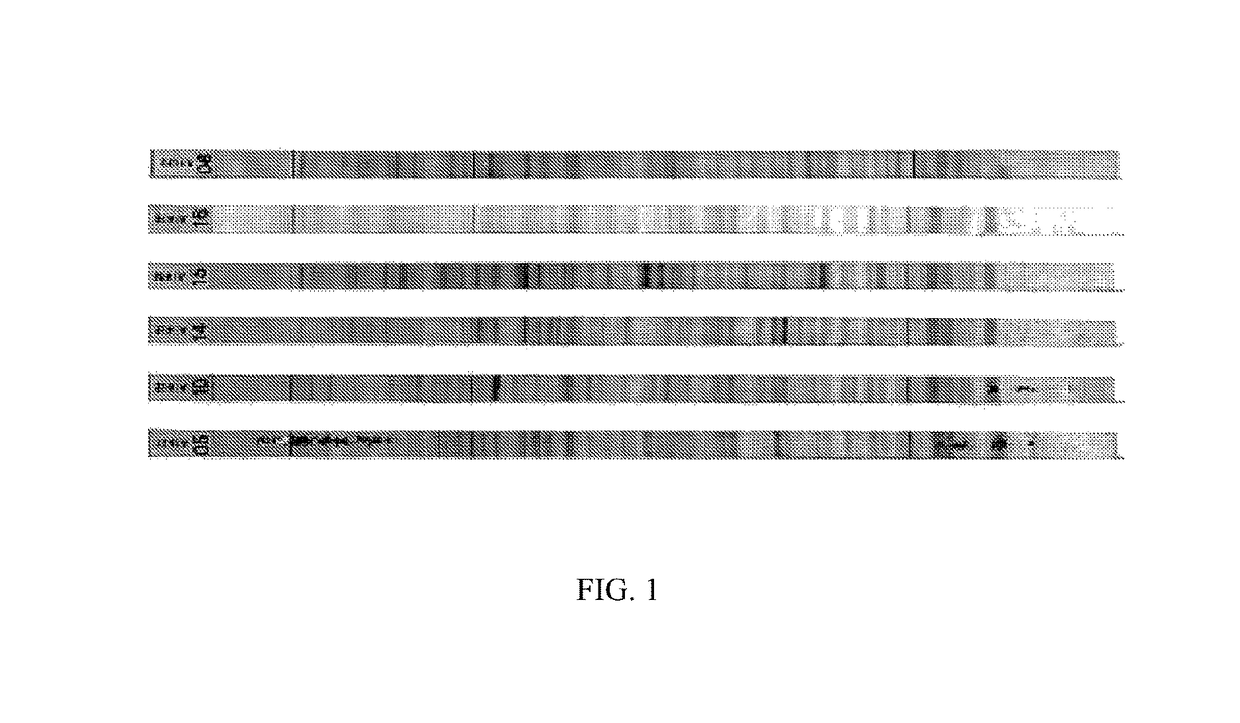
[0085]The law enforcement community has demonstrated several needs associated with drug testing of suspects including dealing with privacy issues associated with sample collection, maintenance of sample chain of custody, prevention of sample adulteration by the suspect, and facilitating more rapid turnaround time on sample analyses. Current drug testing protocols utilize urine samples and, occasionally, blood samples. Invasion of privacy is a continuing problem with urine samples since it is necessary to observe the individual providing the sample to maintain the chain of custody and eliminate the possibility of sample switching or adulteration. Urine samples are also not a good indicator of the current level of intoxication since many drug metabolites continue to be excreted into urine for days or weeks after the drugs are initially taken. While blood samples do not suffer from these problems, collecting blood is an invasive procedure requiring special facilities and trained person...

example 2

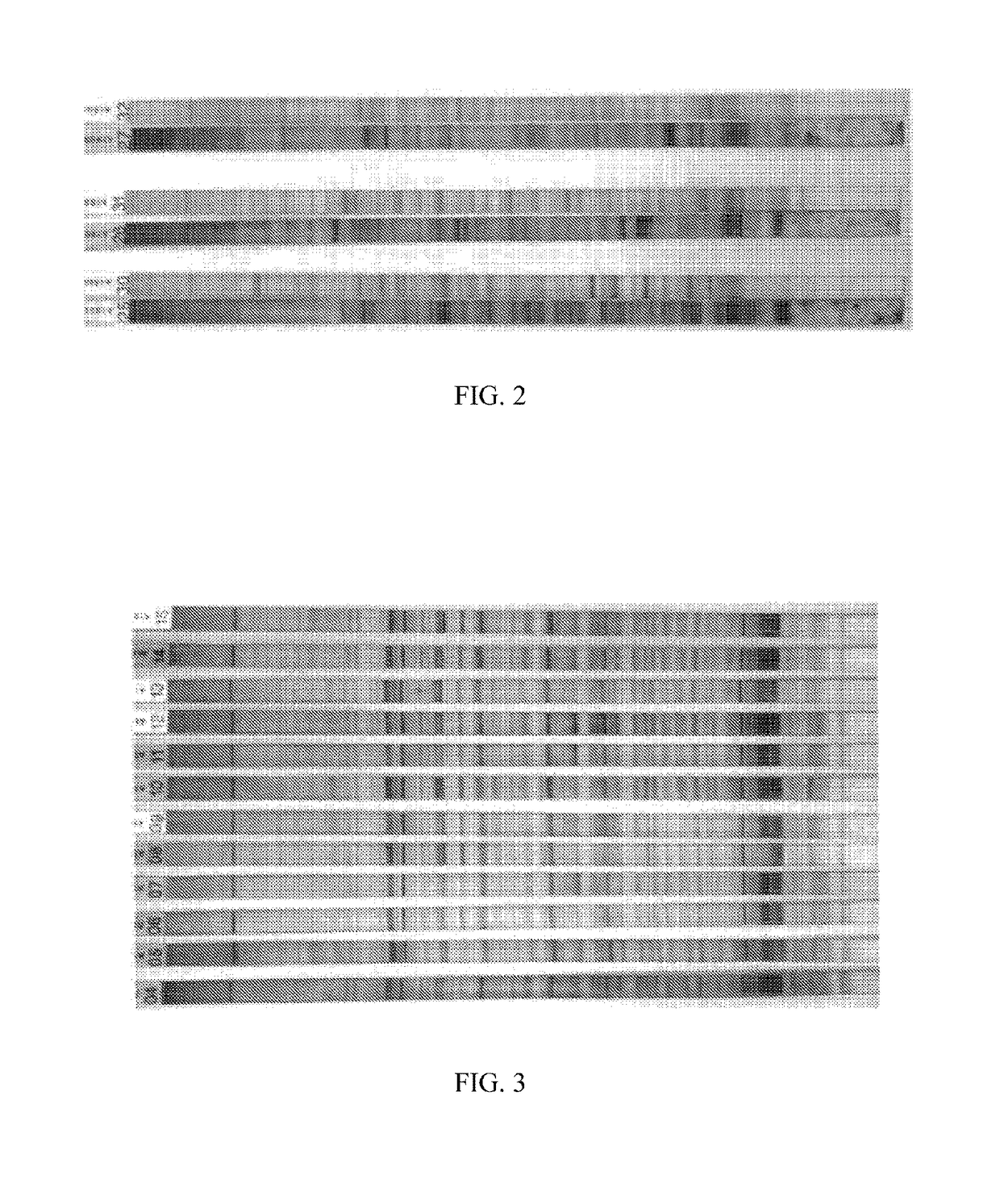
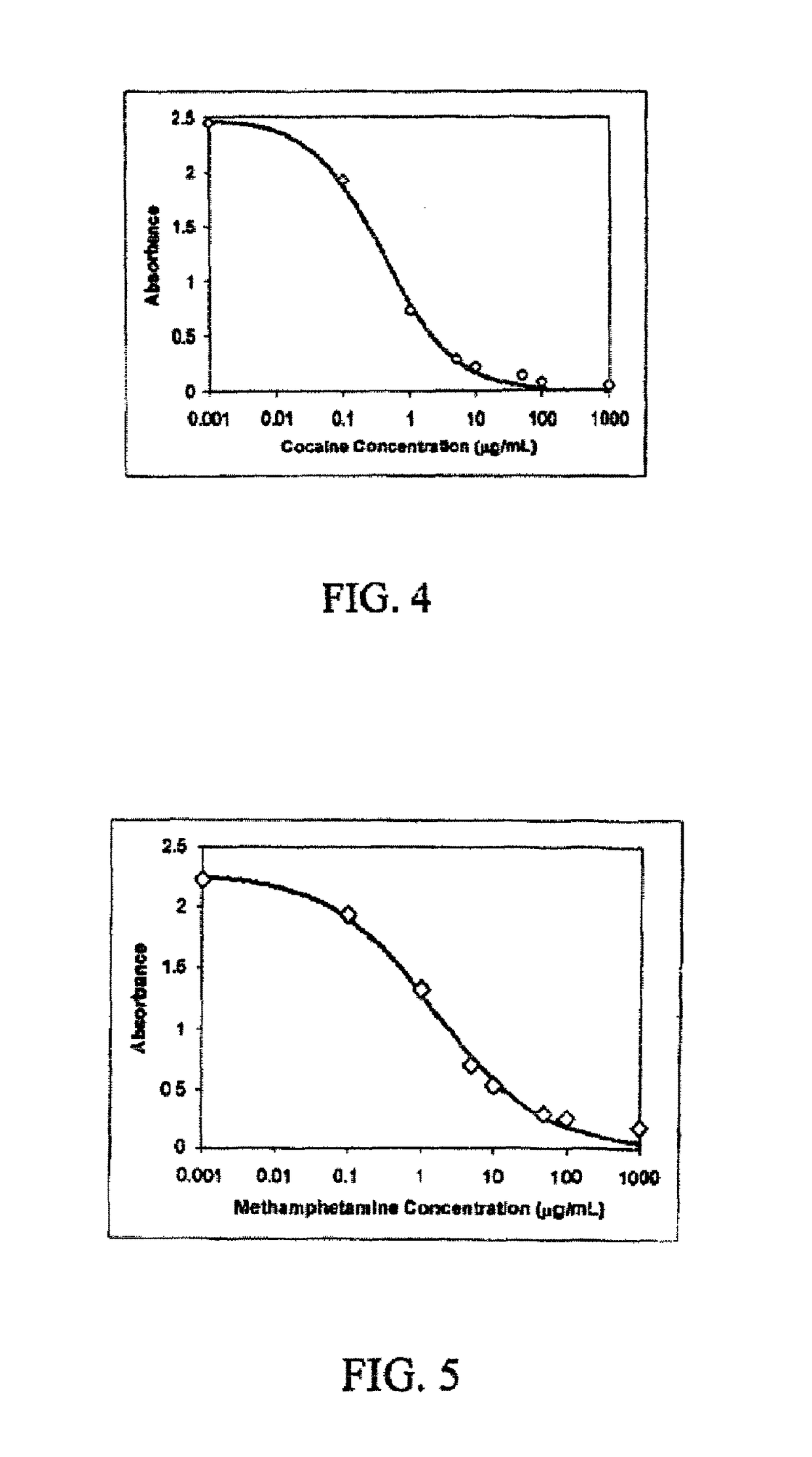
[0105]In this example, the procedure of Example 1 is followed except that fractionated HeLa cell antigens are immobilized on a PVDF membrane in a predetermined pattern as a two-dimensional array. Additionally, Cocaine (crystalline tropane alkaloid) and methamphetamine are immobilized on the membrane as additional spots on the array. After development of color as described, results are substantially similar to those of Example 1.

example 3

[0106]In this example, the procedure of Example 2 is followed except that the array is immobilized on a glass slide.

the structure of the environmentally friendly knitted fabric provided by the present invention; figure 2 Flow chart of the yarn wrapping machine for environmentally friendly knitted fabrics and storage devices; image 3 Is the parameter map of the yarn covering machine
Login to View More

PUM

PropertyMeasurementUnit
diameteraaaaaaaaaa
diameteraaaaaaaaaa
wavelengthaaaaaaaaaa
Login to View More

Abstract

A method for analyzing a biological sample by antibody profiling for identifying forensic samples or for detecting the presence of an analyte. In an embodiment of the invention, the analyte is a drug, such as marijuana, Cocaine (crystalline tropane alkaloid), methamphetamine, methyltestosterone, or mesterolone. The method comprises attaching antigens to a surface of a solid support in a preselected pattern to form an array wherein locations of the antigens are known; contacting the array with the biological sample such that a portion of antibodies in the sample reacts with and binds to the antigens in the array to form immune complexes; washing away antibodies that do form immune complexes; and detecting the immune complexes, to form an antibody profile. Forensic samples are identified by comparing a sample from an unknown source with a sample from a known source. Further, an assay, such as a test for illegal drug use, can be coupled to a test for identity such that the results of the assay can be positively correlated to the subject's identity.

Description

CROSS-REFERENCE TO RELATED APPLICATIONS[0001]This application is a continuation reissue of U.S. patent application Ser. No. 13 / 439,400, filed on Apr. 4, 2012, now U.S. Pat. No. Re. 44,031, issued on Feb. 26, 2013, which is a reissue of U.S. patent application Ser. No. 11 / 691,096, filed on Mar. 26, 2007, now U.S. Pat. No. 7,695,919, issued Apr. 13, 2010, which is a continuation-in-part of pending U.S. patent application Ser. No. 11 / 101,254, filed Apr. 6, 2005, now U.S. Pat. No. 7,682,798, issued on Mar. 23, 2010, which is a divisional of U.S. patent application Ser. No. 10 / 017,577, filed Dec. 14, 2001, now U.S. Pat. No. 6,989,276, issued Jan. 24, 2006, which claims priority to U.S. Provisional Patent Application Ser. No. 60 / 290,256, filed May 10, 2001, the entire disclosure of each of which is incorporated by reference herein.[0002]Notice: More than one reissue application has been filed for the reissue of U.S. Pat. No. 7,695,919. The reissue applications are application Ser. No. 13 / ...

Claims

the structure of the environmentally friendly knitted fabric provided by the present invention; figure 2 Flow chart of the yarn wrapping machine for environmentally friendly knitted fabrics and storage devices; image 3 Is the parameter map of the yarn covering machine
Login to View More

Application Information

Patent Timeline
28 Mar 2017
Publication
USRE46351E1
IPC
G01N31/00; G01N33/53; G06F19/20
CPC
G01N33/543; G01N33/94; Y10S435/975; Y10S435/973; Y10S435/971; G01N33/6845; G01N33/948; G16B25/10
Inventors
APEL, WILLIAM A.; THOMPSON, VICKI S.