
Zoom lens and digital camera and portable information apparatus
A zoom lens and lens technology, applied in the field of zoom lenses, can solve the problems of difficulty in correcting chromatic aberration, increase in the total length of the optical system, and inability to reduce the thickness of the lens, and achieve the effect of fully correcting chromatic aberration
- Summary
- Abstract
- Description
- Claims
- Application Information
AI Technical Summary
Problems solved by technology
Method used
Image

Examples
no. 1 example
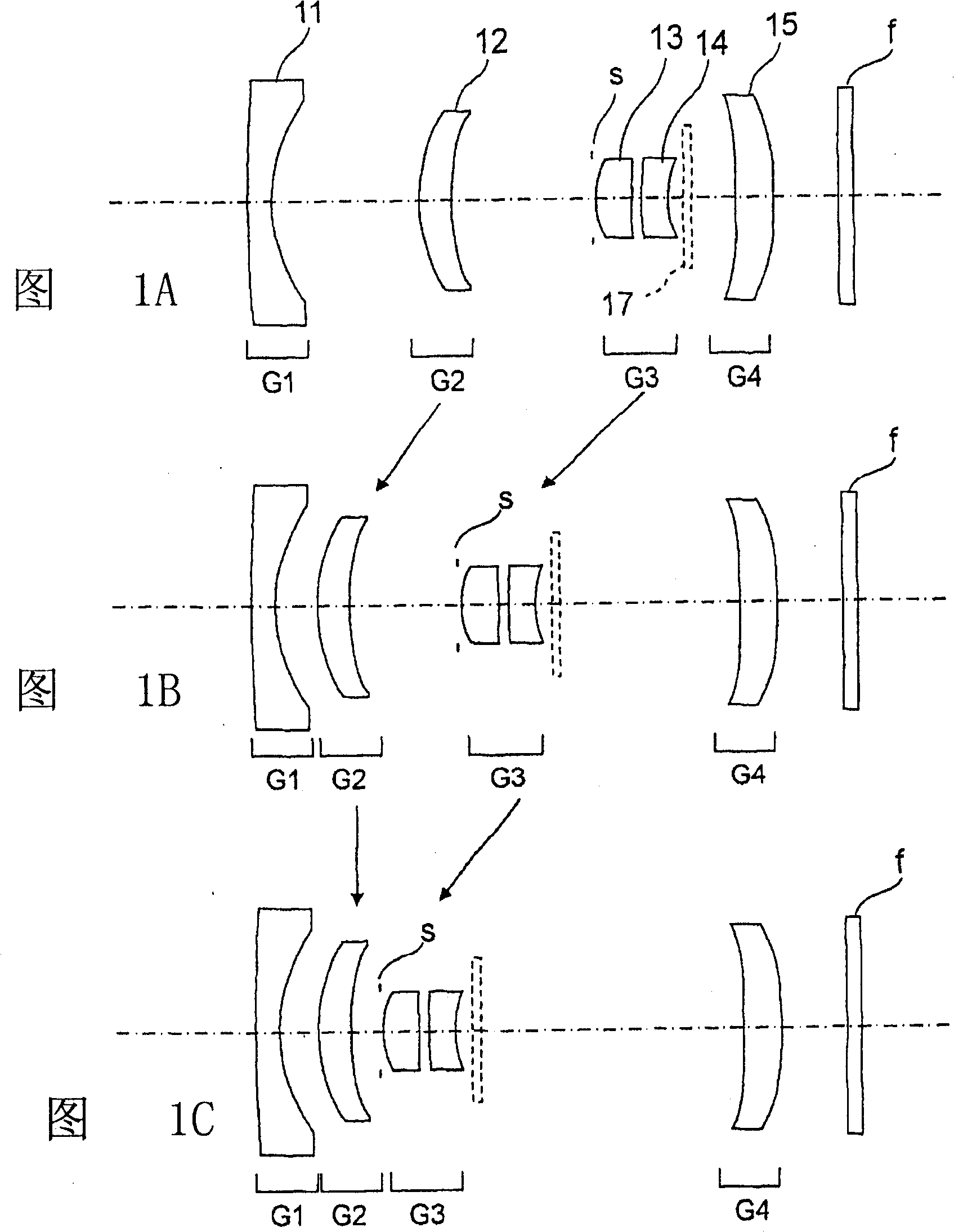
[0061] 1 is a cross-sectional view showing the structure of a zoom lens according to a first embodiment of the present invention, wherein FIG. 1A shows a zoom position at a wide-angle end in a cross section, and FIG. 1B shows a zoom position at an intermediate focal length in a cross section. zoom position, while Figure 1C shows the zoom position at the telephoto end in cross-section. In Figure 1, the left-hand side is the object space and the right-hand side is the image space. The arrows in the figure show the movement of each lens during zooming.
[0062] As shown in FIG. 1, the zoom lens in the first embodiment includes a first lens group G1 with a negative refractive index, a second lens group G2 with a positive refractive index, a third lens group G3 with a positive refractive index, and It is the positive fourth lens group G4, and the first lens group G1, the second lens group G2, the third lens group G3 and the fourth lens group G4 are arranged sequentially from the o...
no. 2 example
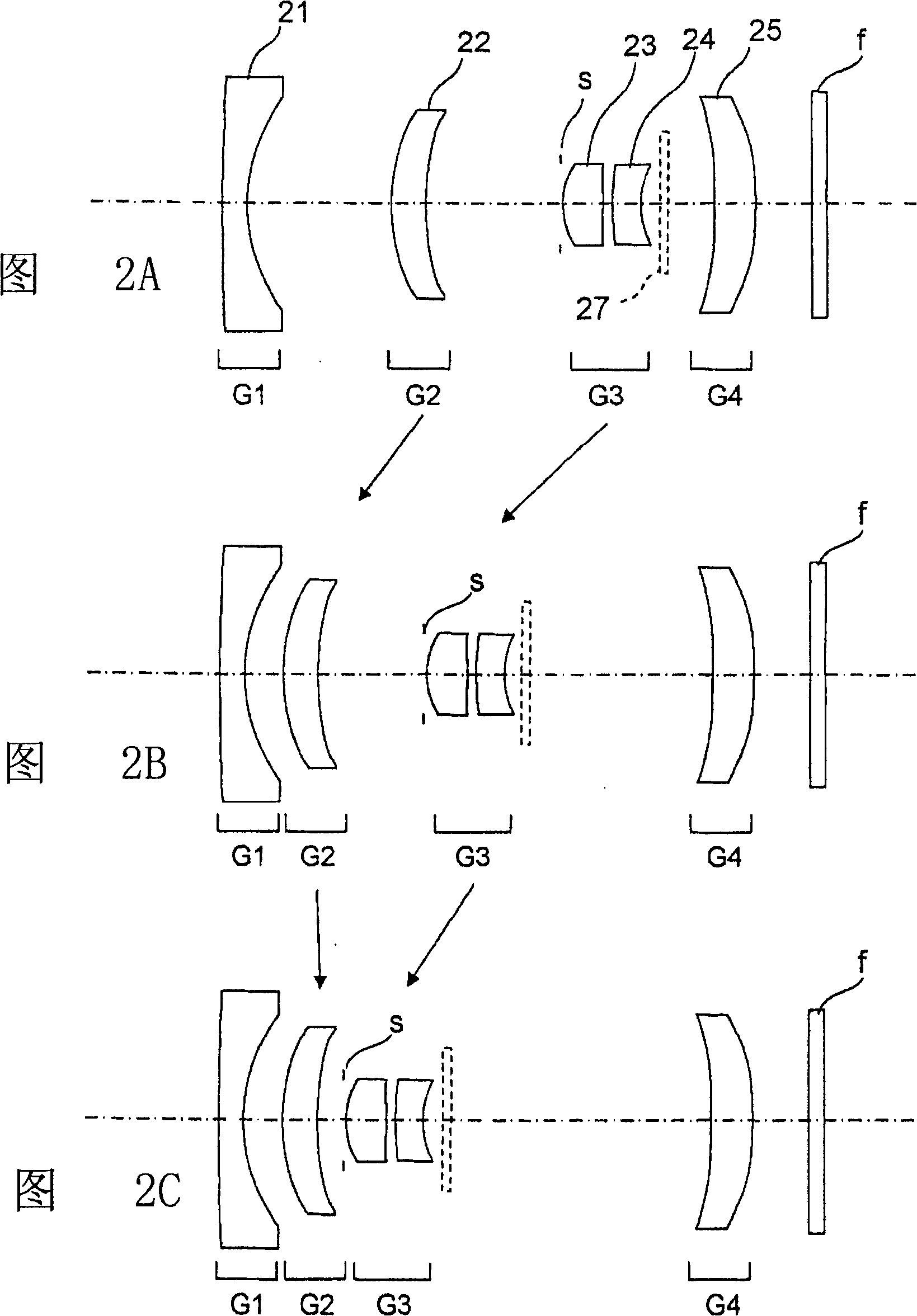
[0091] 2 is a cross-sectional view showing the structure of a zoom lens according to a second embodiment of the present invention, wherein FIG. 2A shows a zoom position at a wide-angle end in cross section, and FIG. 2B shows an intermediate focal length in cross section. The zoom position at , while FIG. 2C shows the zoom position at the telephoto end in cross-section. In Figure 2, the left-hand side is the object space and the right-hand side is the image space. The arrows in the figure show the movement of each lens during zooming.
[0092]As shown in FIG. 2, the zoom lens of the second embodiment includes a first lens group G1 with a negative refractive index, a second lens group G2 with a positive refractive index, a third lens group G3 with a positive refractive index, and a lens group with a positive refractive index. For the positive fourth lens group G4, the first lens group G1, the second lens group G2, the third lens group G3 and the fourth lens group G4 are arrange...
no. 3 example
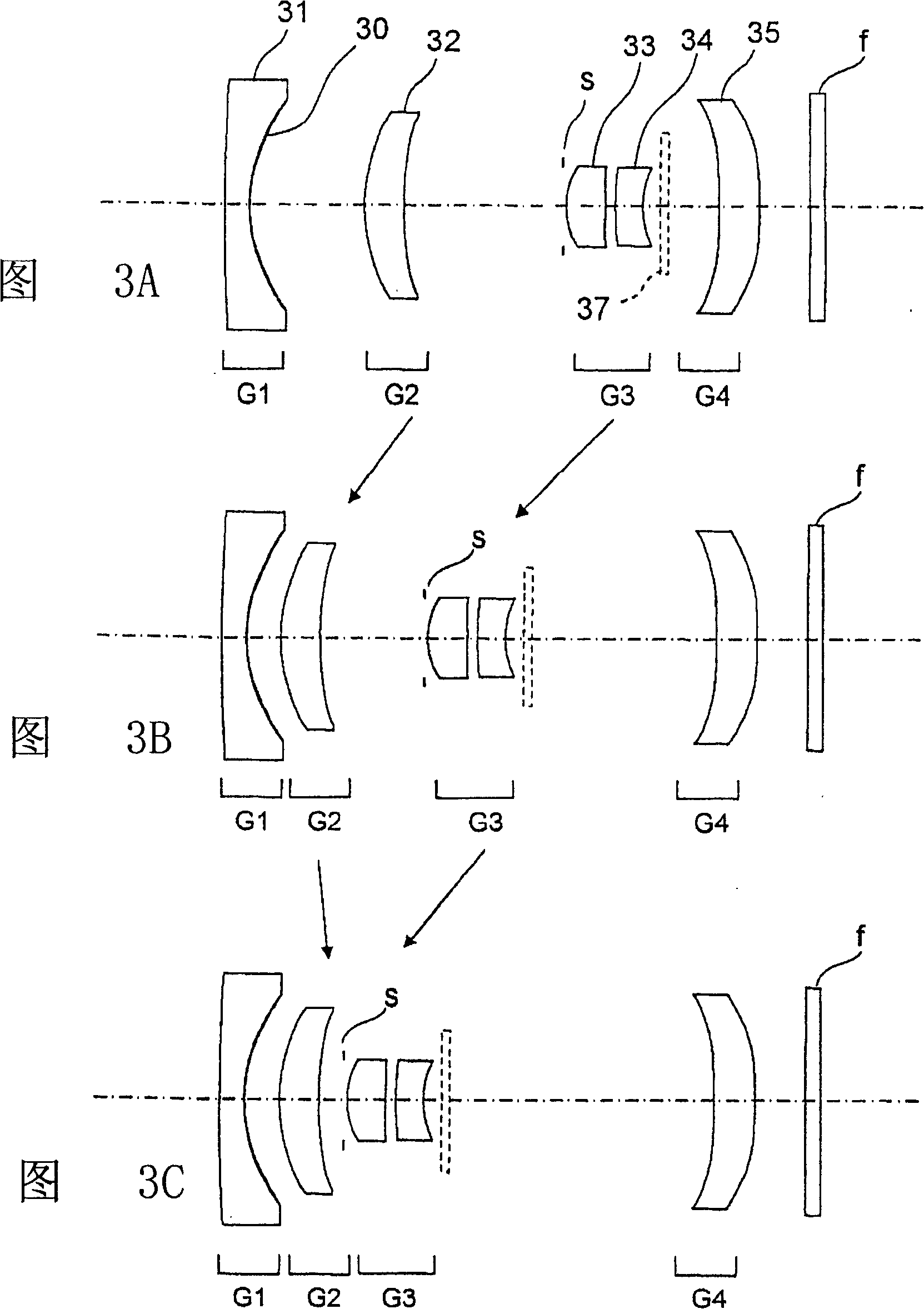
[0116] 3 is a cross-sectional view showing the structure of a zoom lens according to a third embodiment of the present invention, wherein FIG. 3A shows a zoom position at a wide-angle end in cross section, and FIG. 3B shows an intermediate focal length in cross section. The zoom position at , while FIG. 3C shows the zoom position at the telephoto end in cross-section. In Figure 3, the left-hand side is the object space and the right-hand side is the image space. The arrows in the figure show the movement of each lens during zooming.
[0117] As shown in FIG. 3, the zoom lens of the third embodiment includes a first lens group G1 with a negative refractive index, a second lens group G2 with a positive refractive index, a third lens group G3 with a positive refractive index, and a lens group with a positive refractive index. For the positive fourth lens group G4, the first lens group G1, the second lens group G2, the third lens group G3 and the fourth lens group G4 are arranged...
PUM
 Login to View More
 Abstract
Description
Claims
Application Information
 Login to View More