

Upstream channel bonding in a cable communications system
A technology of cable TV and channel binding, applied in the field of data transmission, which can solve problems such as unrealistic
- Summary
- Abstract
- Description
- Claims
- Application Information
AI Technical Summary
Problems solved by technology
Method used
Image

Examples
Embodiment Construction
[0046] 1 Overview
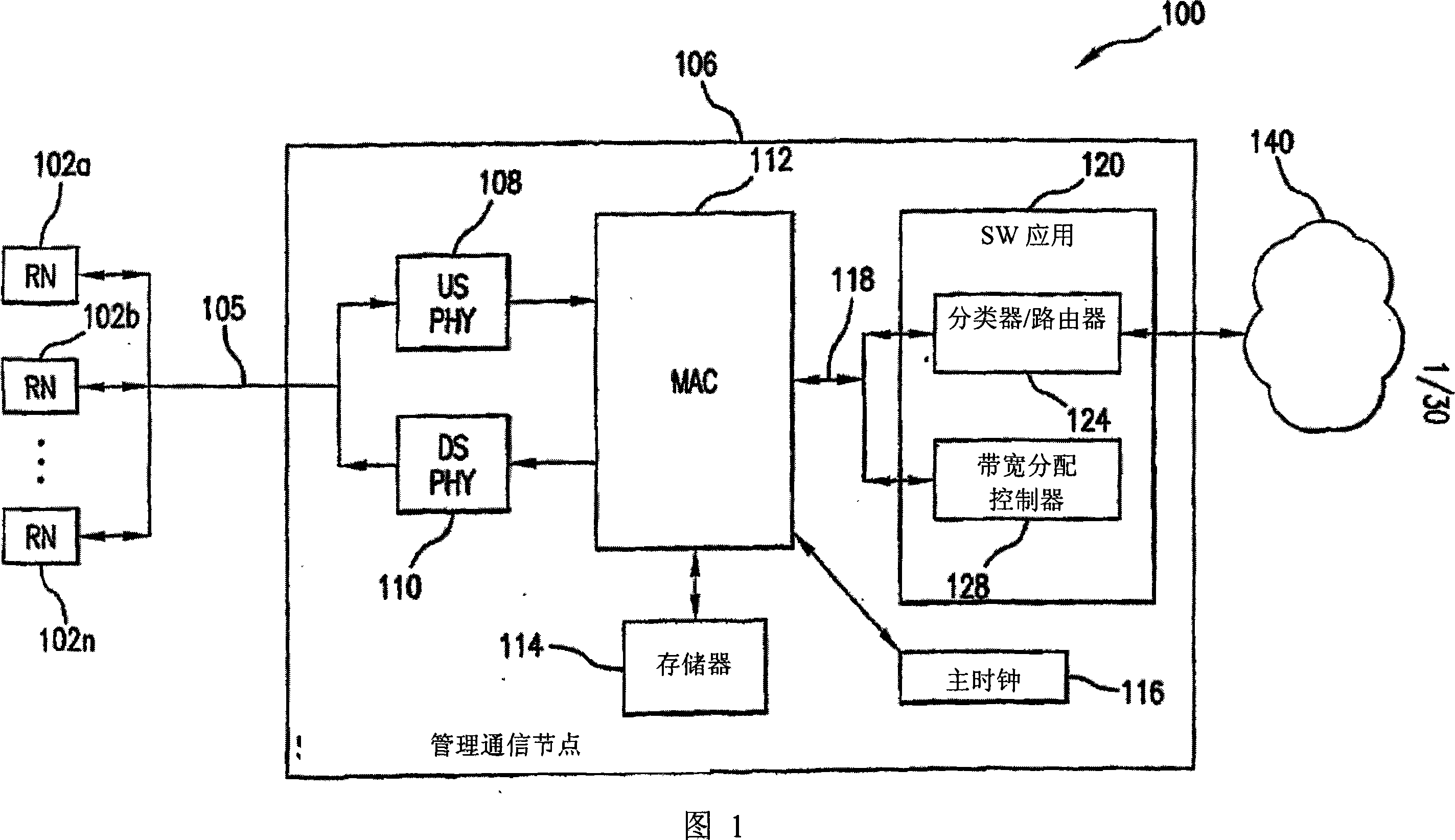
[0047] 1.1 System overview
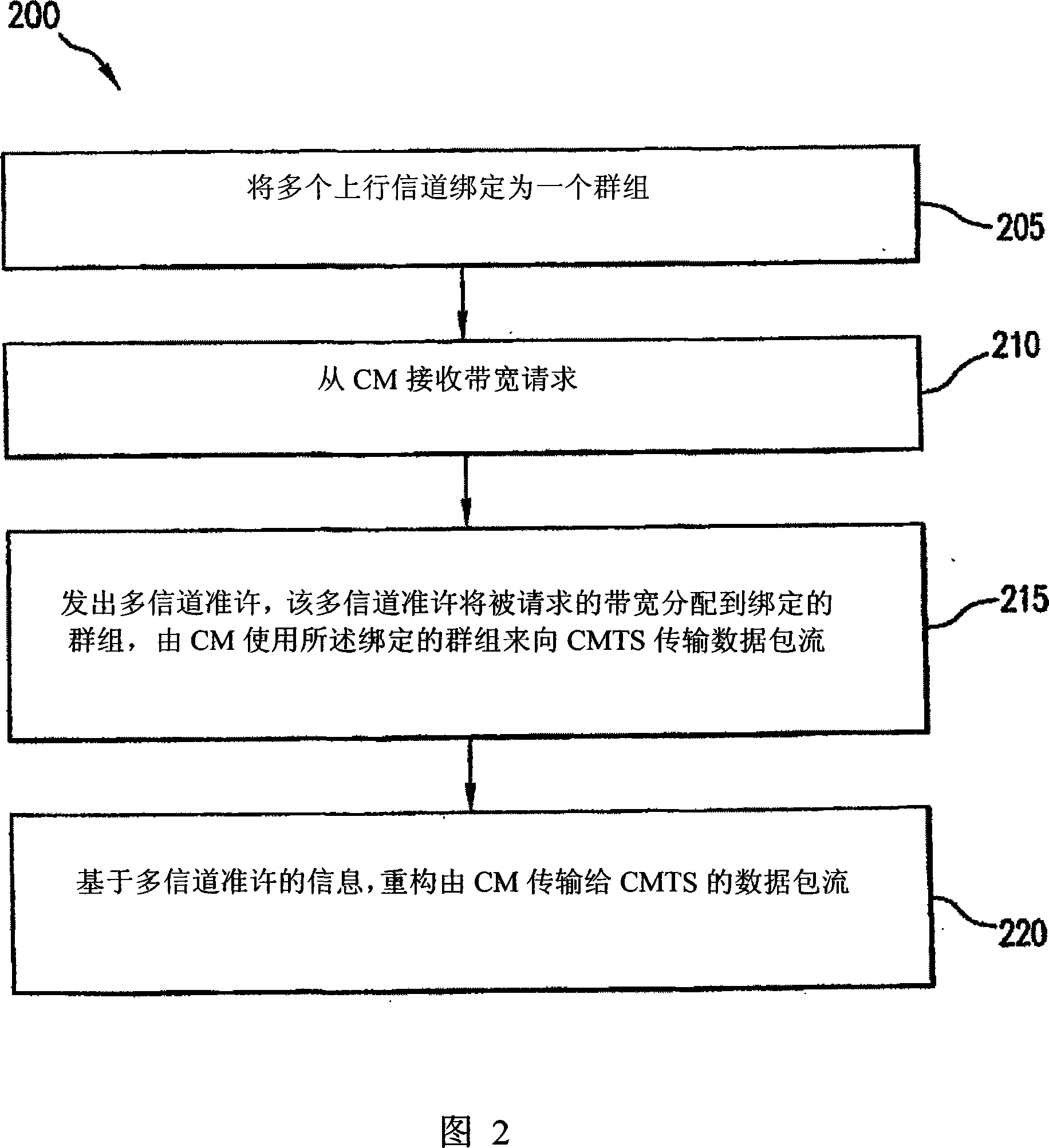
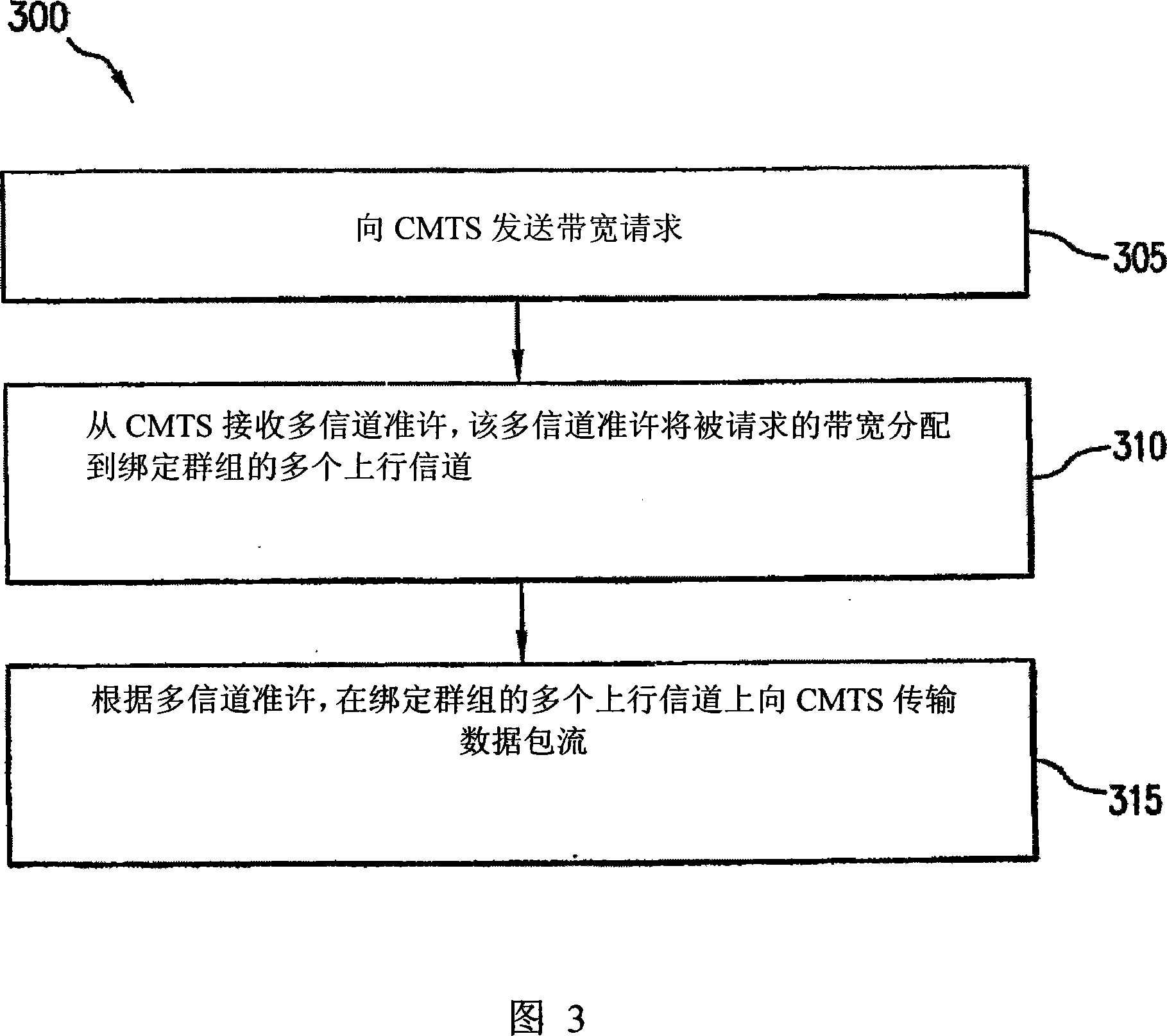
[0048] 1.2 Introduction to Channel Bonding
[0049] 1.3 Terminology
[0050] 2. Traffic segmentation
[0051] 2.1 Segment overview
[0052] 2.2 Continuous cascading and fragmentation
[0053] 2.2.1 Traditional DOCSIS Concatenation and Fragmentation
[0054] 2.2.2 Continuous concatenation and fragmentation according to an embodiment of the present invention
[0055] 2.2.3 Segments without a segment header
[0056] 3. Request bandwidth
[0057] 3.1 Request Mechanism
[0058] 3.2 Piggybacking requests
[0059] 3.2.1 Exemplary Rules for Piggybacking Requests Using Section Headers
[0060] 3.2.2 Exemplary Rules for Disabling Piggybacking Requests Under Segment Headers
[0061] 3.3 Contention requesting
[0062] 4. Allowed bandwidth
[0063] 5. Baseline Privacy Impact
[0064] 5.1 Conventional DOCSIS communication decryption
[0065] 5.2 Communication decryption of bound uplink channel
[0066] 5.2.1 CM forces a single...
PUM
 Login to View More
 Abstract
Description
Claims
Application Information
 Login to View More