

Method and system for preventing IPv6 (Internet Protocol Version 6) from duplicate address detection attack
A technology of address duplication detection and duplication detection, which is applied in the field of data communication, can solve problems such as malfunctioning and network attacks, and achieve the effect of easy expansion and transplantation
- Summary
- Abstract
- Description
- Claims
- Application Information
AI Technical Summary
Problems solved by technology
Method used
Image


Examples
Embodiment Construction
[0034] In order to make the technical problems, technical solutions and beneficial effects to be solved by the present invention clearer and clearer, the present invention will be further described in detail below in conjunction with the accompanying drawings and embodiments. It should be understood that the specific embodiments described here are only used to explain the present invention, not to limit the present invention.
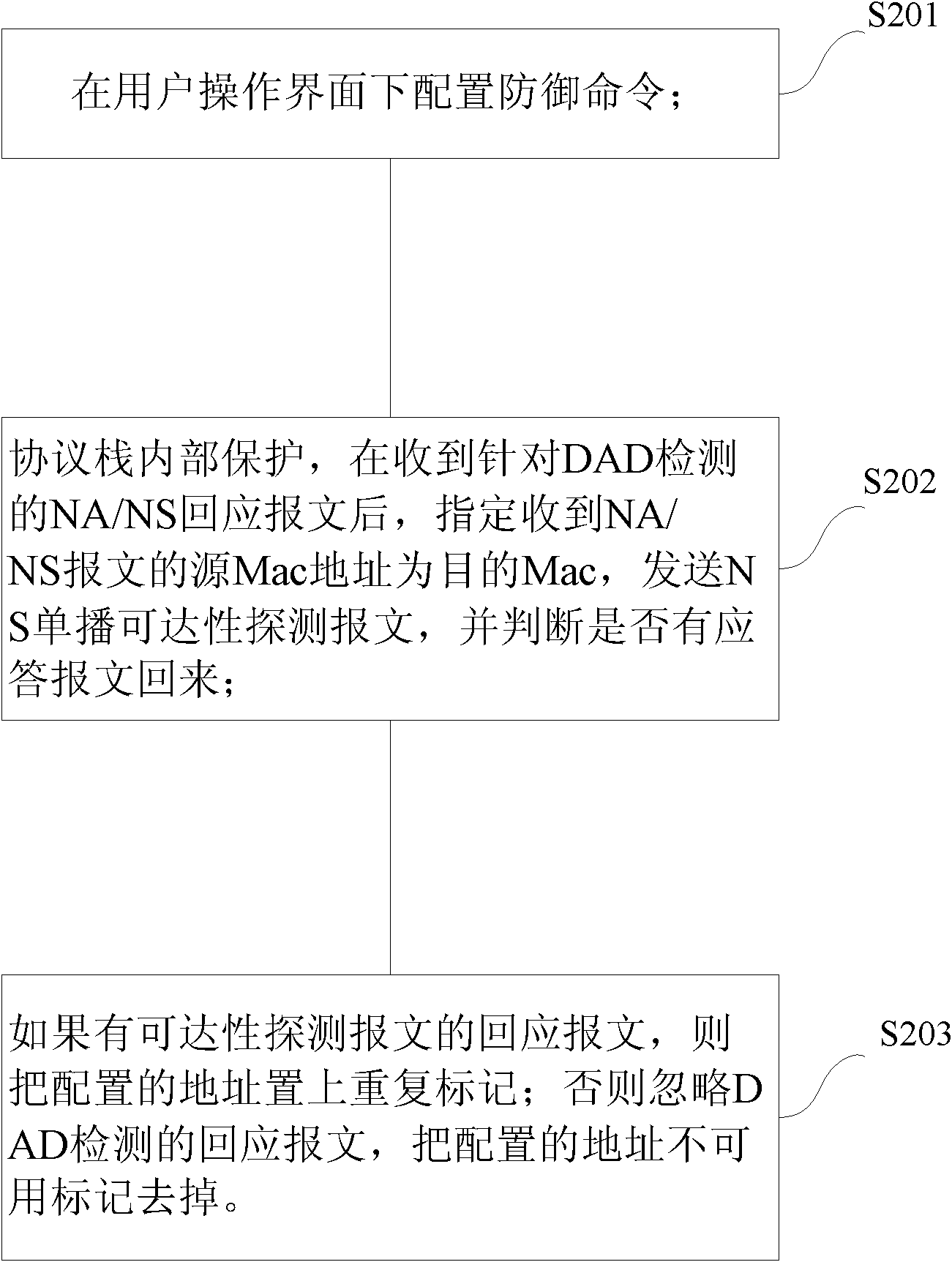
[0035] The present invention provides an embodiment of a method for preventing IPv6 address duplication detection attacks, such as figure 2 Shown is the flowchart of this embodiment, and the method includes,
[0036] S201, configure defense commands under the user operation interface;
[0037] In protection mode, enter ipv6 protect dad to run IPv6 protection DAD, and enable protection when the command takes effect;
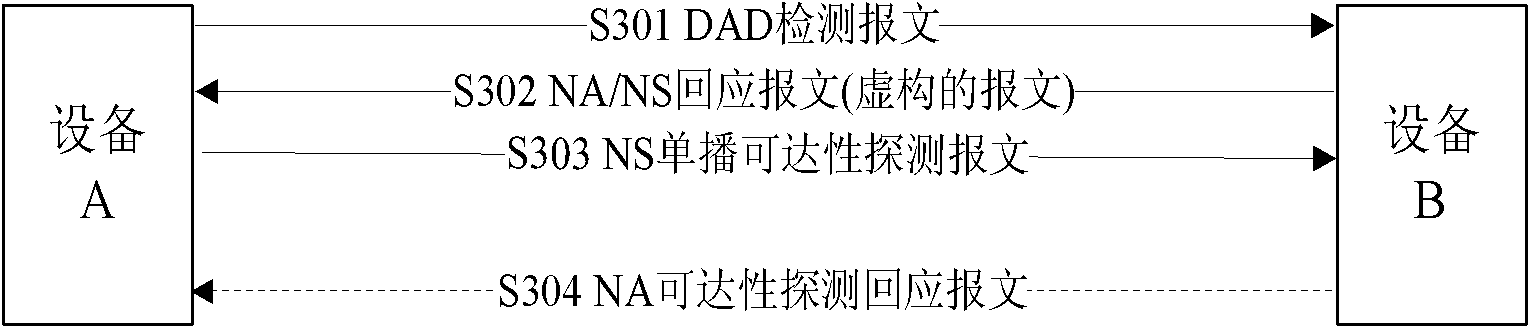
[0038] S202, the internal protection of the protocol stack, after receiving the NA / NS response message for DAD detection, designate the...
PUM
 Login to View More
 Abstract
Description
Claims
Application Information
 Login to View More