
Method for recycling textile dyeing and finishing wastewater
A technology for textile dyeing and finishing and waste water recycling, which is applied in the research field of water pollution control to achieve the effects of high water quality, cost reduction and stable operation.
- Summary
- Abstract
- Description
- Claims
- Application Information
AI Technical Summary
Problems solved by technology
Method used
Image


Examples
Embodiment 1
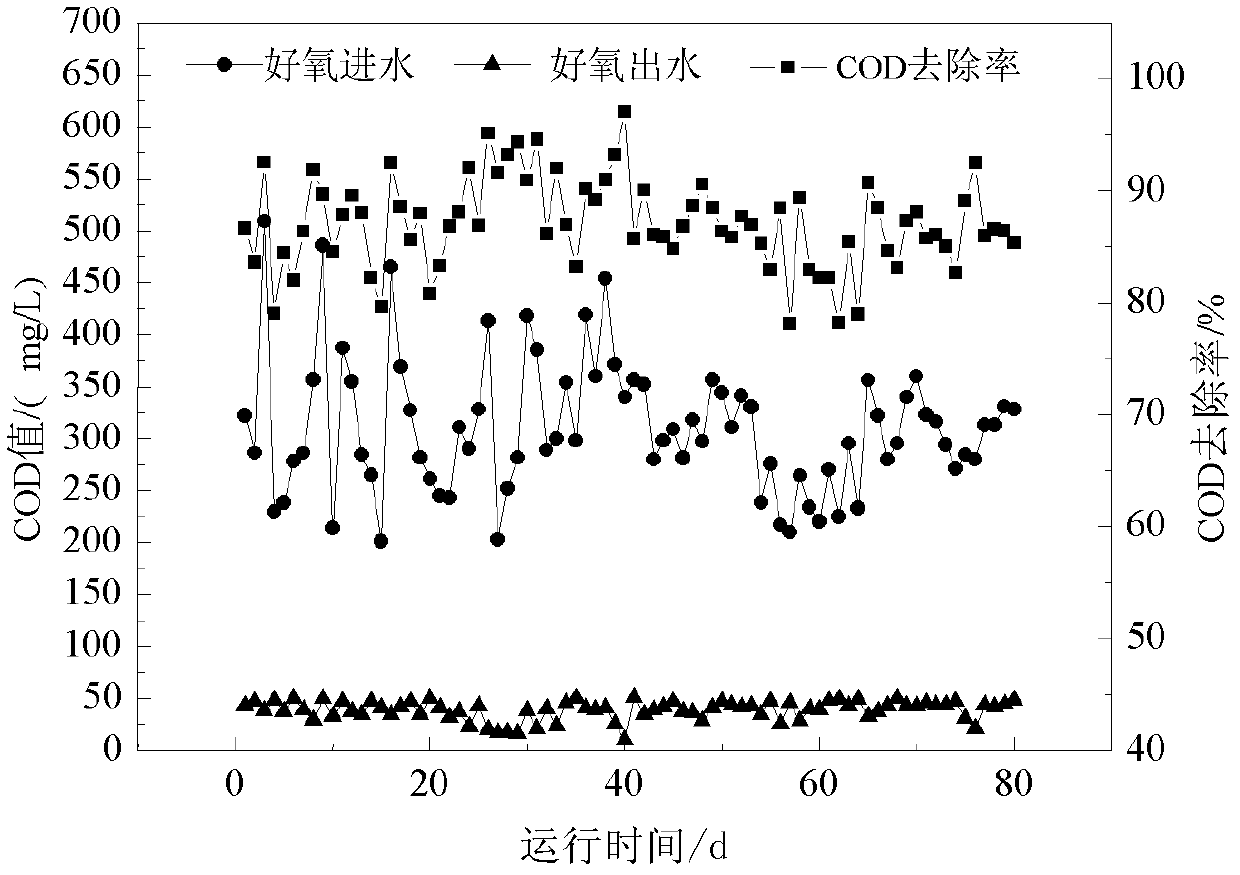
[0047] The multistage circulating aerobic treatment system used in the embodiment of the present invention is composed of anaerobic / anoxic reaction pool A and aerobic reaction pool O in series according to the mode of A-O-A-O-A-O-A, anaerobic / anoxic reaction pool A (effective volume 10L) and The effective volume ratio of the aerobic reaction tank O (effective volume 5L) is 2:1,
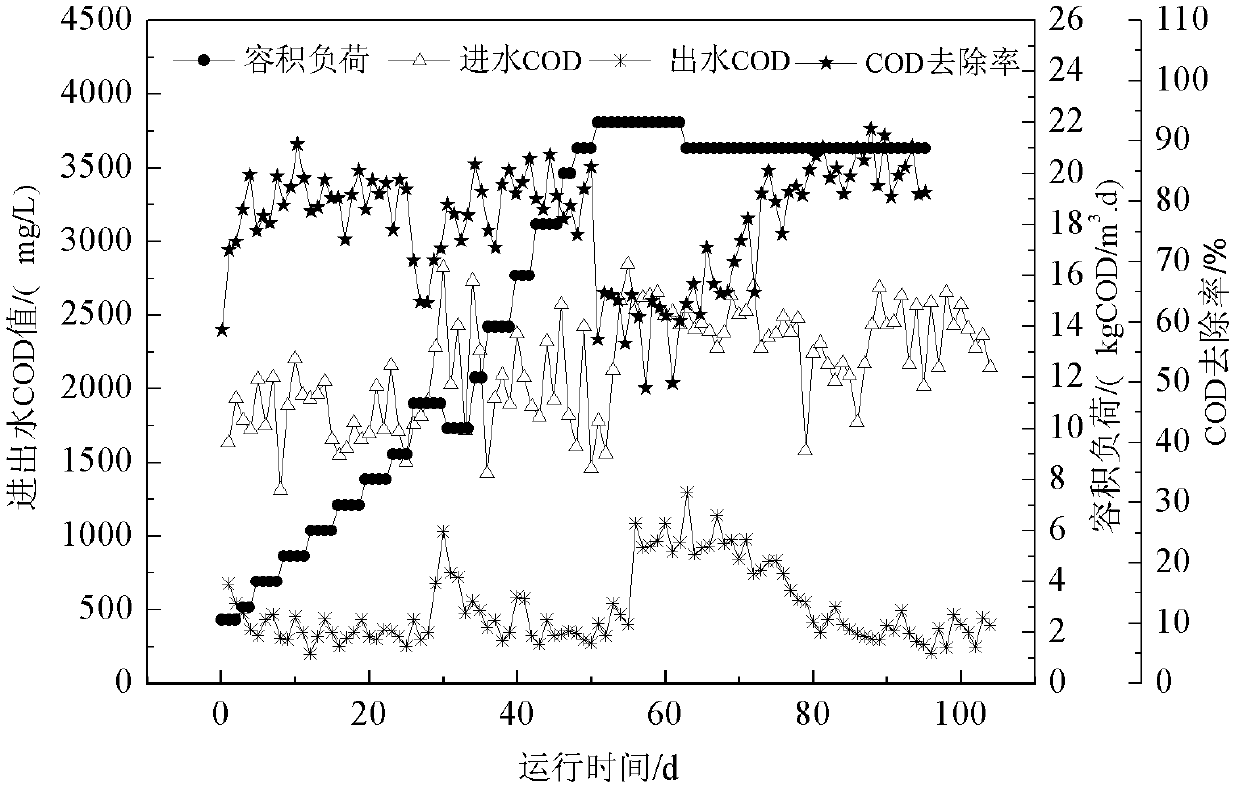
[0048] Inoculate the anaerobic granular sludge in the IC reactor (effective volume 50L), and then pass the debugging wastewater into it. Under the condition of neutral pH value, in the anaerobic environment, the sludge is acclimated at 20-40℃, and the COD of the wastewater is adjusted. The concentration starts from 200mg / L and increases the concentration every day (100mg / L increase rate per day) until the raw water enters. The PCR-DGGE method is used to detect the microbial ecology in the wastewater, and to track the IC reactor effluent and biogas production. When the IC reactor The effluent COD can b...
PUM
 Login to View More
 Abstract
Description
Claims
Application Information
 Login to View More