
Esophagus cancer postoperative early-stage recurrence and prognosis related miRNA marker and its application
An esophageal cancer and marker technology, applied in the fields of genetic engineering and oncology, can solve the problems of lack of specific and sensitive molecular markers, different molecular biological changes, lack of early recurrence and metastasis of esophageal cancer, etc. The effect of improving sensitivity and specificity, simple method, and convenient operation
- Summary
- Abstract
- Description
- Claims
- Application Information
AI Technical Summary
Problems solved by technology
Method used
Image

Examples
Embodiment
[0028] 1. Sample selection
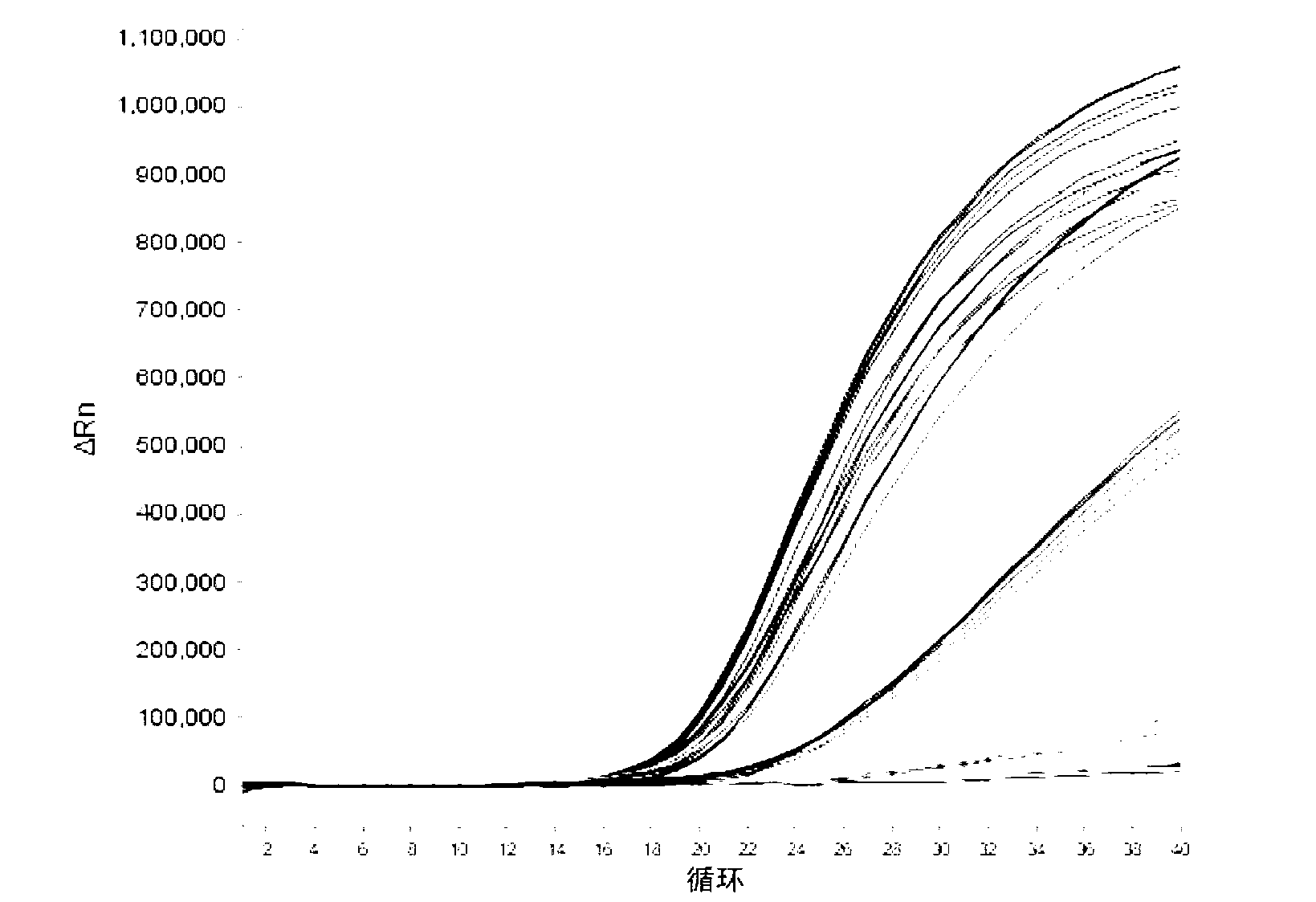
[0029] Two paraffin specimens were selected from the First Affiliated Hospital of Xinxiang Medical College from 2006 to 2007 with the same pathological stage and significantly different prognosis and survival. These two specimens were both paraffin specimens made from tumor samples of primary lesions surgically resected for the first time. At the same time, the normal esophageal mucosa 8 cm away from the edge of the tumor tissues of the two paraffin samples were selected as controls. In 2 cases, no distant metastasis was diagnosed by physical examination and imaging before operation, and no radiation therapy or chemotherapy was received before operation. Both cases underwent esophageal cancer resection + thoracic and abdominal two-field lymph node dissection, and neck anastomosis was performed manually. Postoperative chemotherapy was given twice, and postoperative pathological examination revealed well-differentiated squamous cell carcinoma of the ...
experiment example 1
[0068] Experimental example 1. Verification of expression difference of has-miR-382 in patients with esophageal cancer with the same stage but different prognosis
[0069] 1. Sample selection
[0070] Selected 46 cases of paraffin wax specimens from the First Affiliated Hospital of Xinxiang Medical College from 2006 to 2009 with the same pathological stage and significant differences in prognosis and survival. There was no distant metastasis in the imaging diagnosis of the examination machine, and no radiation therapy or chemotherapy was received before operation. Among them, 18 cases were specimens of esophageal cancer that were alive 5 years after surgery and had a good prognosis, and 28 cases were specimens of esophageal cancer that had recurred early within 1 year after surgery and had a poor prognosis. The patient information is shown in Table 7. At the same time, the normal esophageal mucosa with the same pathological stage and 8 cm away from the edge of the tumor tissu...
experiment example 2
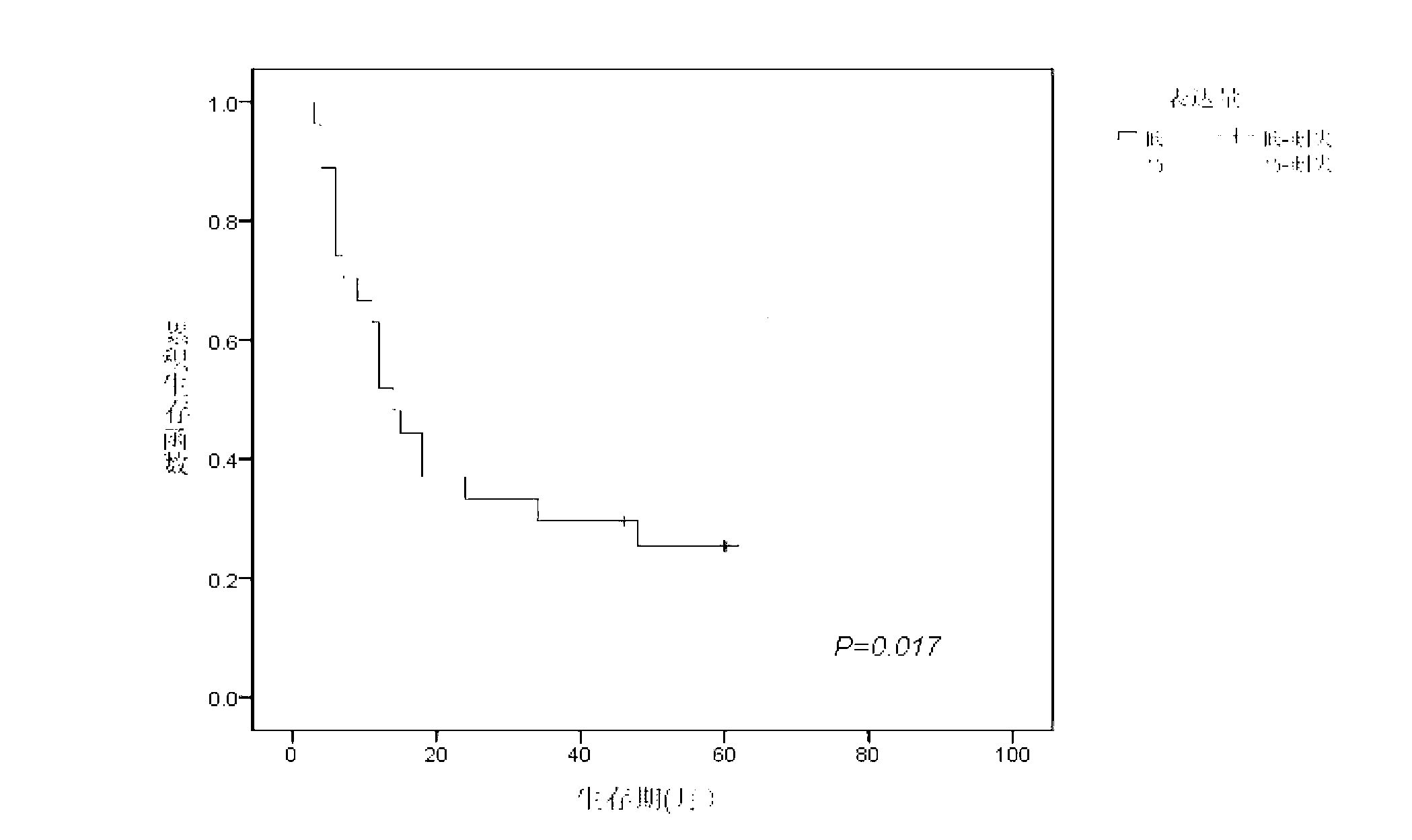
[0099] Experimental example 2. Analysis of has-miR-382 expression level and risk score method for early recurrence and prognosis of esophageal cancer after surgery
[0100] The SPSS17.0 database was established and analyzed, and Kaplan-Meier was used to analyze the survival curve of has-miR-382 expression. Taking P figure 2 shown.
[0101] Cox univariate risk analysis was performed on the prognosis, gender, age, TNM stage, postoperative T, N0-N1 stage, tumor size, degree of differentiation and expression of has-miR-382 in patients with esophageal cancer. The results are shown in Table 9 Show. The results showed that the patient's prognosis (P=0.000), postoperative T (p=0.008), tumor size (p=0.007) and has-miR-382 expression (P=0.021) were significantly correlated with the patient's survival time.
[0102]Table 9 The expression of has-miR-382 and the risk score method of early recurrence and prognosis of esophageal cancer after univariate analysis
[0103]
[0104] The ab...
PUM
 Login to View More
 Abstract
Description
Claims
Application Information
 Login to View More