Method for ultrasonic removal of carbon deposition

An ultrasonic and carbon deposition technology, applied in the field of carbon deposition, can solve the problems of scrapped parts and easily damaged substrates, and achieve the effects of preventing excessive corrosion, increasing stirring effect, and achieving obvious effects.

CN103757650AInactive Publication Date: 2014-04-30SHENYANG LIMING AERO-ENGINE GROUP CORPORATION
5 Cites 13 Cited by

Patent Information

Authority / Receiving Office
CN · China
Current Assignee / Owner
Publication Date
2014-04-30
Estimated Expiration
Not applicable · inactive patent

Smart Images

  • Figure 1
    Figure 1
  • Figure 2
    Figure 2
  • Figure 3
    Figure 3
Patent Text Reader

Abstract

The invention relates to a method for ultrasonic removal of carbon deposition. According to the technical scheme of the invention, the method for ultrasonic removal of the carbon deposition comprises the following steps: deoiling parts, preparing a carbon deposition removing bath solution, carrying out ultrasonic removal of the carbon deposition, and carrying out hydrochloric acid corrosion. The method for ultrasonic removal of the carbon deposition utilizes the carbon deposition removing bath solution with a special formula, has the advantages of fast carbon deposition removing speed, high quality and easy implementation, and besides reduces the environmental pollution caused by using an ordinary chemical immersion method to remove the carbon deposition.
Need to check novelty before this filing date? Find Prior Art

Description

technical field

[0001] The invention relates to a method for removing carbon deposits, in particular to an ultrasonic method for removing carbon deposits. Background technique

[0002] Carbon deposits are the product of high temperature oxidation of fuel and lubricating oil. In the combustion chamber, the oxygen supply is insufficient, and the fuel and the lubricating oil that have entered the combustion chamber cannot be completely burned, resulting in soot and tar particles. Attached to the nozzle, and under the continuous action of high temperature, the colloid polymerizes into a more complex polymer, that is, carbon deposits. Moreover, the higher the engine temperature, the harder and tighter the carbon deposits formed, and the bond with the metal will be firmer. If the carbon deposit is not cleaned up, it will waste fuel and seriously affect the service life of the engine.

[0003] At present, the chemical soaking method is commonly used in the market to remove carbo...

Examples

Embodiment 1

[0017]

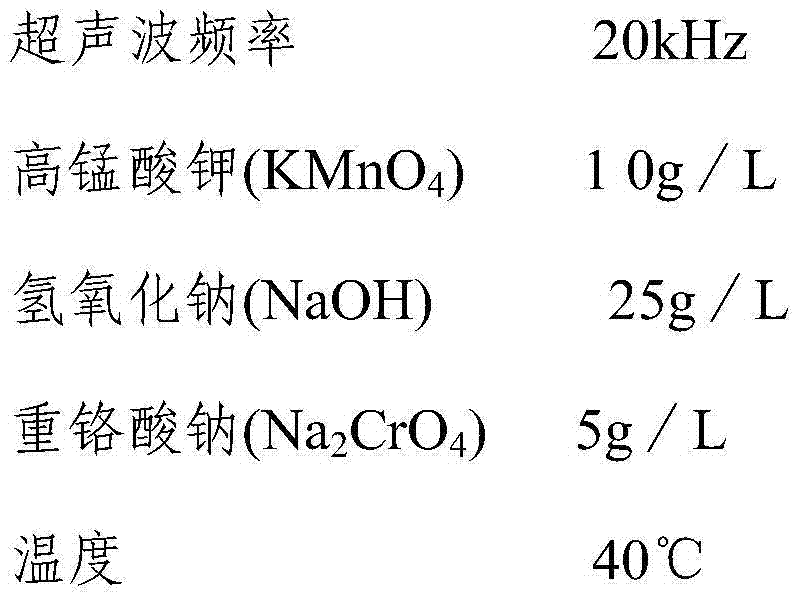
[0018] Using the above process formula, remove carbon deposits according to the process of removing carbon deposits on fuel nozzles. The carbon deposits on the surface of fuel nozzles are removed cleanly, showing a metallic luster matrix. The carbon deposit removal time is about 3 hours.

Embodiment 2

[0020]

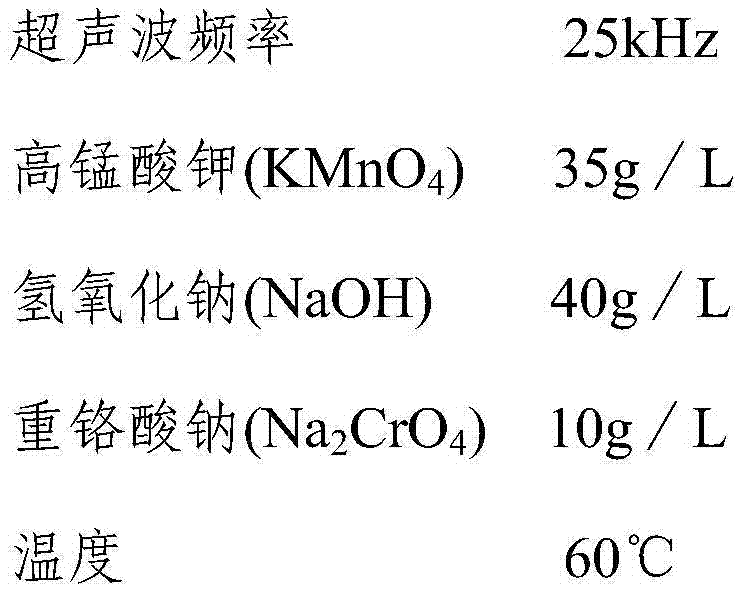
[0021] Using the above process formula, remove carbon deposits according to the process of removing carbon deposits on fuel nozzles. The carbon deposits on the surface of fuel nozzles are removed cleanly, showing a metallic luster matrix. The carbon deposit removal time is about 1 hour.

Embodiment 3

[0023]

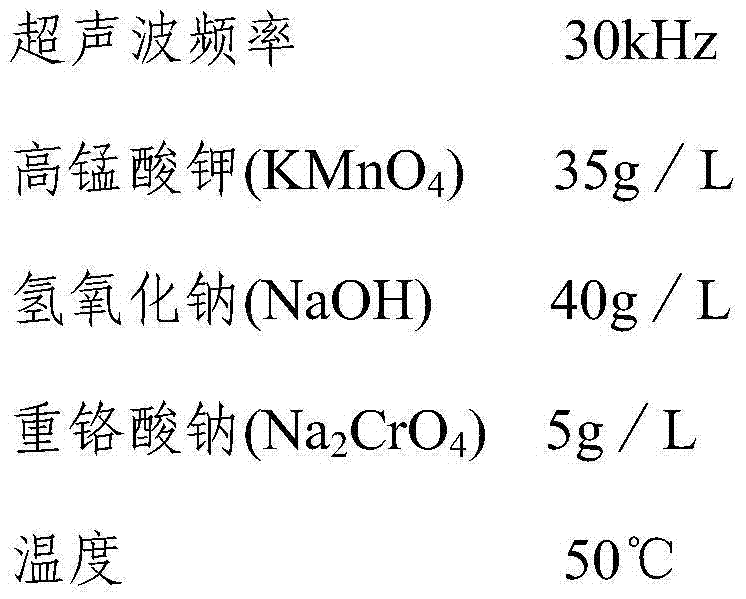
[0024] Using the above process formula, remove carbon deposits according to the process of removing carbon deposits on fuel nozzles. The carbon deposits on the surface of fuel nozzles are removed cleanly, showing a metallic luster matrix. The carbon deposit removal time is about 1 hour.