
Primers, probes, detection systems and kits for one-time detection of multiple genes in lung cancer
A one-time, lung cancer technology, applied in the fields of biochemical equipment and methods, recombinant DNA technology, and microbial determination/inspection, it can solve the problems of small sample size, time-consuming, unable to meet the requirements of one-by-one screening, etc., and achieve cost-saving. Effect
- Summary
- Abstract
- Description
- Claims
- Application Information
AI Technical Summary
Problems solved by technology
Method used
Image

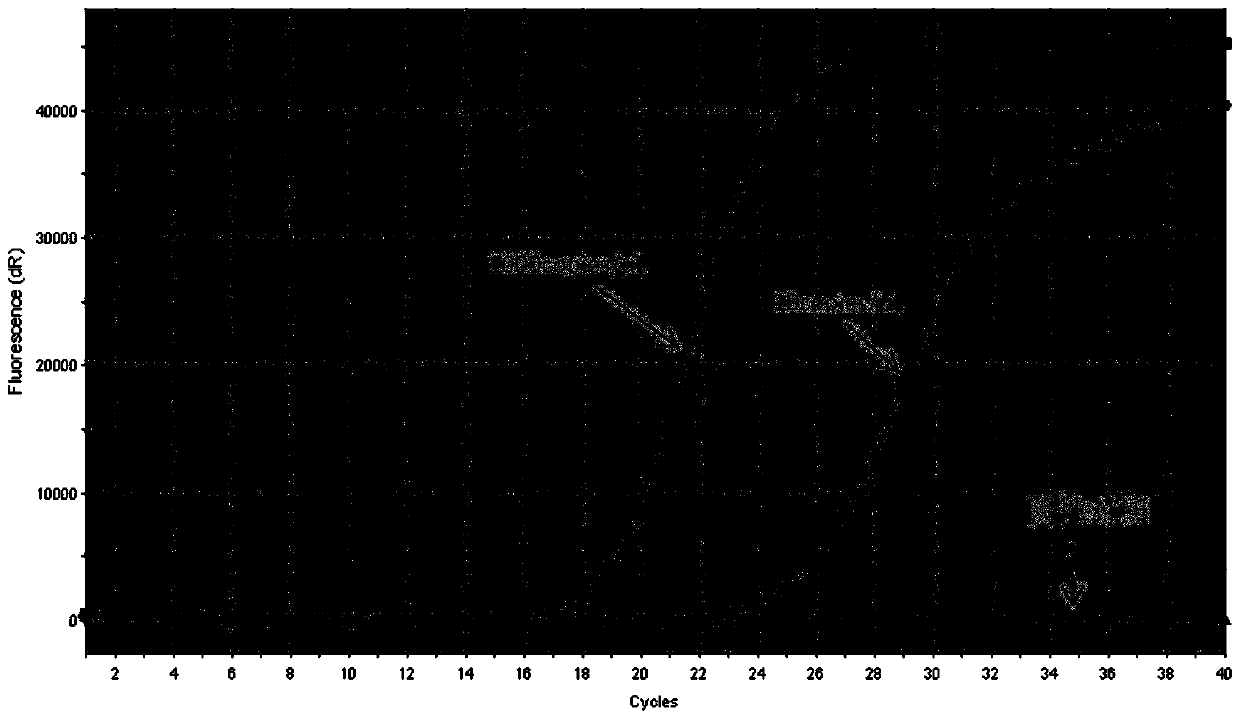
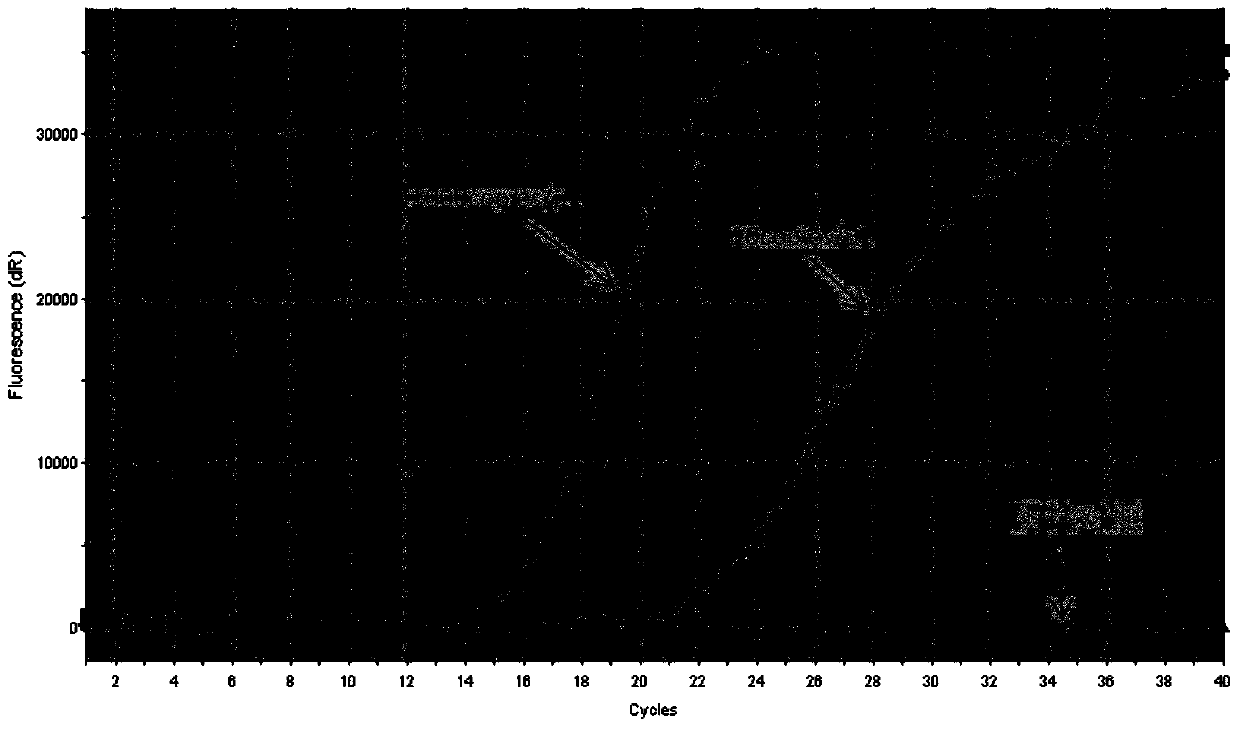
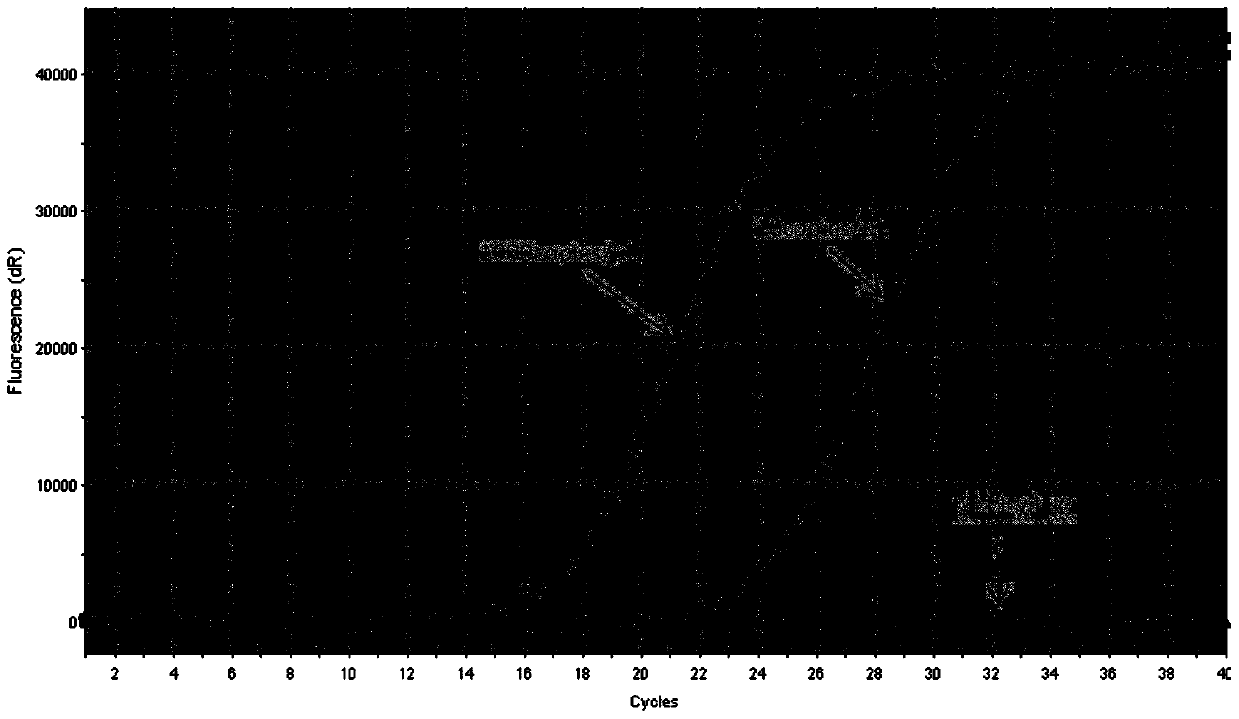
Examples
Embodiment 1
[0077] The human EGFR, KRAS, BRA, ALK and ROS1 published according to Cosmic data are wild-type gene sequences. Based on the driving mutation sites and fusion sites of EGFR, KRAS, BRA, ALK and ROS1, specific primers and New probes (see Table 1 and Table 8).
[0078] Table 8 Distribution of tubes
[0079]
[0080] This example uses EML4 exon 13; ALK exon 20 (ALK fusion gene), CD74 exon 6; ROS1 exon 32 (ROS1 fusion gene), KIF5B exon 16; ROS1 exon 12 (RET fusion gene), L861Q (EGFR gene mutation), G12D (KRAS gene mutation), V600E1 (BRAF gene mutation), G776> VC (HER2 gene mutation), Q61R (NRAS gene mutation), H1047R (PIK3CA gene mutation) are examples to illustrate the fluorescent PCR detection of the above-mentioned lung cancer genes of the present invention.
[0081] The experiment uses armored RNA containing the above-mentioned fusion gene and each mutant plasmid template, and the fluorescent PCR detection includes the following steps:
[0082] (1) Plasmid and armored RNA processing a...
Embodiment 2
[0131] Using the present invention to detect clinical samples, from December 2013 to October 2014, 1100 cases of clinical lung cancer paraffin-embedded tissue samples were tested for multiple lung cancer gene mutations.
[0132] 1. Extraction of DNA and RNA from test samples: DNA and RNA can be extracted using the FFPE sample DNA / RNA co-separation kit of Xiamen Aide Biomedical Technology Co., Ltd. (Minxia Food and Drug Administration (quan) 2013 No. 1400070 ), CatNo.ADx-FF03 or QIAGEN paraffin tissue DNA extraction kit, Cat NO.56404; follow the instructions of the extraction kit. After the extraction of DNA and RNA, immediately use an ultraviolet spectrophotometer to detect the concentration and purity of DNA and RNA. DNA and RNA OD260 / OD280 should be between 1.8~2.1; RNA concentration should be between 50~500 ng / μL. The DNA and RNA extracted above are used as the template for fluorescent PCR amplification of lung cancer genes.
[0133] 2. The DNA and RNA mentioned above are resp...
PUM
 Login to View More
 Abstract
Description
Claims
Application Information
 Login to View More