
rotary damper
A technology of rotary dampers and damping parts, used in springs/shock absorbers, vibration suppression adjustment, mechanical equipment, etc., can solve problems such as rotation angle limitation of rotary dampers
Patent Information
- Authority / Receiving Office
- CN · China
- Patent Type
- Patents(China)
- Current Assignee / Owner
- Publication Date
- 2018-01-12
Smart Images
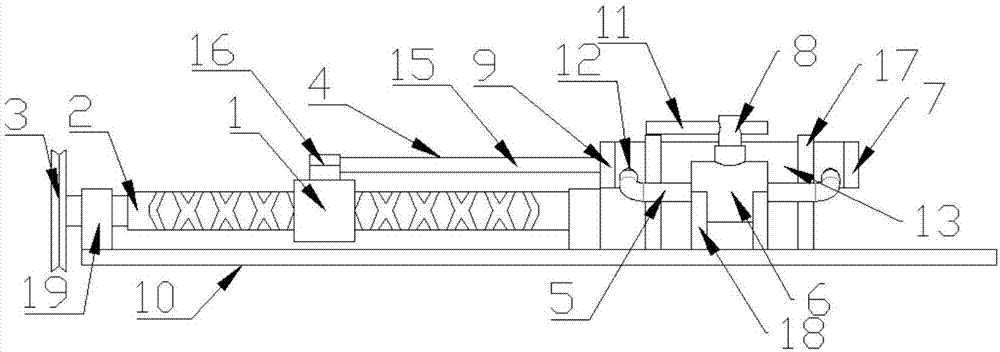
Figure 1 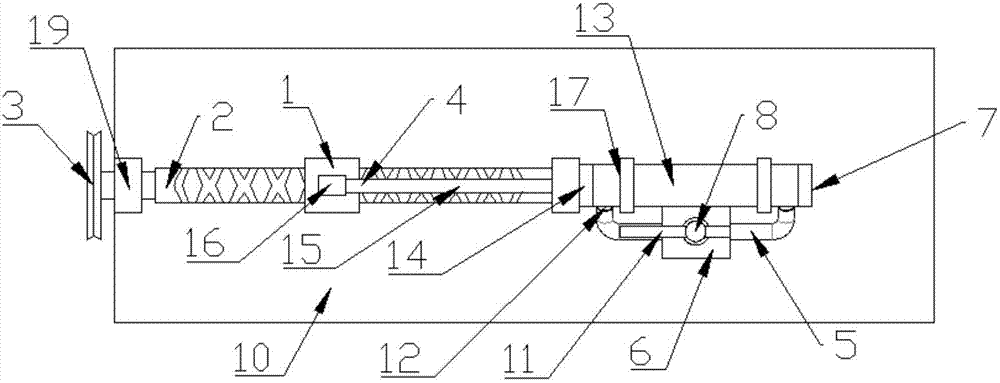
Figure 2 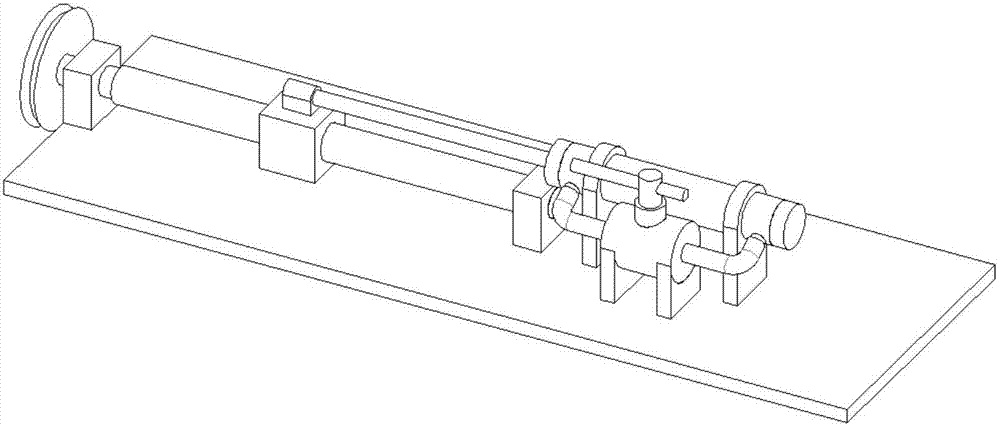
Figure 3
Abstract
Description
technical field
[0001] The present invention relates to mechanical equipment for various elevators and various rotation reduction devices, and more particularly to a rotation damper device. Background technique
[0002] A damper is a device that provides resistance to movement and consumes movement energy. It is widely used in aerospace, military industry, automobile and bridge and other fields. At this stage, the damper is divided into two types: linear type and rotary type. The straight type provides resistance to linear motion. The swivel type provides resistance to rotating objects. However, the rotary damper can only rotate at a certain angle, and cannot rotate unlimitedly in one direction while providing resistance. Contents of the invention
[0003] Aiming at the defects of the above-mentioned rotary damper, a rotary damper is invented which can rotate clockwise and counterclockwise arbitrarily, and can also provide resistance for the rotary device. The inventi...
Examples
Embodiment
[0021] Refer to the attached Figure 1-4 The rotary damper of the present invention will be described.
[0022] The rotary damper includes five parts: a damper, a resistance adjustment assembly, a reciprocating guide assembly, a pipeline and a base 10; wherein, the damper is connected between the reciprocating guide assemblies, and the damper, the resistance adjustment assembly, and the reciprocation guide assembly are fixed on the base Above 10, the damper is connected to the resistance adjustment assembly through pipelines; the damper includes a cylinder 13 and a piston 4, and the two ends of the cylinder 13 are sealed by the front cover 9 and the rear cover 7, and the sealing form is an oil seal. The body 13 is filled with damping fluid according to different mechanical requirements, and one end of the piston 4 is set inside the cylinder body 13; the resistance adjustment assembly includes a valve and an oil pipe 5, and the valve is respectively connected to the front and r...