
Motion imagination EEG classification processing method based on sparse representation classification algorithm
A technology of motor imagery and classification algorithm, applied in the field of EEG signal recognition, can solve the problems of large amount of calculation data and low operation speed, and achieve the effect of efficient processing method, reducing the pressure of data calculation, and simplifying the complexity
- Summary
- Abstract
- Description
- Claims
- Application Information
AI Technical Summary
Problems solved by technology
Method used
Image

Examples
Embodiment Construction
[0027] The present invention will be further described below in conjunction with the accompanying drawings.
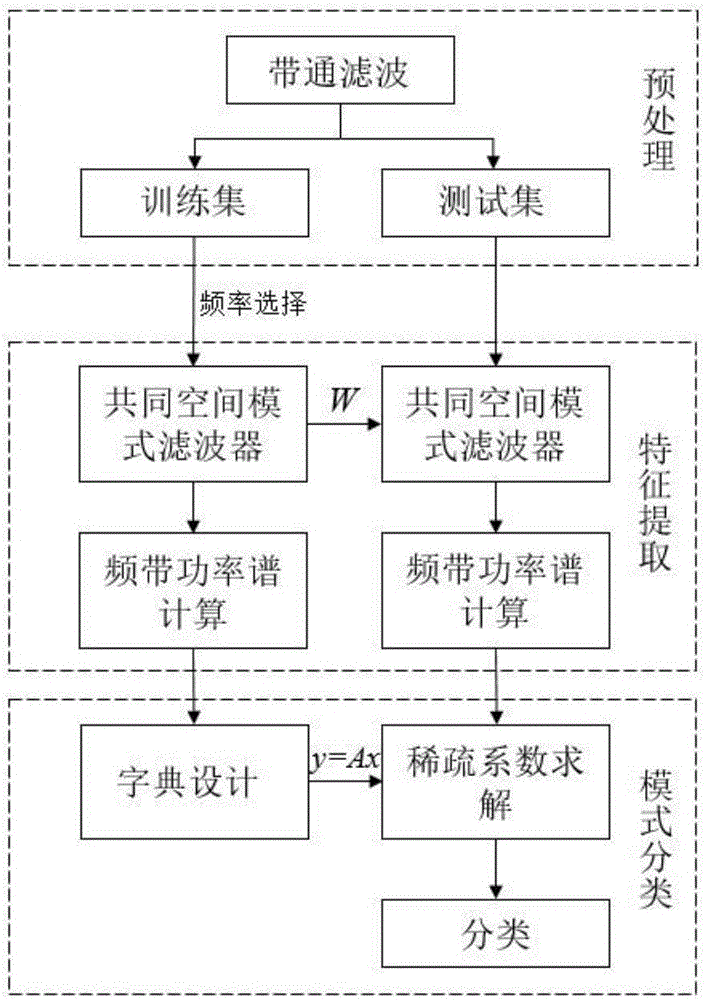
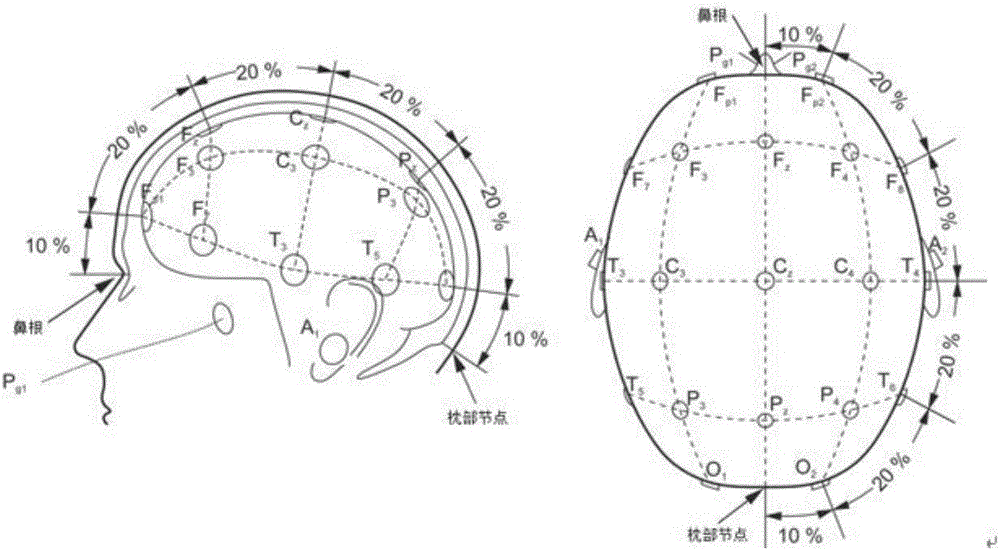
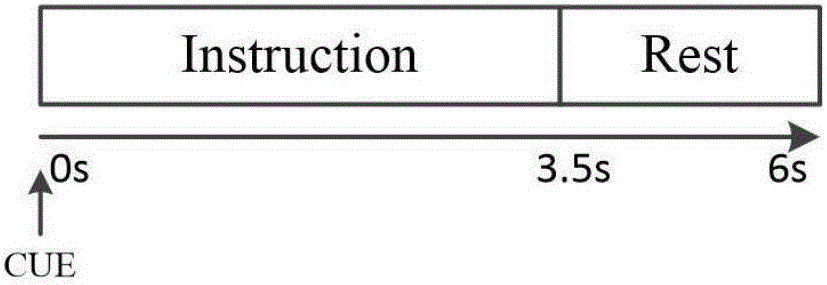
[0028] Step (1). In an environment with less external interference, the tester wears a scalp electrode cap with wireless or wired transmission on his head, and imagines various movements such as left hand movement and right hand movement according to the prompts, and the EEG cap detects The EEG signal of the tester is then preliminarily band-pass filtered, and the filtered EEG signal is transmitted to the host computer for storage. The host computer software automatically and manually organizes and marks the incoming raw EEG signals, and produces sample sets and test sets for classification. In this method, the number of electrode channels of the subject wearing an electrode cap is 118.
[0029] Step (2). Based on the inherent ERD / ERS characteristics of the motor imagery EEG signal, the upper computer software uses the common spatial mode filter to extract dimensional...
PUM
 Login to View More
 Abstract
Description
Claims
Application Information
 Login to View More