
Feed additive for improving fur quality of fur-bearing animals and application method thereof
A feed additive, fur animal technology, applied in animal feed, animal feed, application and other directions, can solve the problem of low fur quality, achieve broad market prospects, safe and convenient use, and improve product efficacy.
- Summary
- Abstract
- Description
- Claims
- Application Information
AI Technical Summary
Problems solved by technology
Method used
Image

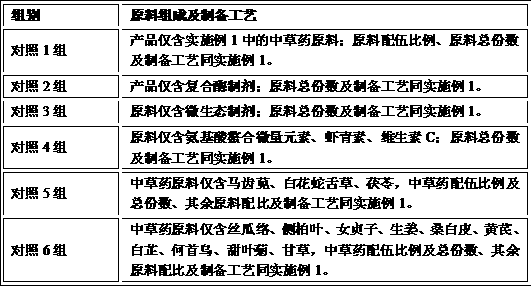
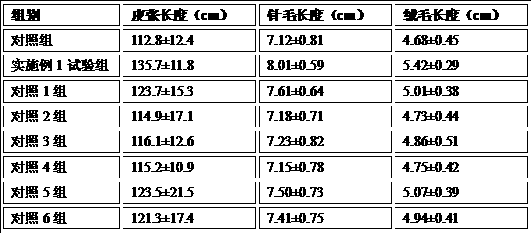
Examples
Embodiment 1
[0027] A feed additive for improving fur quality of fur animals, prepared through the following steps:
[0028] (1) Impurity removal and crushing: the raw materials of Chinese herbal medicine after removing impurities are divided into 25 parts of purslane, 15 parts of Hedyotis diffusa, 15 parts of Poria cocos, 10 parts of loofah, 10 parts of oriental cypress leaves, 15 parts of Ligustrum lucidum, ginger 7 parts, 7 parts of Morus alba, 7 parts of Astragalus, 10 parts of Angelica dahurica, 6 parts of Polygonum multiflorum, 15 parts of stevia, and 8 parts of licorice are mixed in proportion, crushed and passed through a 40-mesh sieve;
[0029] (2) Ultrasonic-assisted enzymatic hydrolysis: add pure water with a mass ratio of 3 to 5 times of raw materials, then add 2 to 3% cellulase and 1 to 2% non-starch polysaccharase, and enzymatically hydrolyze for 30 to 60min, the enzymatic hydrolysis temperature is controlled at 40-50°C;
[0030] (3) Centrifugation: centrifuge to separate th...
Embodiment 2
[0038] A feed additive for improving fur quality of fur animals, prepared through the following steps:
[0039](1) Impurity removal and crushing: the Chinese herbal medicine raw materials after removal of impurities are divided into 26 parts of purslane, 17 parts of Hedyotis diffusa, 16 parts of Poria cocos, 13 parts of loofah, 12 parts of oriental cypress leaves, 19 parts of Ligustrum lucidum, ginger 11 parts, 8 parts of Morus alba, 8 parts of Astragalus, 12 parts of Angelica dahurica, 7 parts of Polygonum multiflorum, 17 parts of stevia, and 9 parts of licorice are mixed in proportion, crushed and passed through a 40-mesh sieve;
[0040] (2) Ultrasonic-assisted enzymatic hydrolysis: add pure water with a mass ratio of 3 to 5 times of raw materials, then add 2 to 3% cellulase and 1 to 2% non-starch polysaccharase, and enzymatically hydrolyze for 30 to 60min, the enzymatic hydrolysis temperature is controlled at 40-50°C;
[0041] (3) Centrifugation: centrifuge to separate the...
Embodiment 3
[0049] A feed additive for improving fur quality of fur animals, prepared through the following steps:
[0050] (1) Impurity removal and crushing: the Chinese herbal medicine raw materials after removing impurities are divided into 22 parts of purslane, 12 parts of Hedyotis diffusa, 13.5 parts of Poria cocos, 8 parts of loofah, 9 parts of arborvitae leaves, 13 parts of Ligustrum lucidum, ginger 7 parts, 5 parts of Morus alba, 7 parts of Astragalus, 8 parts of Angelica, 4 parts of Polygonum multiflorum, 13 parts of stevia, 7 parts of licorice, mixed in proportion, crushed through a 40-mesh sieve;
[0051] (2) Ultrasonic-assisted enzymatic hydrolysis: add pure water with a mass ratio of 3 to 5 times of raw materials, then add 2 to 3% cellulase and 1 to 2% non-starch polysaccharase, and enzymatically hydrolyze for 30 to 60min, the enzymatic hydrolysis temperature is controlled at 40-50°C;
[0052] (3) Centrifugation: centrifuge to separate the enzyme extract and Chinese medicina...
PUM
| Property | Measurement | Unit |
|---|---|---|
| Fineness | aaaaa | aaaaa |
Abstract
Description
Claims
Application Information
 Login to View More