
Speed bump power generation device and working method
A technology for power generation devices and speed bumps, applied in electromechanical devices, electric components, electrical components, etc., can solve problems such as loss of kinetic energy and energy waste in automobiles, and achieve the effects of avoiding waste, being easy to manufacture, and improving comfort.
- Summary
- Abstract
- Description
- Claims
- Application Information
AI Technical Summary
Problems solved by technology
Method used
Image

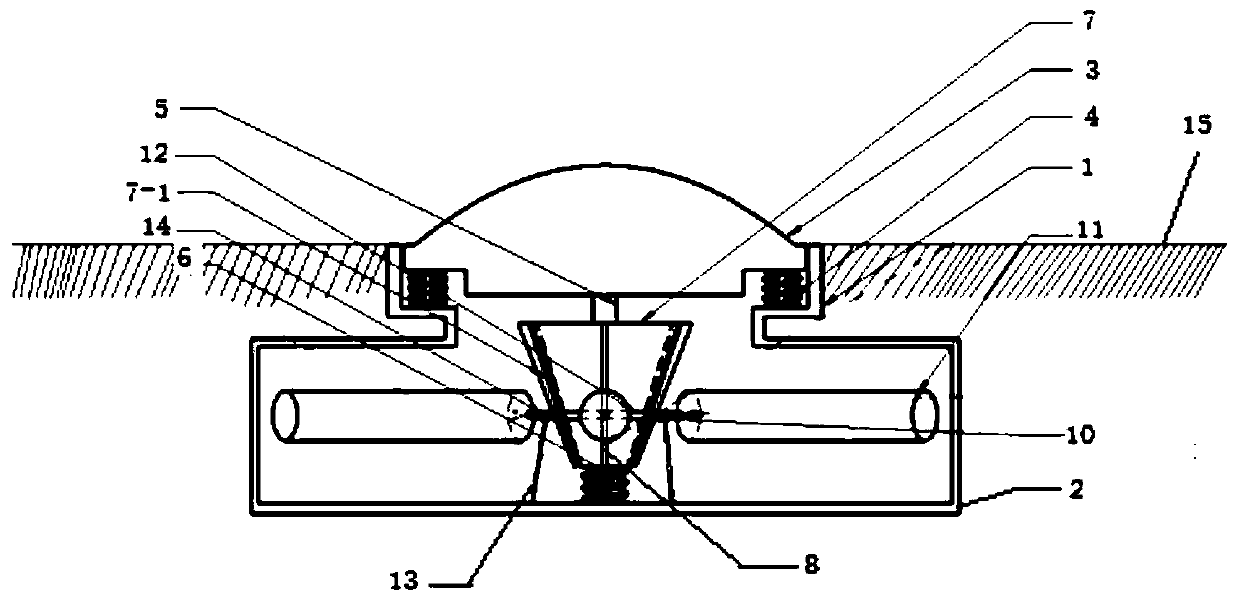
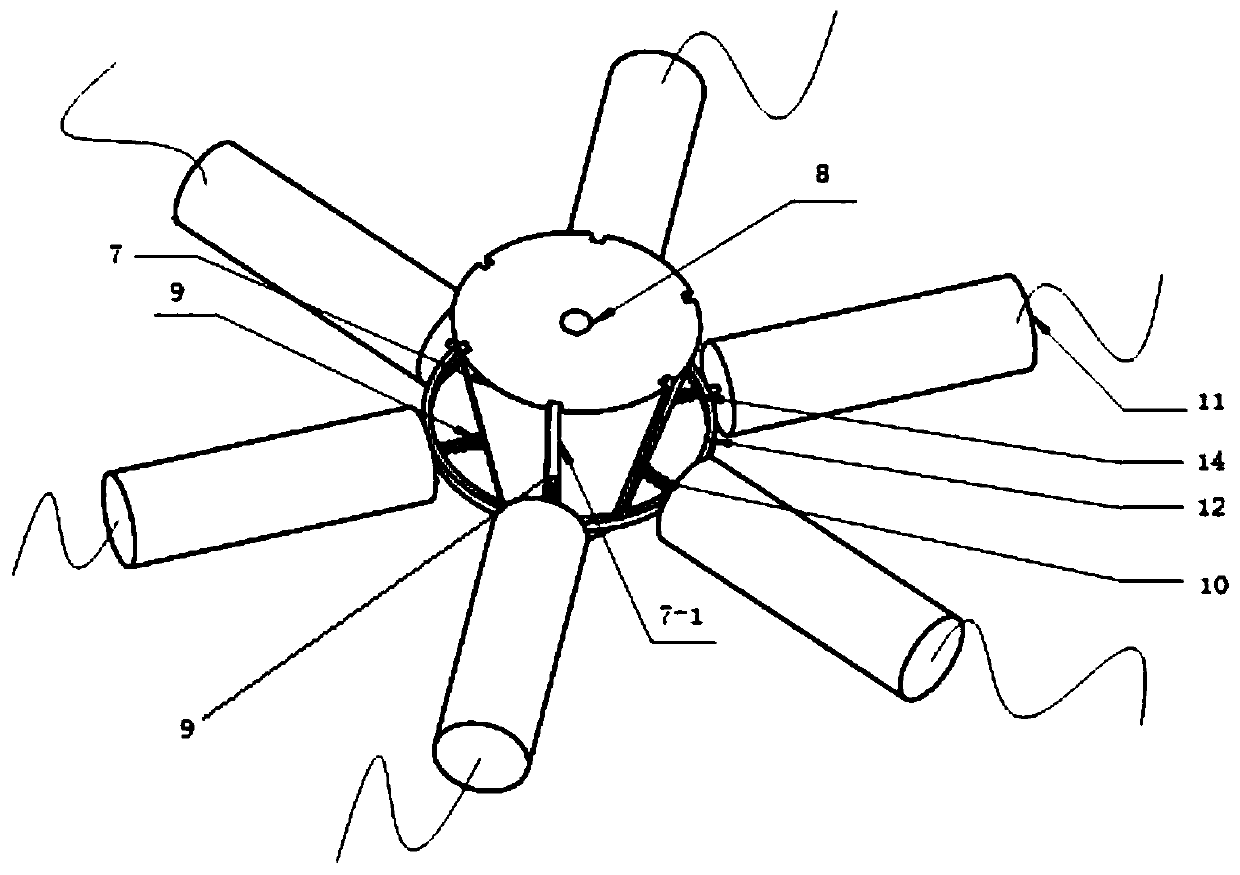
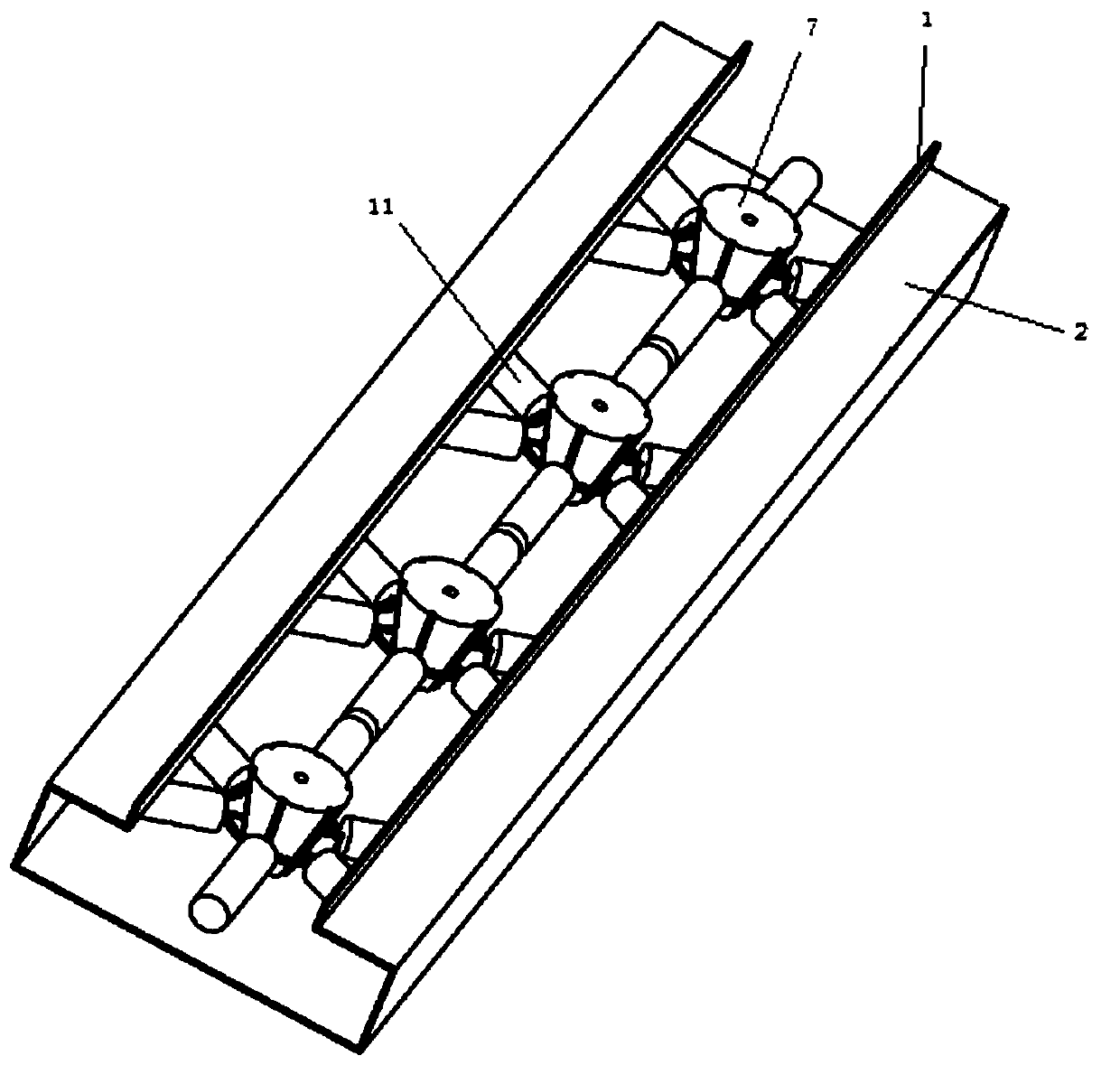
Examples
Embodiment 2
[0044] This embodiment discloses a working method of a deceleration belt power generation device:
[0045] The casing is buried 15 below the ground, and the top surface of the casing is flush with the ground. When the vehicle is running against the speed bump, the speed bump moves downward under the action of the vehicle pressure, and the inverted conical frustum moves downward synchronously. Contacting the side of the inverted cone, the downward movement of the inverted cone drives the transmission rod to move away from the axis of the inverted cone, and the movement of the transmission rod drives the linear generator to generate electricity. When the wheels of the vehicle leave the speed reduction belt, the first spring and Under the action of the second spring, the deceleration belt and the transmission part move upwards and return to their original positions. At the same time, under the action of the third spring, the transmission rod moves toward the axis of the inverted c...
PUM
 Login to View More
 Abstract
Description
Claims
Application Information
 Login to View More