A bidirectional dc-dc converter based on AC switch switching

A DC-DC and AC switching technology, applied in the field of converters, can solve the problems of difficult design of output filter, smaller soft switching area, complex control mode, etc., and achieve the effect of simple structure, small switching loss and simple control

CN110995011BActive Publication Date: 2021-05-18NANJING INST OF TECH
5 Cites 0 Cited by

Patent Information

Authority / Receiving Office
CN · China
Patent Type
Patents(China)
Current Assignee / Owner
Publication Date
2021-05-18

Smart Images

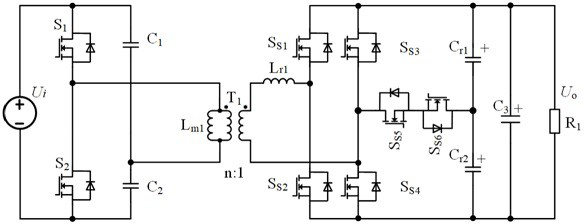
  • Figure 1
    Figure 1
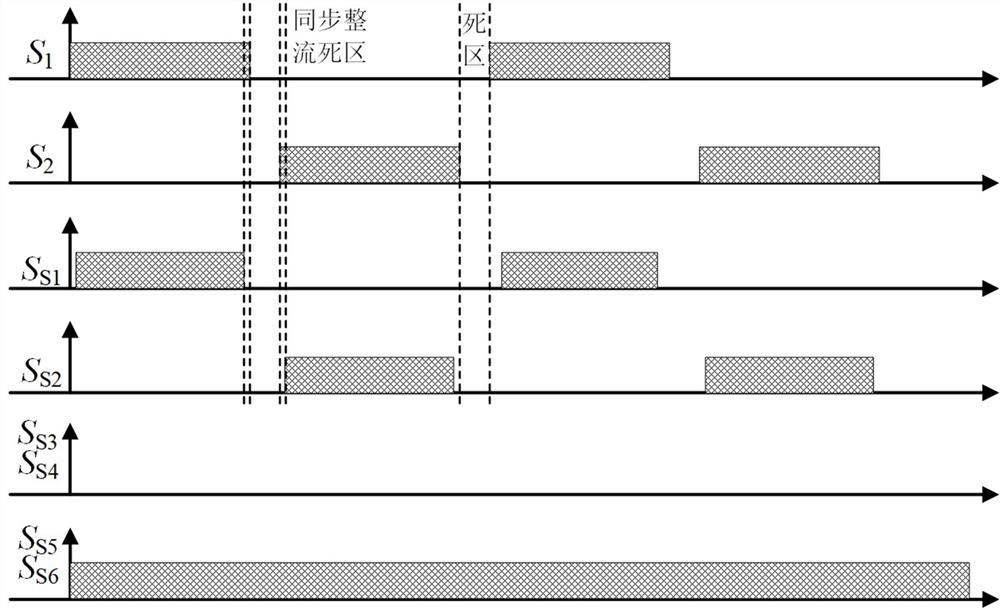
  • Figure 2
    Figure 2
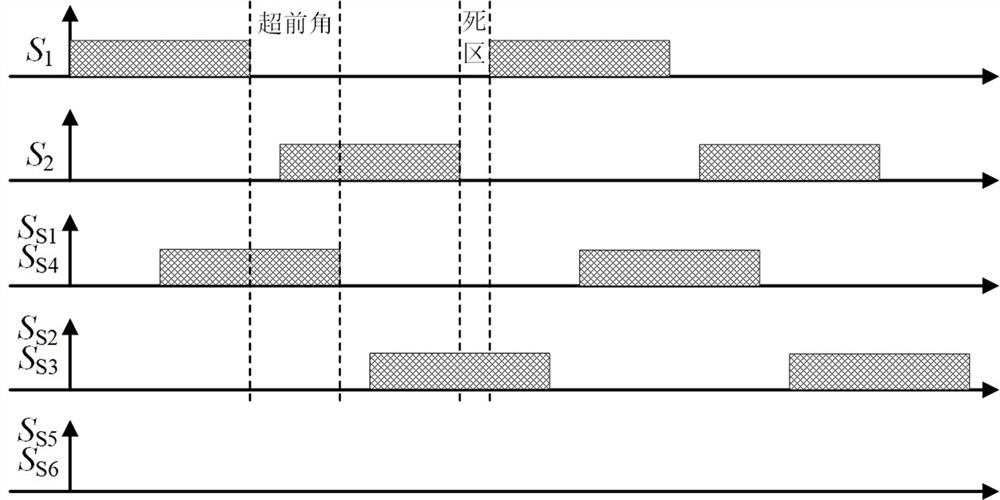
  • Figure 3
    Figure 3
Patent Text Reader

Abstract

The invention relates to a bidirectional DC-DC converter based on AC switching, and belongs to the technical field of converters. Including the primary side half-bridge circuit, the DC capacitor bridge arm including the neutral point, the secondary side H-bridge circuit, the LLC resonant cavity sharing the split resonant capacitor, the isolation transformer and the AC switch circuit; the primary side half-bridge circuit and the DC capacitor bridge arm are connected Both ends of the power supply at the input end; the primary side of the isolation transformer with the same name is connected to the midpoint of the primary half-bridge circuit, and the primary side of the isolation transformer with the same name is not connected to the midpoint of the DC capacitor bridge arm; the secondary side of the isolation transformer is connected with the same name to correspond to LLC resonance One end of the cavity resonant inductor, the other end of the resonant inductor is connected to the midpoint of the left bridge arm of the H bridge; the non-identical terminal of the isolation transformer is connected to the midpoint of the right bridge arm of the secondary H bridge circuit, and at the same time connected to one end of the AC switch circuit; the secondary H bridge circuit and the two ends of the direct current of the split resonant capacitor string are connected to the two ends of the output direct current. The circuit of the invention has the advantages of small switching loss, high efficiency, simple structure and the like.
Need to check novelty before this filing date? Find Prior Art

Description

technical field

[0001] The invention relates to a bidirectional DC-DC converter based on AC switching, and belongs to the technical field of converters. Background technique

[0002] In recent years, in order to increase the switching frequency of switching converters and increase the power density of switching converters, soft switching technology has been adopted to achieve zero voltage switching (ZVS) or zero current turning off (ZVS) of power switches. zerocurrent switching, ZCS), in order to reduce the switching loss. However, the LLC resonant soft-switching converter generally adopts a pulse frequency modulation (PFM) control method, which has disadvantages such as complicated control methods and difficult design of output filters. In view of the problems existing in PFM, scholars have proposed a PWM phase shift full-bridge (PSFB) DC-DC converter, by controlling the phase shift time of the drive pulses of the two bridge arms, the output voltage of the PSFB DC-DC conve...

Examples

Embodiment Construction

[0029] The present invention will be described in detail below in conjunction with the accompanying drawings and specific embodiments. It should be noted that the following examples are only used to illustrate the technical solution of the present invention more clearly, but not to limit the protection scope of the present invention.

[0030] see figure 1 , the present invention is a bidirectional DC-DC converter based on AC switching, which consists of a primary half-bridge circuit, a DC capacitor bridge arm including a neutral point, a secondary H-bridge circuit, and a shared LLC resonant cavity with split resonant capacitor, 1 isolation transformer and 1 AC switching circuit.

[0031] The primary-side half-bridge circuit includes two MOSFET tubes, S1 and S2 respectively; a DC capacitor bridge arm including a neutral point, with capacitors C1 and C2. The D pole of MOSFET S1 and one end of capacitor C1 are connected to the input positive bus, the S pole of MOSFET S2 and one...