

Application of TOX3 gene overexpression as liver cancer prognosis marker
A technology for gene overexpression and liver cancer prognosis, applied in the field of molecular biology, can solve the problems of limited research on CD155 regulation
- Summary
- Abstract
- Description
- Claims
- Application Information
AI Technical Summary
Problems solved by technology
Method used
Image

Examples
Embodiment 1
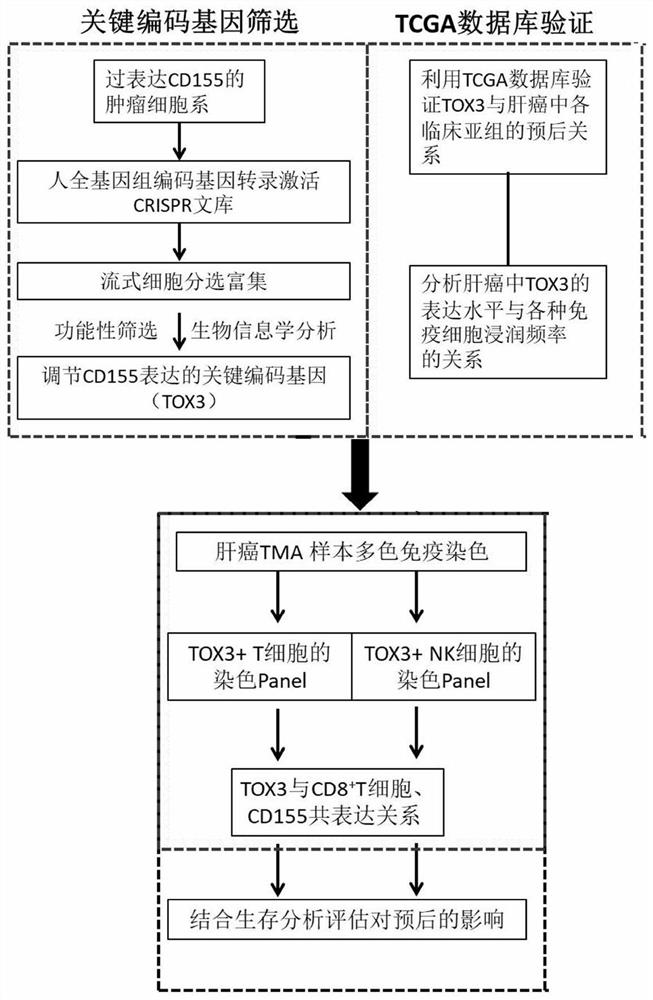
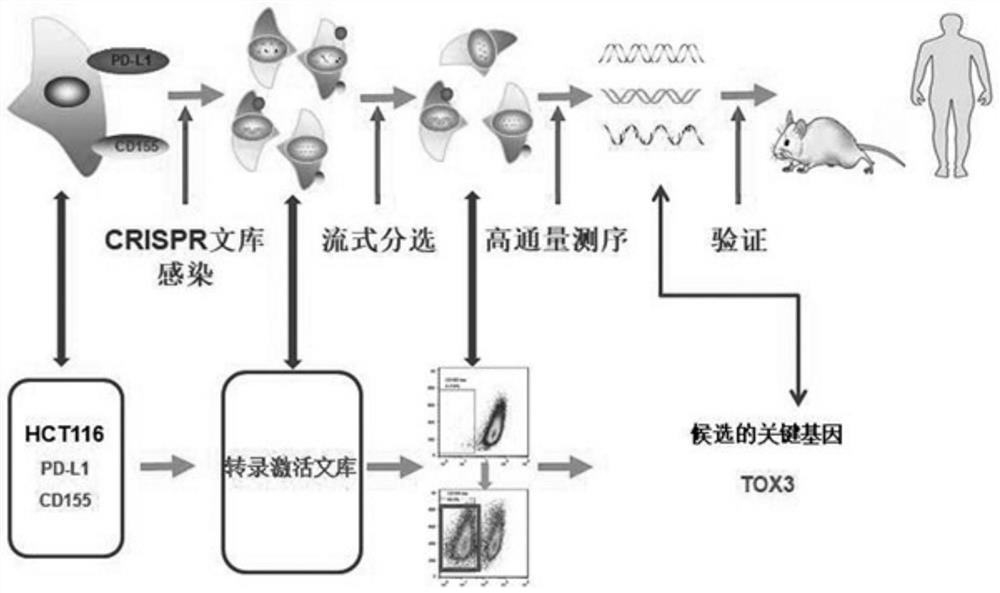
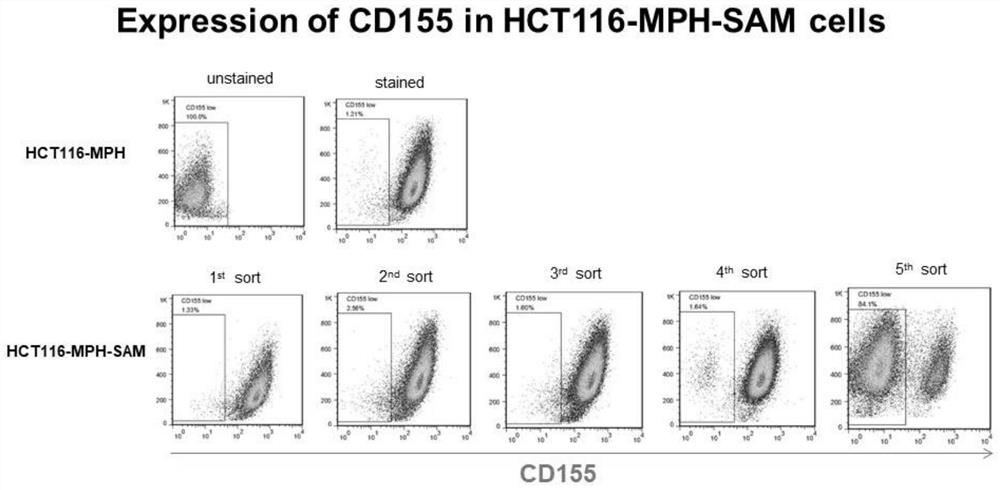
[0031] The following examples are used to illustrate the present invention, but are not intended to limit the scope of the present invention. Unless otherwise specified, the examples are all in accordance with conventional experimental conditions, such as Sambrook et al. Molecular Cloning Experiment Manual (Sambrook J & Russell DW, Molecular Cloning: a Laboratory Manual, 2001), or in accordance with the conditions suggested by the manufacturer's instructions. Example 1 Application of genome-wide CRISPR activation library screening found that TOX3 can inhibit the expression of checkpoint inhibitor CD155
[0032] Although antibody drugs related to immune checkpoints have gradually begun to be used clinically, the regulatory mechanisms of these immune checkpoints are still less studied. The present invention establishes a set of key gene technology for screening and regulating immune checkpoints based on the CRISPR library. Through this technology, we have screened the key regula...
PUM
 Login to View More
 Abstract
Description
Claims
Application Information
 Login to View More