Step-type landslide displacement prediction method based on gradient elevator and quadratic programming

A technology of quadratic planning and forecasting method, applied in forecasting, computer parts, data processing applications, etc., can solve the complex parameter setting, the normalization method selection is subjective, the step-type landslide step-type feature prediction is difficult and other problems, to achieve the effect of simple parameter setting and accurate prediction means

CN112668606AActive Publication Date: 2021-04-16BEIJING INSTITUTE OF TECHNOLOGYGY +1
3 Cites 4 Cited by

Patent Information

Authority / Receiving Office
CN · China
Current Assignee / Owner
Publication Date
2021-04-16

Smart Images

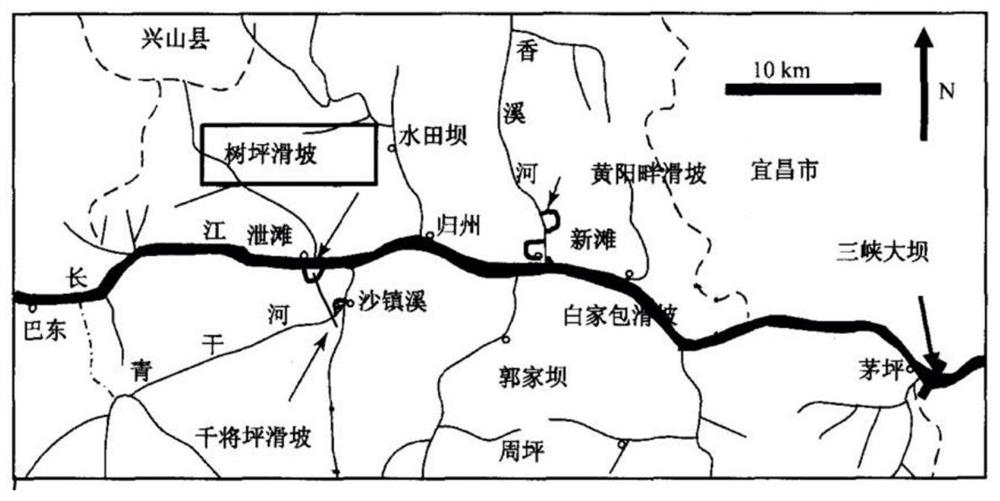
  • Figure 1
    Figure 1
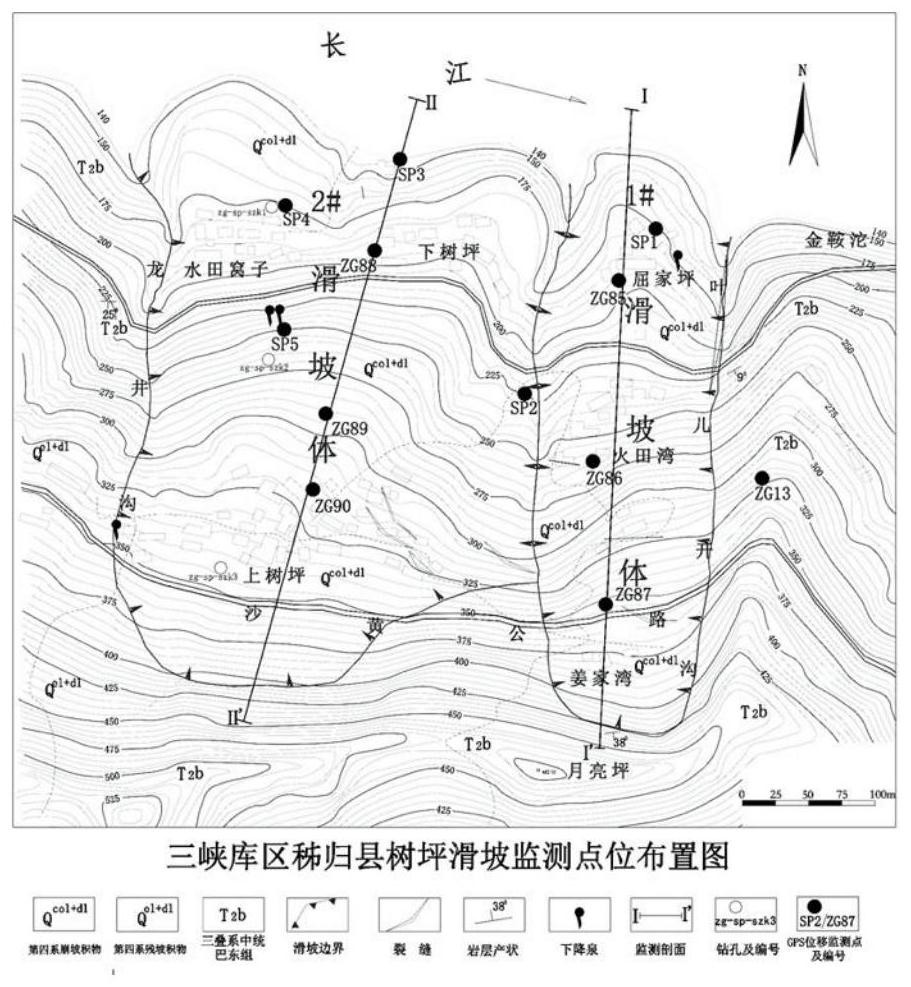
  • Figure 2
    Figure 2
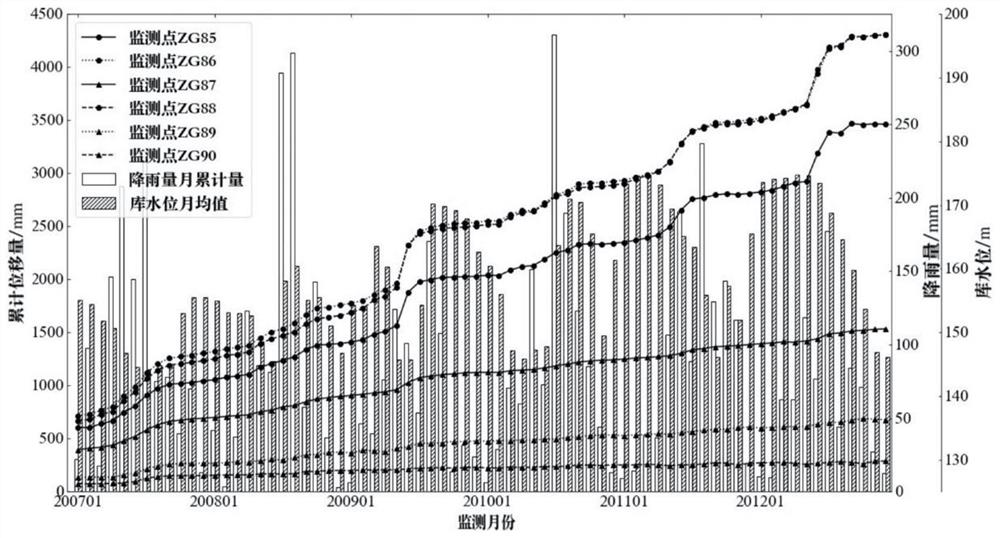
  • Figure 3
    Figure 3
Patent Text Reader

Abstract

The invention provides a step-type landslide displacement prediction method based on a gradient elevator and quadratic programming, and the method comprises the steps: enabling the accumulated displacement of a step-type landslide to be decomposed into trend term displacement and periodic term displacement, and carrying out the fitting of a trend term displacement change curve through a polynomial model least square algorithm; then, obtaining a gradient elevator-quadratic programming model with high accuracy through combination of multiple normalization modes; and finally, superposing a trend term displacement change curve fitting result and an output result of the gradient elevator-quadratic programming model to obtain a step type landslide displacement prediction curve. Therefore, the analysis and prediction models of the landslide trend term displacement and the periodic term displacement can be respectively obtained, the step-type landslide total displacement prediction value can be automatically obtained, and the method has the advantages of being simple in parameter setting and suitable for a low-dimensional feature matrix; the defects of nonlinear model parameter setting and data preprocessing in landslide displacement prediction are effectively overcome.
Need to check novelty before this filing date? Find Prior Art

Description

technical field

[0001] The invention belongs to the technical field of prediction and early warning of landslide geological disasters, and in particular relates to a step-type landslide displacement prediction method based on a gradient hoist and quadratic programming. Background technique

[0002] Predicting landslide state and sliding time based on the trend of landslide displacement-time curve is one of the main methods for monitoring and evaluating landslide stability. The displacement-time curve of a step-type landslide has multiple step-type characteristics, which can be divided into trend item displacement and periodic item displacement through the time series additive model. The periodic item displacement generated by the comprehensive influence of external conditions needs to be combined with the corresponding period A variety of external factors to establish a nonlinear model for fitting prediction. At present, a variety of nonlinear machine learning algorithms ha...

Examples

Embodiment Construction

[0055] In order to enable those skilled in the art to better understand the solutions of the present application, the technical solutions in the embodiments of the present application will be clearly and completely described below in conjunction with the drawings in the embodiments of the present application.

[0056] The invention proposes a step-type landslide displacement prediction method based on gradient hoisting machine and quadratic programming, which has an important application in landslide disaster prediction and early warning. After decomposing the displacement of the trend item and the displacement of the period item by the exponential smoothing method and the time series addition model, the displacement of the trend item of the step-type landslide is predicted by using the quadratic polynomial least squares fitting; after extracting the features, the gray relational degree analysis is used to calculate the feature correspondence Weight, optimize the feature matrix...