

Method for designing color filters which improve or modify color vision of human eye, and color filter means designed by method
A technology of color vision and color filter, applied in the field of color filter, can solve the problem of not applying feedback control of the output terminal
- Summary
- Abstract
- Description
- Claims
- Application Information
AI Technical Summary
Problems solved by technology
Method used
Image

Examples
Embodiment Construction
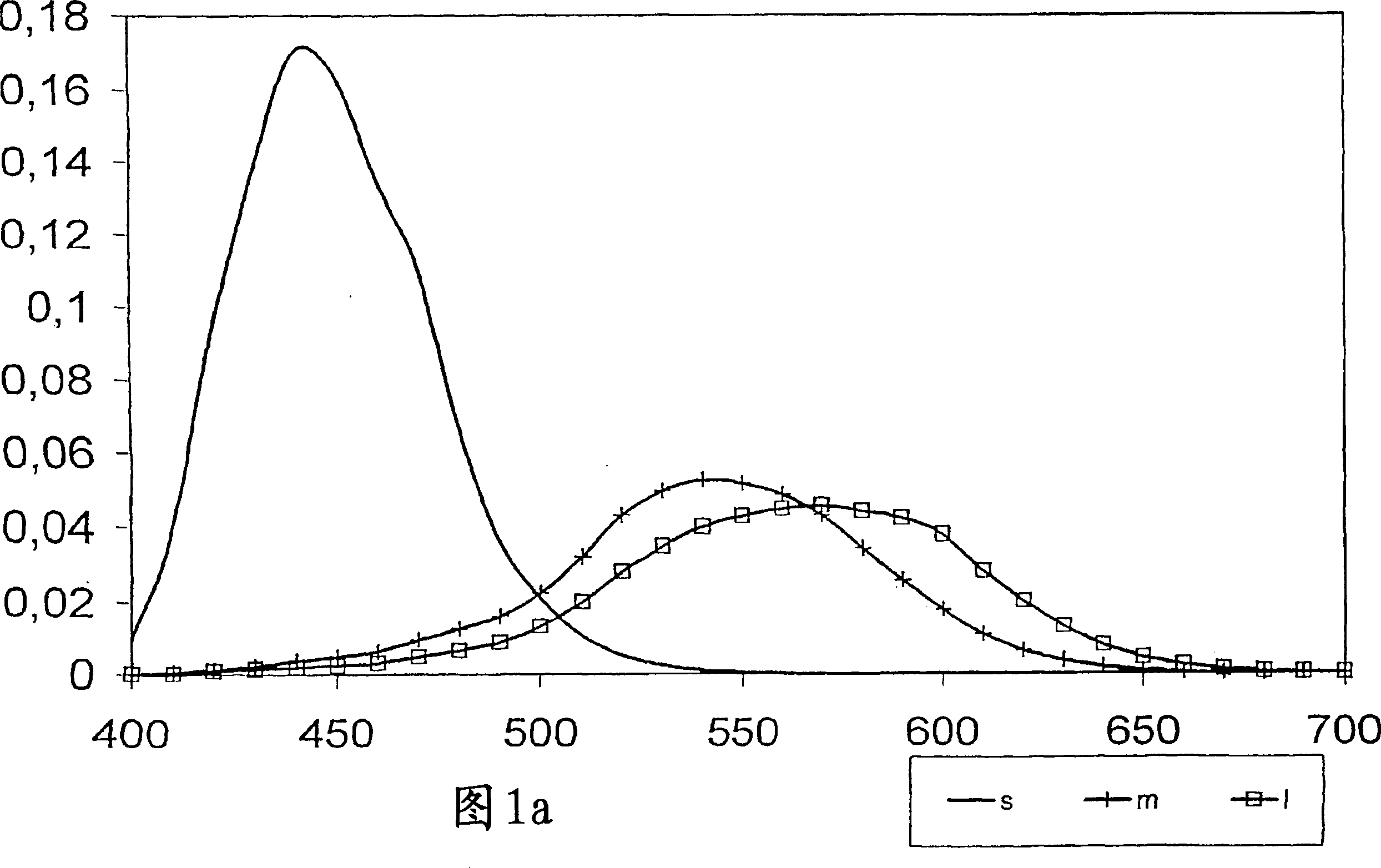
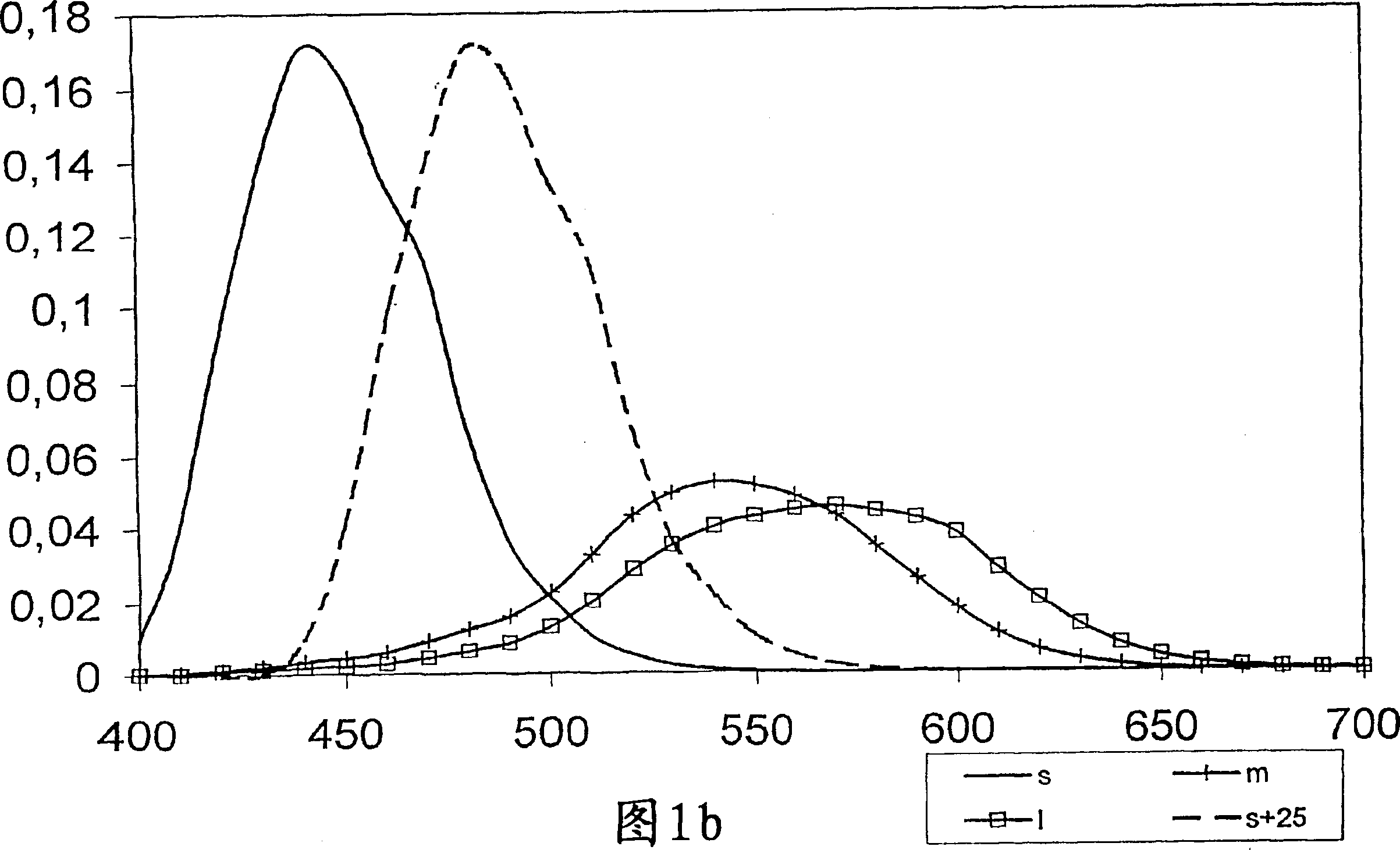
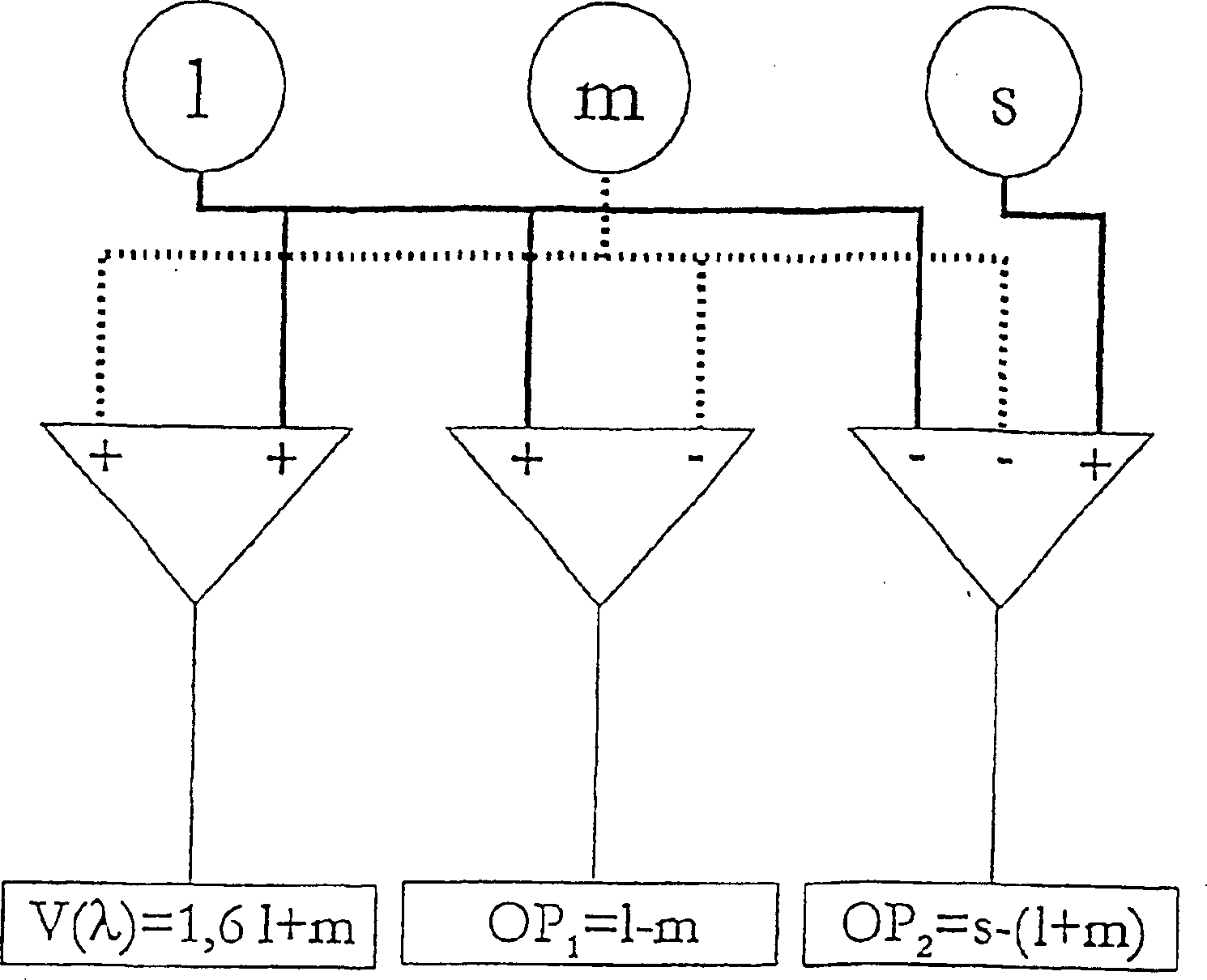
[0027] Patients with red / green perception inversion (i.e. protanomaly or deuteranomaly) are characterized by a position of the SSF of the l photoreceptor (for protanomaly) or the SSF of the m photoreceptor (for deuteranomaly) relative to the SSF of normal individuals the drift and / or deformed shape, and in both examples the OP 1 The shape of the function is also different from normal. Because most color deficient people are red / green perception inversion, the following invention will discuss how to obtain normal OP 1 . However, it should be noted that the same principle applies to obtaining a normal OP for a tritanomania patient 2 , where the SSF of the s photoreceptor has a positional drift and / or distorted shape. The same principle applies to modifying the color vision of a colorless person with a color deficiency for a specific purpose, i.e. the purpose is to obtain a different OP than a normal person in a predetermined way 1 or OP 2 .
[0028] In order to design the ...
PUM
 Login to View More
 Abstract
Description
Claims
Application Information
 Login to View More