
Method for reducing noise and cavitation in machines and pressure exchangers which pressurize or depressurize fluids by means of displacement principle
A pressure exchanger, principle technology, applied in the direction of fluid pressure converter, fluid pressure actuation device, fluid pressure actuation system components, etc., can solve the problems of unacceptable noise level and limited time.
- Summary
- Abstract
- Description
- Claims
- Application Information
AI Technical Summary
Problems solved by technology
Method used
Image

Examples
Embodiment Construction
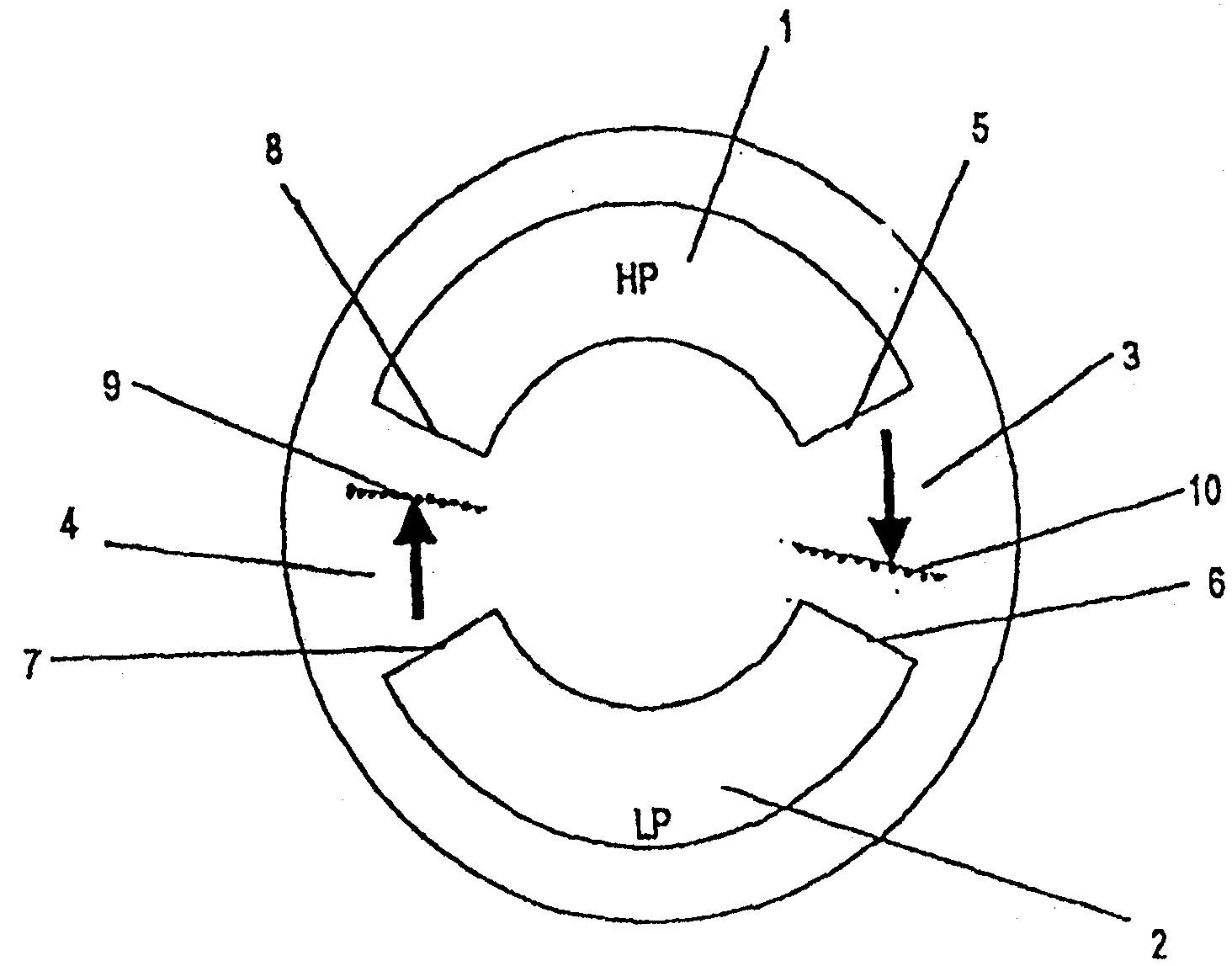
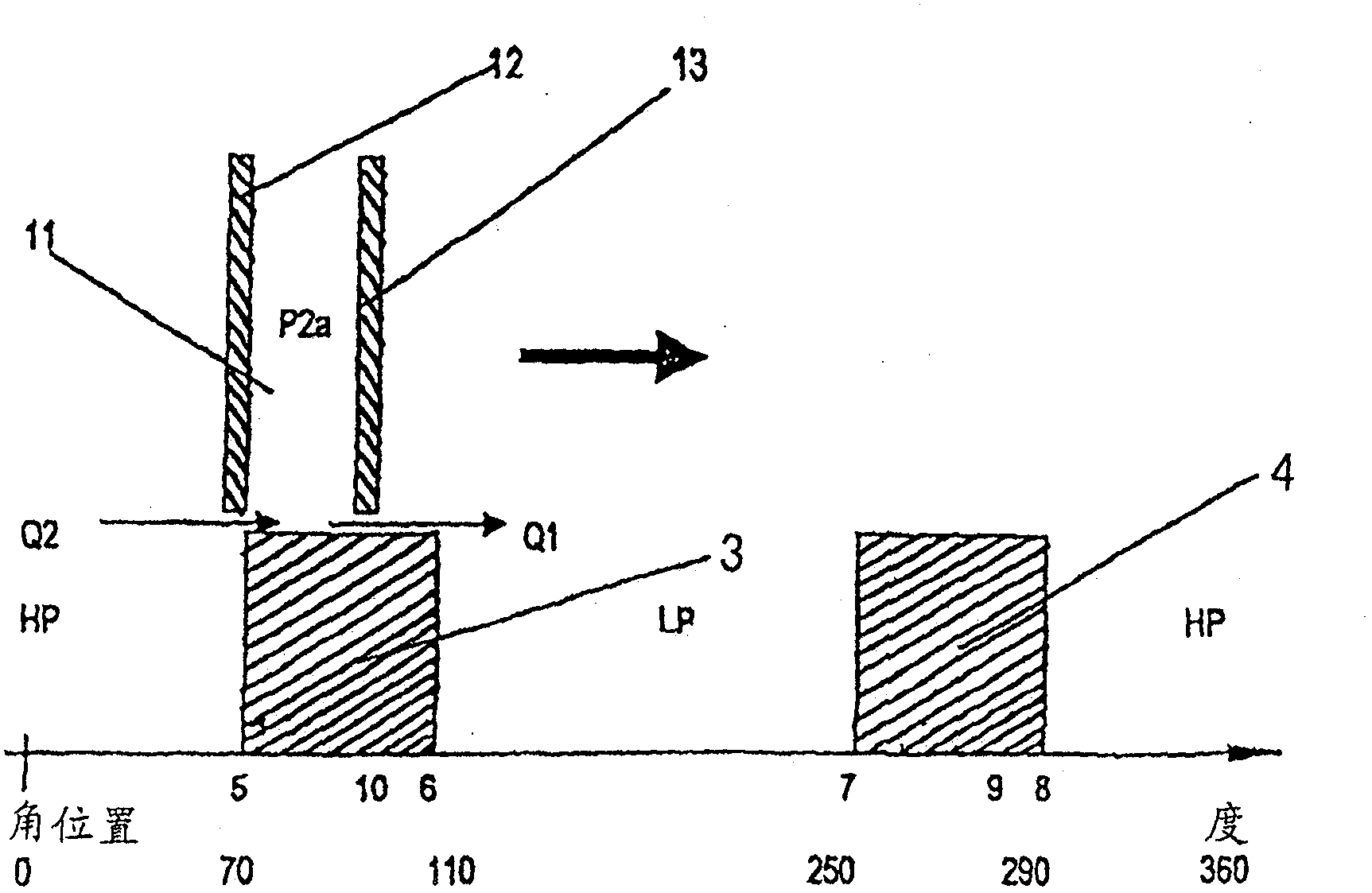
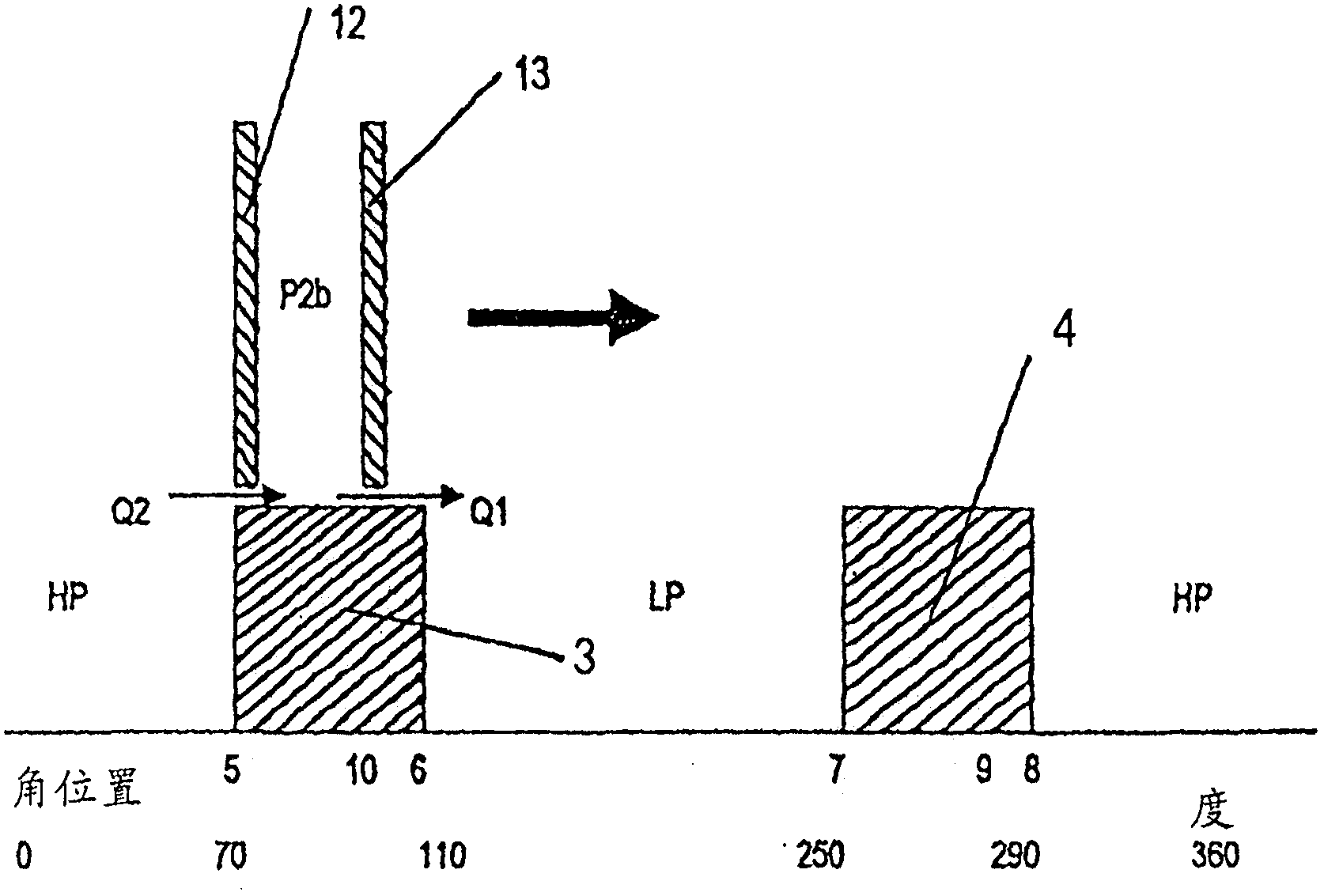
[0013] figure 1 All major components of a symmetrical end cap with high pressure port 1 and low pressure port 2 are shown. Although the aperture angles are the same in the figures, this is not necessary and may be advantageous in combination with a different number of channels in the rotor. There are two sealing areas on the end cover, one is the decompression area 3 between the high pressure side and the low pressure side, and the other is the pressurized area 4. According to the fact that the rotor channels rotate clockwise, all the rotor channels will pass from the high pressure port 1 through the decompression zone 3 to the low pressure port 2, so as to pass through the pressurized zone 4 and enter the high pressure port 1 again. Furthermore, the decompression zone 3 has an inlet edge and an outlet edge 6 , and the pressurization zone 4 has an inlet edge 7 and an outlet edge 8 , respectively. The angular extent of the sealing areas 3 and 4 covers at least one complete ro...
PUM
 Login to View More
 Abstract
Description
Claims
Application Information
 Login to View More