

Cosmetic or dermatological light-protective formulation comprising a water-soluble UV filter substance and a benzoxazole derivative
a technology of benzoxazole and uv filter substance, which is applied in the direction of biocide, plant growth regulator, animal husbandry, etc., can solve the problems of simple sunburn or even burns of greater or lesser severity, uv-a radiation is much more hazardous than uv-b radiation, and the harmful effect of ultraviolet part of solar radiation on the skin is generally known
- Summary
- Abstract
- Description
- Claims
- Application Information
AI Technical Summary
Benefits of technology
Problems solved by technology
Method used
Image

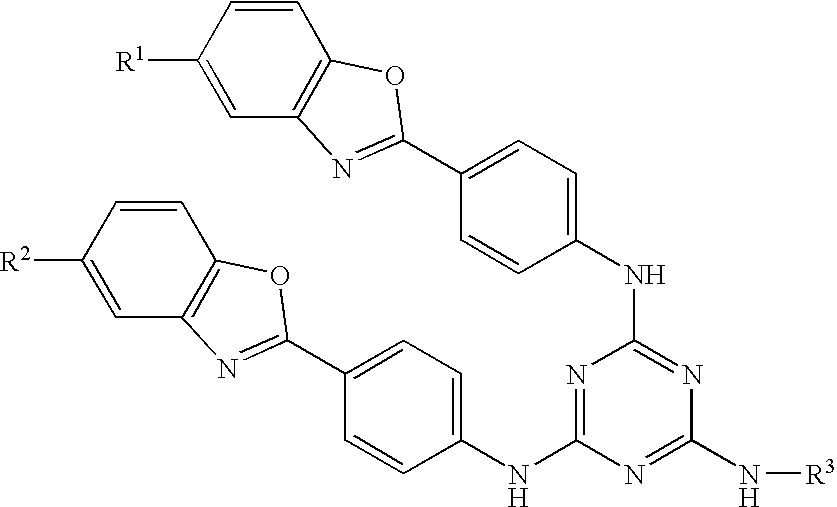
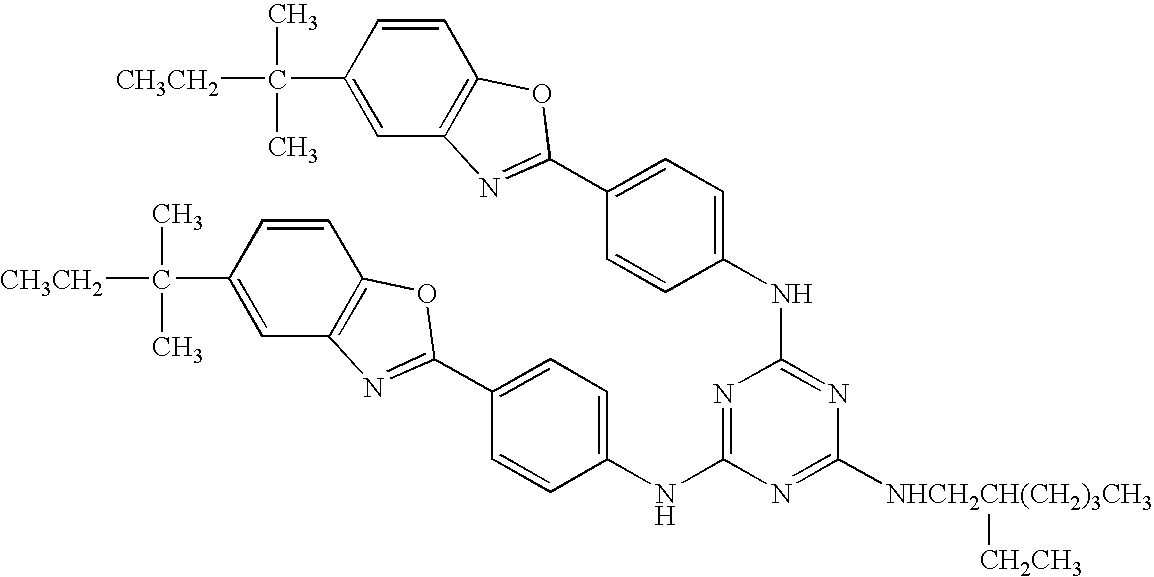
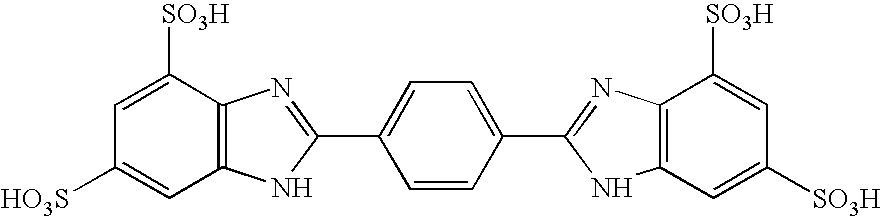
Examples
examples
1. O / W sunscreen emulsions1234567Glycerol monostearate SE0.501.003.001.50Glyceryl stearate citrate2.001.002.002.50Stearic acid3.000.752.00PEG-40 stearate0.502.00PEG-100 stearate1.50Cetyl dimethicone copolyol0.750.50Cetyl phosphate0.751.00Stearyl alcohol3.002.000.50Cetyl alcohol2.501.000.502.00UVASorb ® K2A1.002.503.004.001.505.001.00Phenylbenzimidazolesulfonic acid0.501.002.000.50Disodium phenyl dibenzimidazoletetrasulfonate2.501.002.001.501.00Terephthalidenedicamphorsulfonic1.000.500.50acidButylmethoxydibenzoylmethane2.001.00Uvinul ® A Plus1.00Bisethylhexyloxyphenol1.502.50methoxyphenyltriazineEthylhexyltriazone2.002.004.002.00Diethylhexylbutamidotriazone2.00Ethylhexyl methoxycinnamate3.5010.00Octocrylene5.009.007.502.50Methylenebisbenztriazolyltetramethylbutylphenol2.000.50Homosalate2.00Ethylhexyl salicylate3.005.00Drometrizoltrisiloxane0.51.00Titanium dioxide T 8051.501.000.50Titanium dioxide MT-100Z1.003.001.00Zinc oxide NDM1.503.00C12-15 alkyl benzoate2.507.005.00Dicaprylyl eth...
PUM
| Property | Measurement | Unit |
|---|---|---|
| wavelength | aaaaa | aaaaa |
| wavelength | aaaaa | aaaaa |
| wavelength | aaaaa | aaaaa |
Abstract
Description
Claims
Application Information
 Login to View More