
Method and apparatus for non-destructive testing
a non-destructive testing and material technology, applied in the direction of liquid/fluent solid measurement, machines/engines, instruments, etc., can solve the problems of not being able to easily cover larger specimens, devices are not without disadvantages, and positrons also lose energy in the source material itsel
- Summary
- Abstract
- Description
- Claims
- Application Information
AI Technical Summary
Problems solved by technology
Method used
Image

Examples
Embodiment Construction
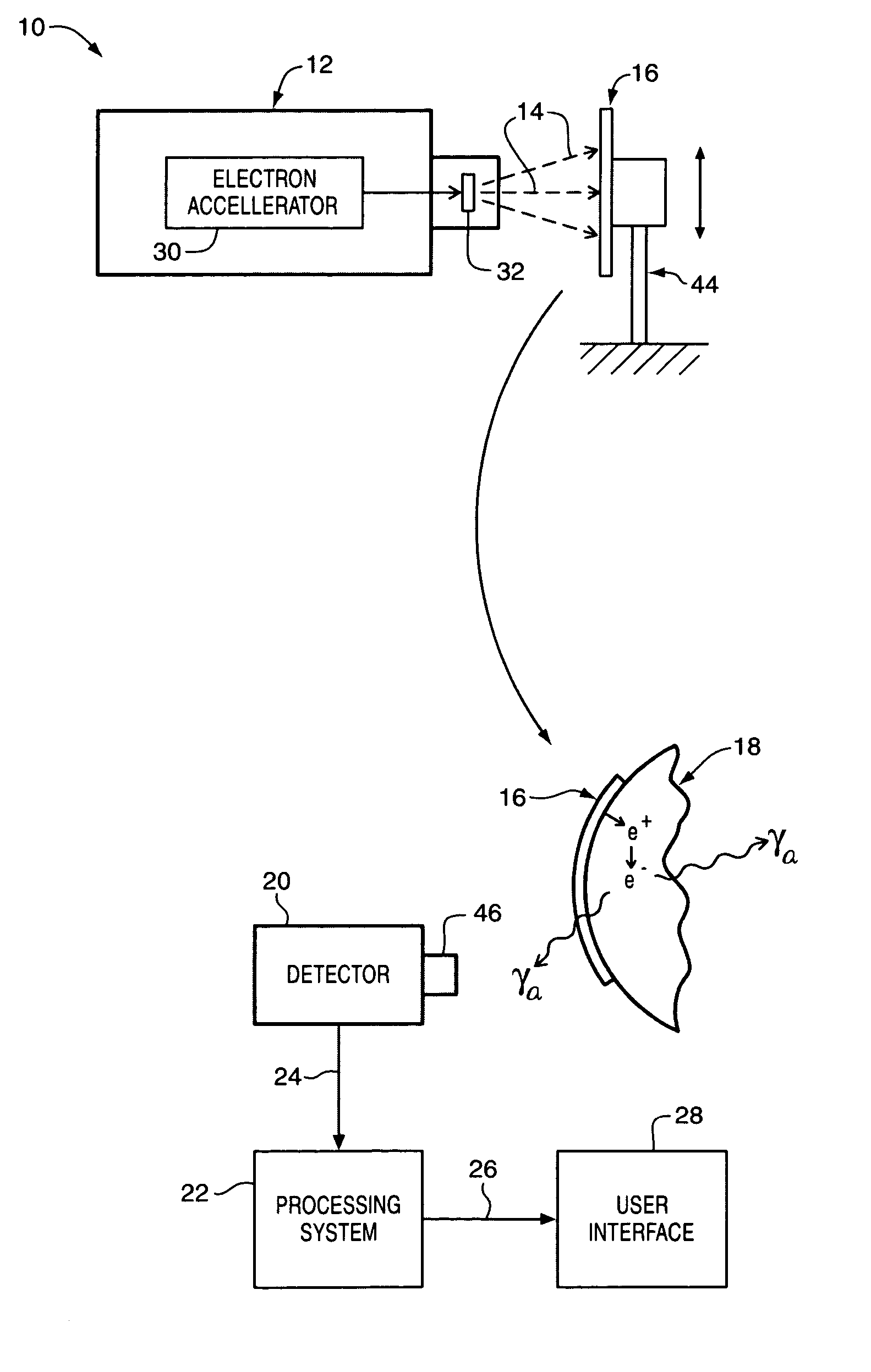
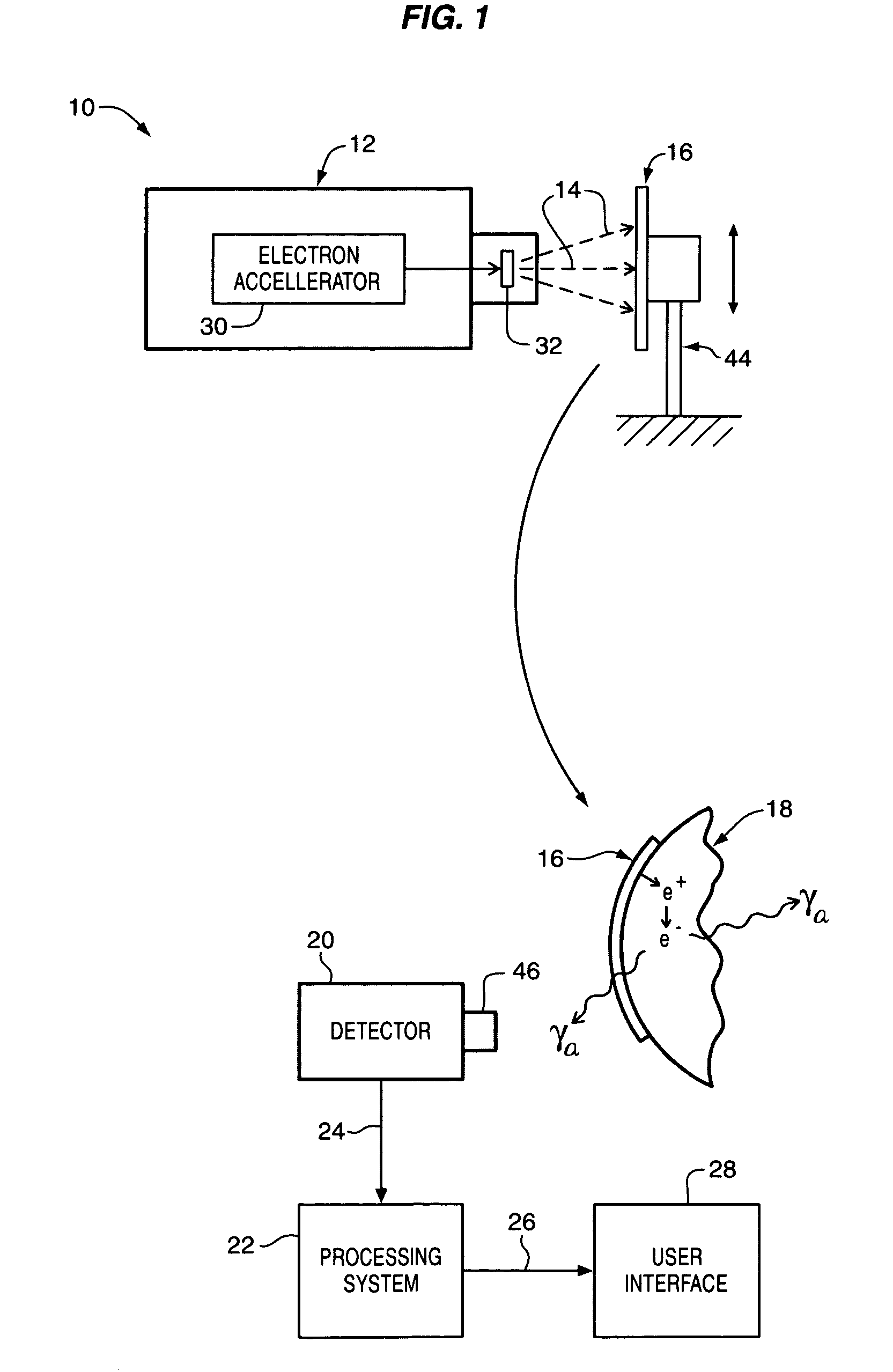
[0018] Non-destructive testing apparatus 10 according to one embodiment of the present invention is illustrated in FIG. 1 and may comprise a photon source 12 for producing photons 14. A source material 16 is positioned adjacent the photon source 12 so that the source material 16 is bombarded by photons 14 from the photon source 12. As will be described in greater detail below, the source material 16 comprises a material that emits positrons e+in response to bombardment of the source material 16 with photons, such as photons 14 from the photon source 12. After being bombarded with photons 14 from the photon source 12, a process referred to herein in the alternative as “photon activation,” the source material 16 may be removed from a position adjacent the photon source 12 and moved to a position adjacent a specimen 18. As will be described in greater detail below, the positrons emitted by the source material 16 may have relatively high energies, e.g., in the range of about 0.5 MeV to ...
PUM
 Login to View More
 Abstract
Description
Claims
Application Information
 Login to View More