
Touch detectable display device and driving method thereof
a display device and display device technology, applied in the direction of instruments, computing, electric digital data processing, etc., can solve the problems of increasing the thickness and weight of the display device, difficult to represent minute characters or pictures, and the area where a touch may not be easily detected
- Summary
- Abstract
- Description
- Claims
- Application Information
AI Technical Summary
Benefits of technology
Problems solved by technology
Method used
Image

Examples
Embodiment Construction
[0036] The present invention is described below more fully with reference to the accompanying drawings, in which preferred embodiments of the invention are shown.
[0037] In the drawings, the thickness of layers and regions are exaggerated for clarity. Like numerals refer to like elements throughout. It will be understood that when an element such as a layer, region or substrate is referred to as being “on” another element, it can be directly on the other element or intervening elements may also be present. In contrast, when an element is referred to as being “directly on” another element, there are no intervening elements present.
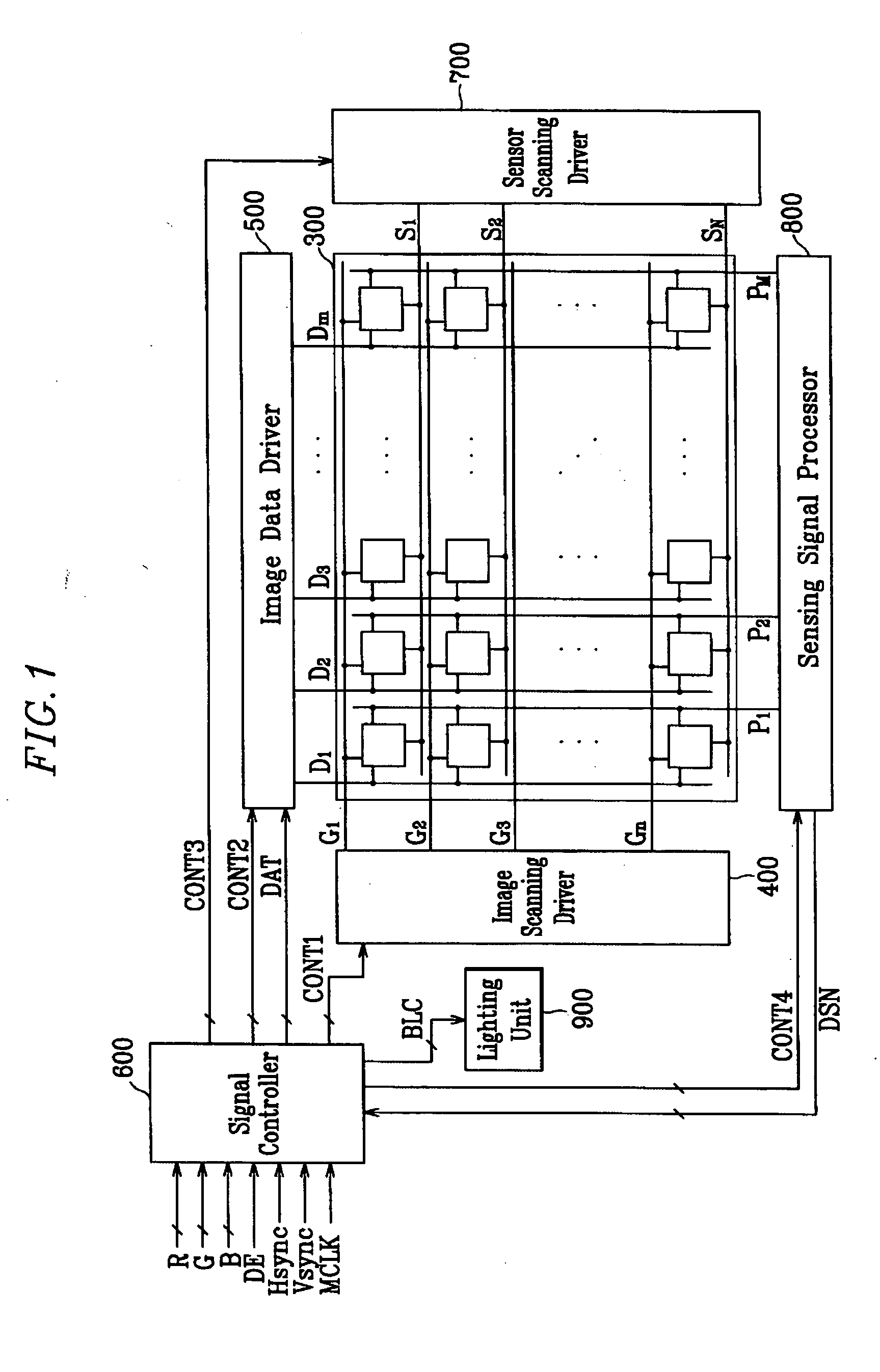
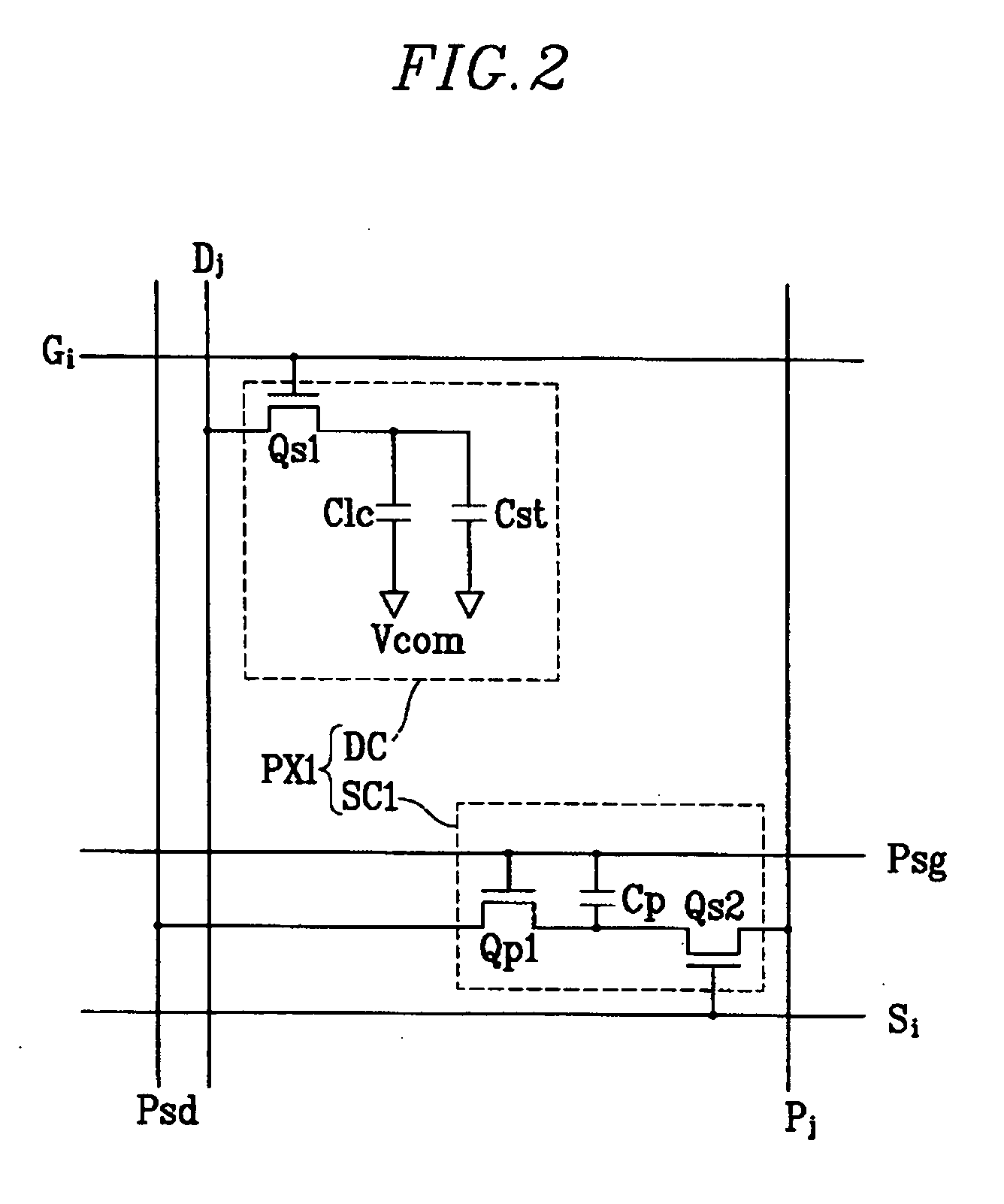
[0038] A liquid crystal display according to an embodiment of the present invention is described below in detail with reference to FIGS. 1, 2 and 3.
[0039]FIG. 1 is a block diagram of an LCD according to an embodiment of the present invention, FIG. 2 is an equivalent circuit diagram of a pixel including a light sensing circuit for an LCD according to an em...
PUM
 Login to View More
 Abstract
Description
Claims
Application Information
 Login to View More